
- 1
- 2
Electromagnetic water valves
What electromagnetic water valves can be purchased at the online store Specialist?
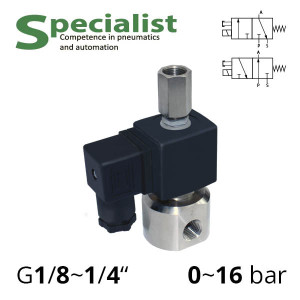
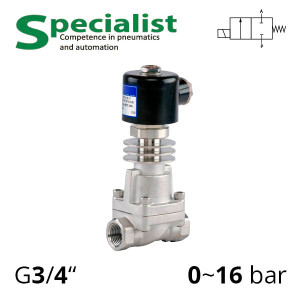
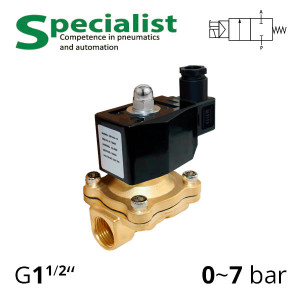
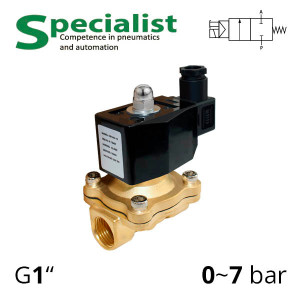
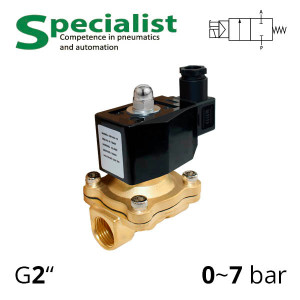
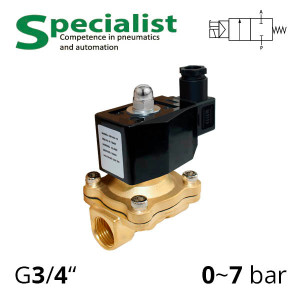
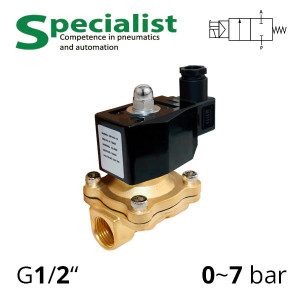
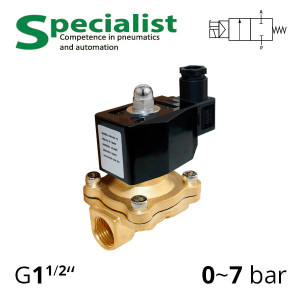
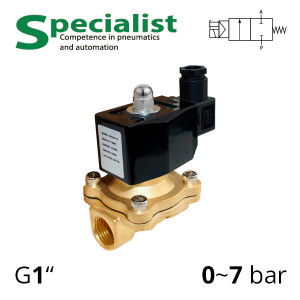
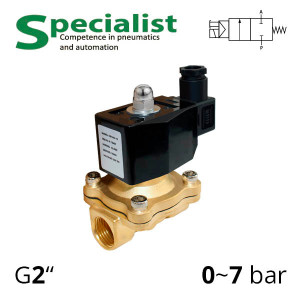
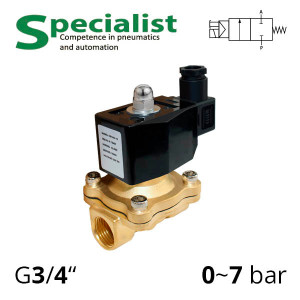
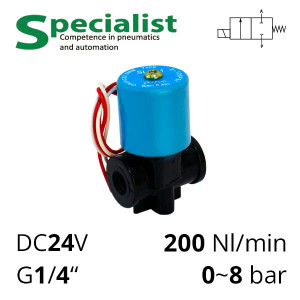
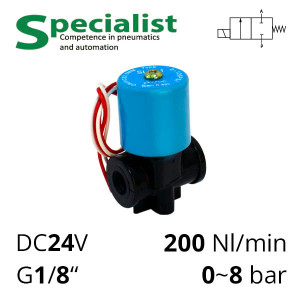
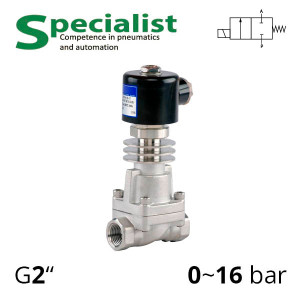
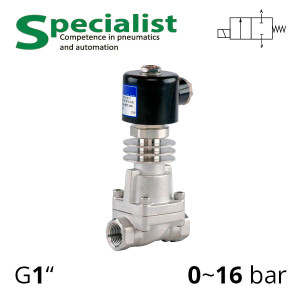
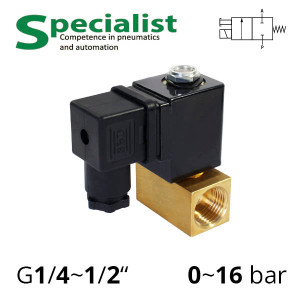
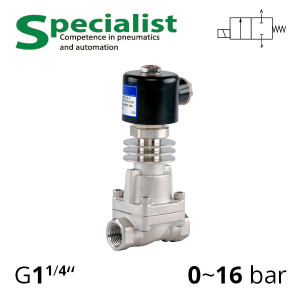
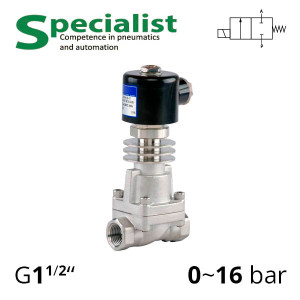
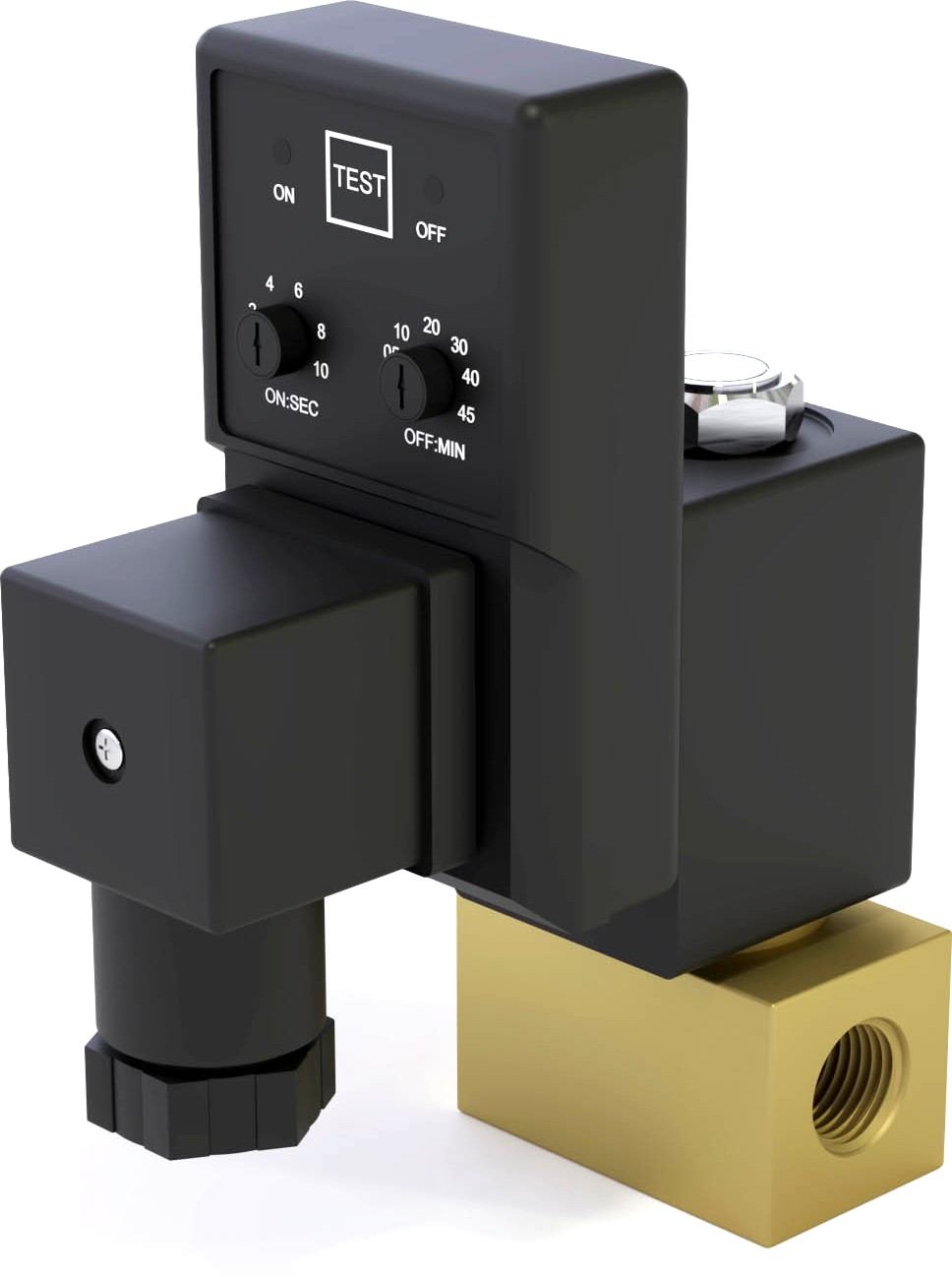
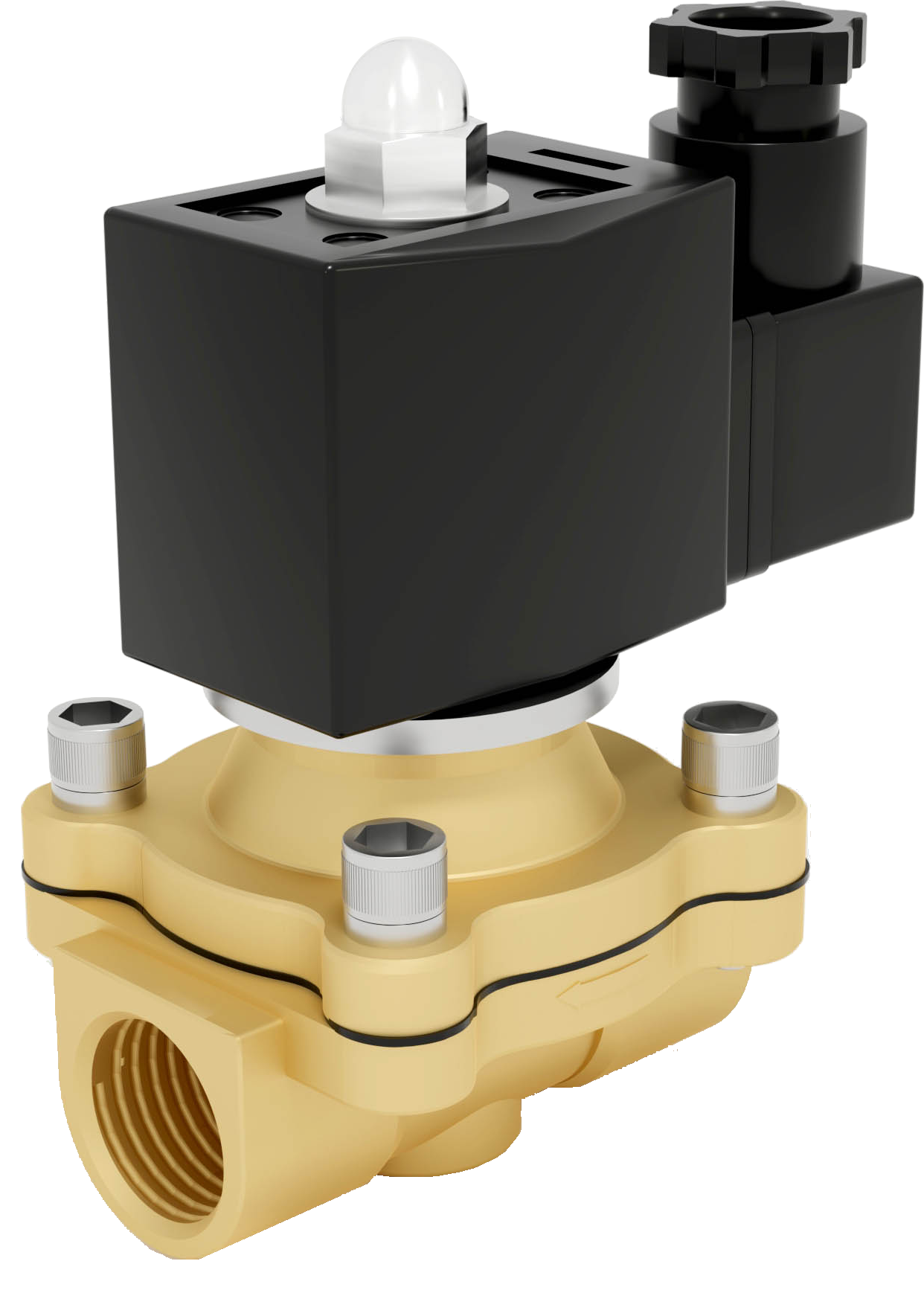
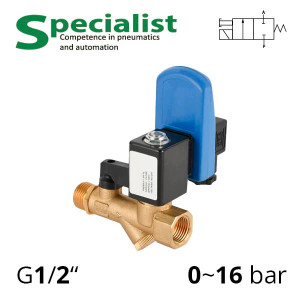
In the online catalogue of Specialist, you can select and purchase an electromagnetic valve suitable for both cold and hot water in heating systems, as well as for steam in industrial applications. Our water valves are often used for other chemically non-aggressive liquids that are compatible with the sealing materials.
The most popular demand in Ukraine is for an electric water valve 220 Volts AC (AC220V), which can be connected to the household power grid without a converter link, but we also offer devices with solenoids of 12v, 24v of various power, with explosion-proof coils, and other electrical parameters. Main sizes of electromagnetic water valves: 1/2 inch, 3/4 inch, 1 and 2 inches, but we also have intermediate threaded sizes available for sale. By default, we offer normally closed type valves, and the normally open one is available only by special order.
The Specialist company is a direct importer of products, and our ZS and FP valves have been on the market for more than 6 years. We have received many positive reviews from water supply system designers about the reliability and quality of our equipment. Moreover, you will not need to buy a new electromagnetic valve – we offer spare parts for self-repair from the manufacturer, including sealing rings, diaphragms, and solenoid coils for replacement. We ship goods from our warehouse in Lviv and near Dnipro.
How to choose an electromagnetic valve for water (solenoid)
Electro-valves are made from different materials, which largely determines the cost of a solenoid valve:
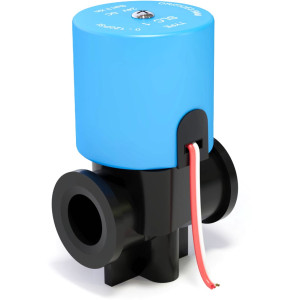
- Plastic. Electro-valves for cold water made from technical polymers are relatively cheap, with the main benefits being low weight and ease. The price of plastic valves for water supply varies greatly as different manufacturers use different materials and production methods - casting or pressing secondary raw materials. Similarly, price differences relate to internal seals.
- Bronze. Bronze valves better withstand high temperatures and their fluctuations. Since among plastic valves you can come across poor quality ones, many manufacturers prefer sturdy metal valves. When using solenoid valves for hot water, pay attention to the seals, as they are most vulnerable to heat.
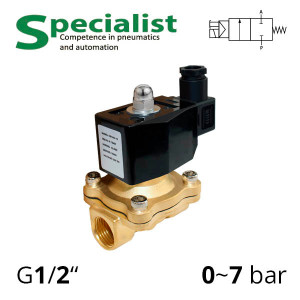
- Brass. Brass valves are often confused with bronze ones. For drinking water and the food industry, brass alloys are not used, as they contain toxic lead.
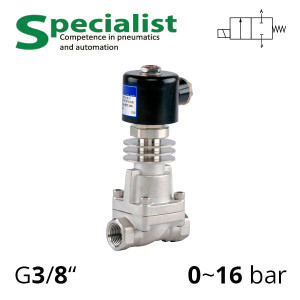
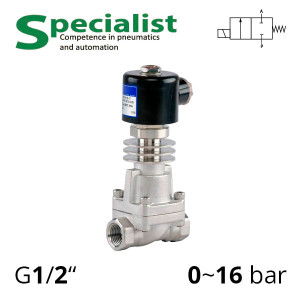
- Stainless steel. Stainless valves are generally used for high temperatures and steam, as well as for pipelines carrying drinking water, food liquids, and mixtures. The surface of stainless valves is smoother, providing them with better hygiene.
Types of electromagnetic (solenoid) valves for water by position
As mentioned above, you can buy electromagnetic water valves at the Specialist store in both "normally open" and "normally closed" designs. This is one of the important aspects!
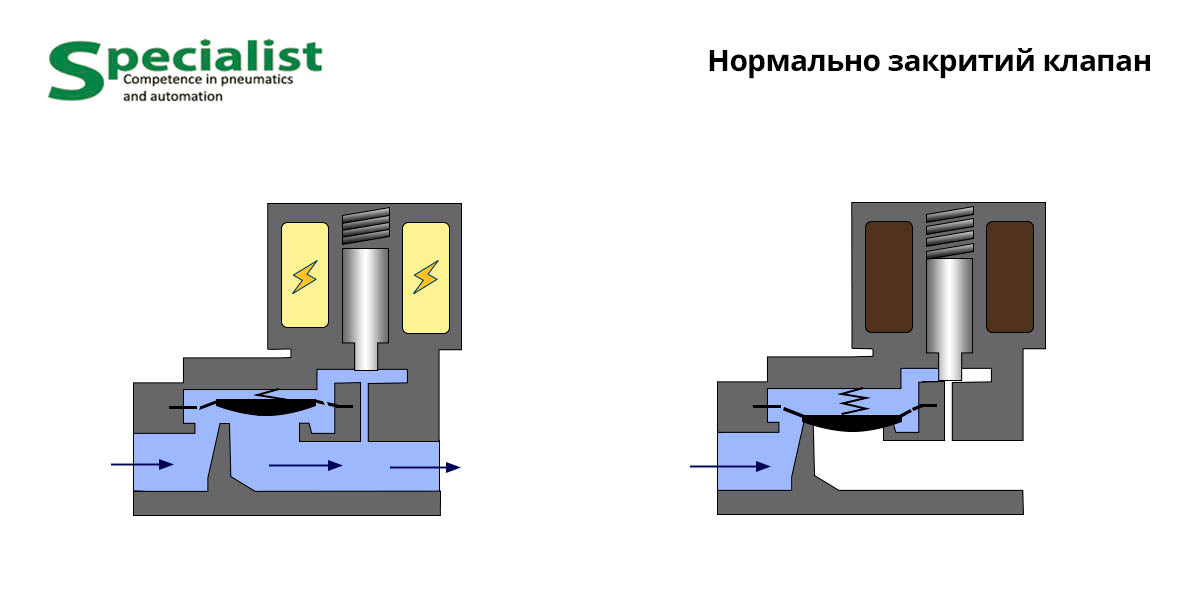
Electromagnetic water valve normally closed
Normally closed valves are marked with the abbreviations NC or N/C. This means that in the absence of electrical current, they block the water flow, and when voltage is applied, they allow the flow. This type of valve is usually preferred because it acts as a cutoff in case of power failure and, for example, prevents reverse flow from a tank or reservoir when there is no power and the pump is off. Thus, normally closed valves are used in reverse osmosis systems with a pump.

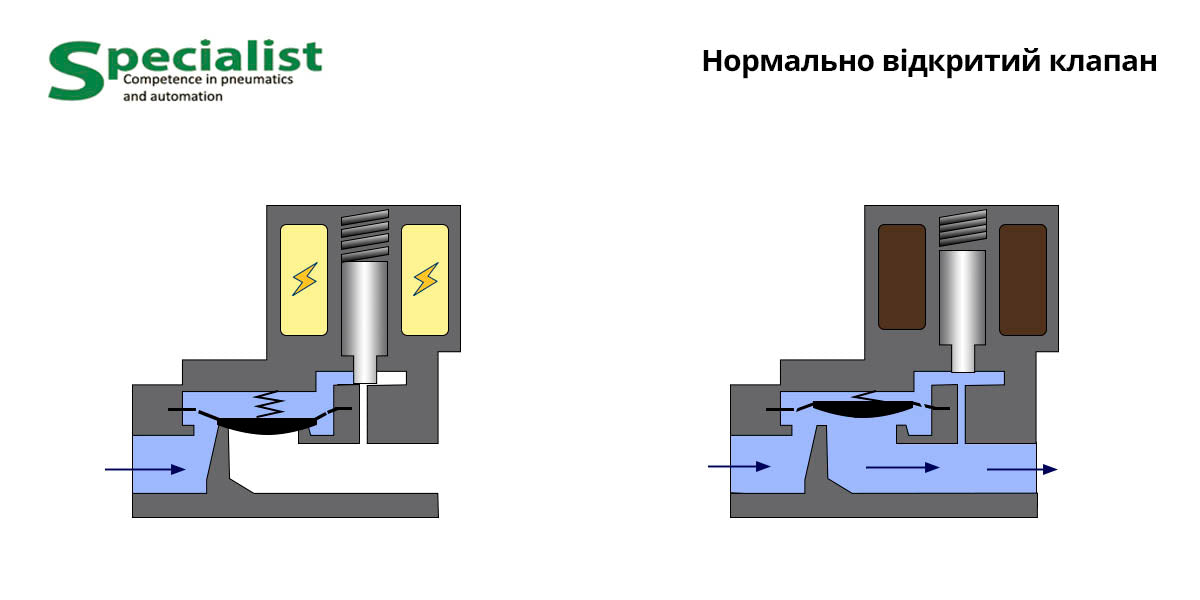
Electromagnetic water valve normally open
Normally open (NO, N/O) types remain in an open position in the absence of electrical current, and close when voltage is applied.

Electromagnetic water valves by operating principle
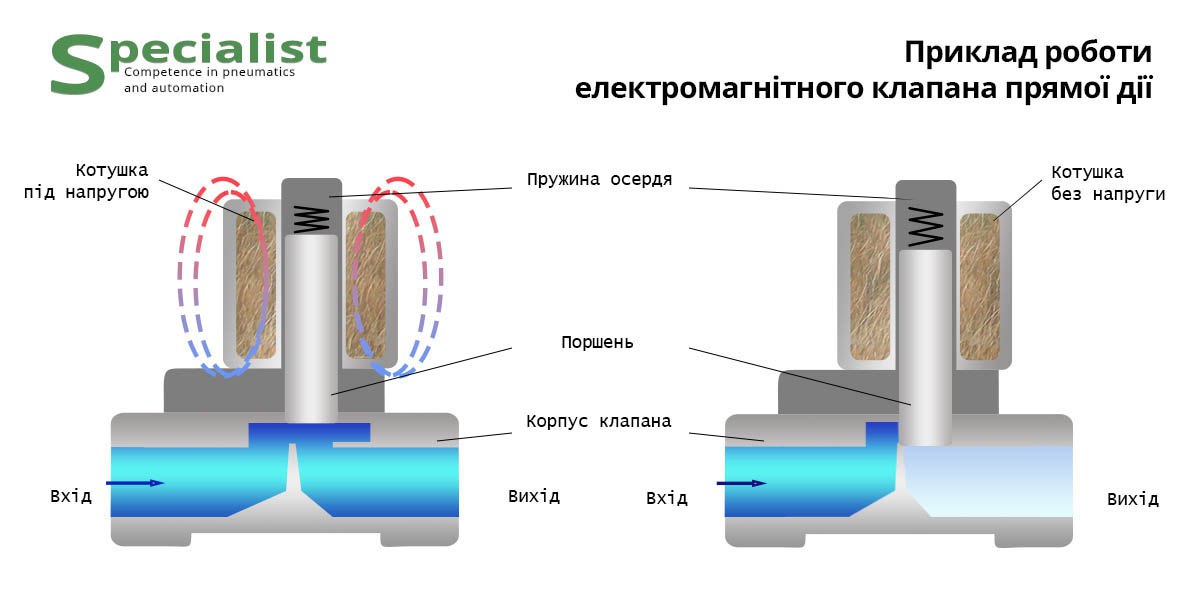
Direct acting electromagnetic valve
Directly controlled electro-valves are cheaper as they have the simplest internal structure. When power is applied to the electromagnetic coil, the created magnetic field moves the core, and with it, the valve that opens the water flow.

Typically, direct electro-magnetic control is characteristic only of small water valves.
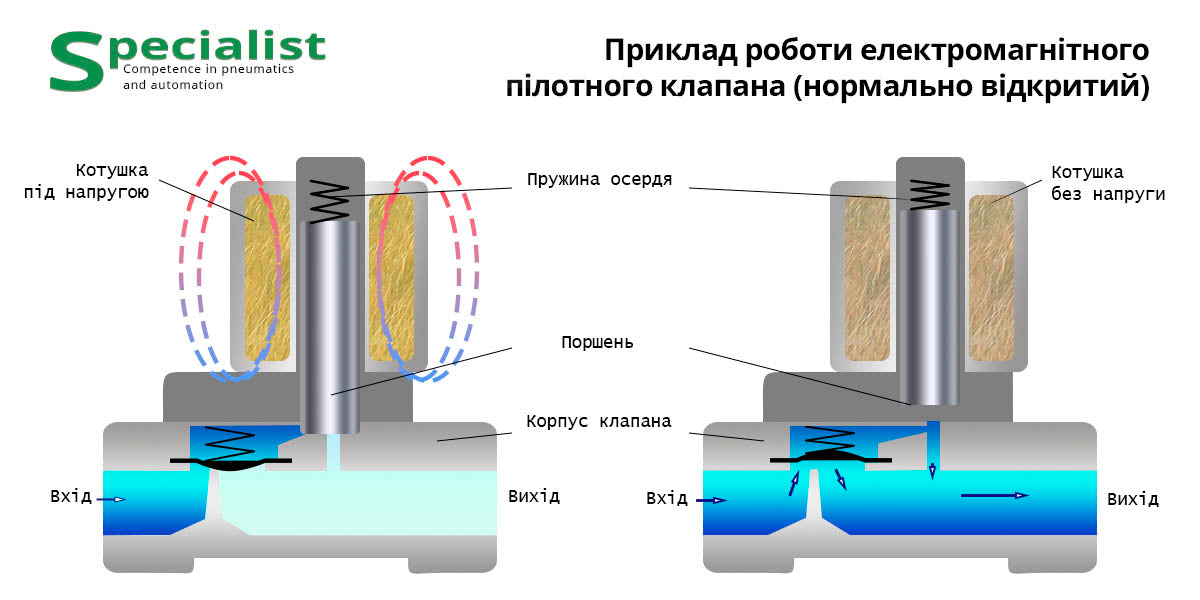
Indirect acting electromagnetic water valve with pilot control
Most valves from our catalogue are indirectly controlled electrically. Although this makes the structure more complicated and increases the cost of the electro-valve, they are energy-efficient — using a pilot for large DN allows for the use of low-power solenoids with low W/h consumption. Let's examine the operating principle using an example of a normally closed water valve with pilot control.

- Initially, the valve is closed, and the fluid flow is completely blocked
- When current is applied to the coil, the electromagnetic force opens the so-called "pilot valve", which means that the passage to the internal chamber becomes open (the main line is still closed at this point)
- As the pilot fills with water, the pressure in its chamber acts on the diaphragm, and as it moves, the main line valve opens, allowing the fluid to pass through the exit.
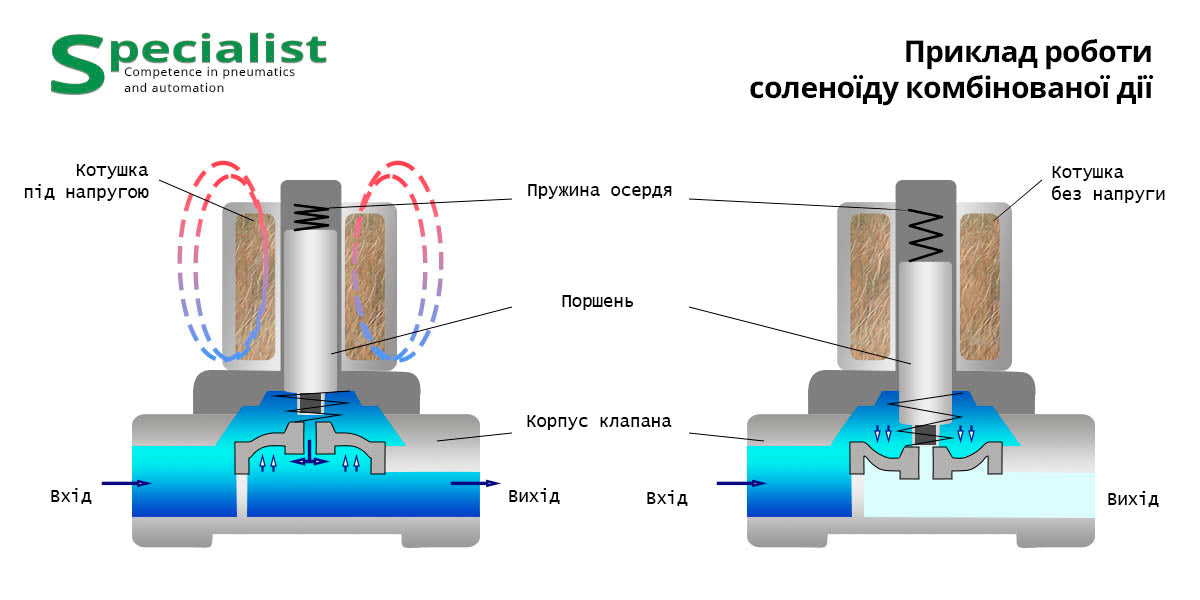
Solenoid for water with combined action and forced diaphragm lift

- Main principle: This type of solenoid uses a combination of mechanical and pilot elements to control the flow of media.
- Forced diaphragm lift: Unlike a conventional direct-acting valve, where the drive directly controls the valve, in a combined-action valve, the diaphragm is lifted forcibly. This can be achieved, for instance, by a pneumatic or hydraulic drive that receives a control signal and mechanically lifts the diaphragm.
- Pilot control: In addition to forced diaphragm lifting, the solenoid is also equipped with a pilot mechanism that can respond to pressure or flow changes in the system.
- Flow adjustment: The pilot mechanism helps adjust the forced diaphragm lift based on system conditions. If the pressure drops below a set level, the pilot mechanism can send a signal to the drive to lift the diaphragm and open the valve, allowing the media to pass. This enables the combined-action solenoid to adapt to different conditions and ensure stable system operation.
Types of electromagnetic coils for water solenoids
Electromagnetic coils usually have a plastic casing with protection. Water electromagnetic valve can be equipped with explosion-proof coils. The most important characteristics are the coil voltage:
- constant voltage - 12V and 24V. (DC12V, DC24V)
- alternative voltage - 220V. (AC220V)
Coils can operate with both alternating and direct currents.
How to choose an electromagnetic valve for water
Selection of an electromagnetic valve for water is usually based on several key parameters:
- Size of the solenoid: depending on water consumption and pipeline size, determine the required nominal diameter DN, thread size;
- Materials: for hot water pipes, select valves with chemically and temperature-resistant materials like bronze and stainless steel, with seals made of EDPM, POM, or PTFE. For drinking water and beverages, ensure the material does not release toxins nor encourage bacteria growth - leading materials are polymers and often, stainless steel.
- Type: make sure the normally closed type of valve suits you — if in doubt, consult our engineer.
- Voltage and signal type: Solenoids operate on direct (DC) or alternating current (AC). Clarify which voltage and power supply is compatible with your system (controller or control regulator, relay, etc.). If a valve with explosion-proof coil is needed, indicate this when ordering (price may be slightly higher).
- Frequency: When choosing, consider flow speed and pressure, solenoid opening or closing frequency. For high pressure and speed in industrial settings, a pneumatically driven valve might be a better option.
Examples of using electromagnetic valves (solenoid) for water
Electromagnetic valves for water use electricity to regulate the passage of working media through piping networks. They can be installed in various sectors, including industrial production, municipal services, and household use. Here are some application examples:
-
In industry:
- for water purification and preparation systems, water distribution;
- for bottling drinking water and beverages;
- for dosing in the automation of production processes;
-
For household:
- Water solenoid valve with flood sensor to protect homes and apartments from flooding — the sensor is installed on the floor near the pipeline and when water leaks onto it, the solenoid shuts off the pipeline, stopping water supply;
- Solenoid valves in reverse osmosis systems with a pump are needed to manage water pumping — to open the pipeline during pump operation and close it afterward to prevent reverse flow under pressure;
- Solenoid valves with a timer for irrigation of the garden or lawn can be programmed and automate irrigation;
- Water solenoid valves are found inside many household appliances: washing machines, semi-automatic dishwashers, coffee machines, etc.
Request a variant
Fill in the form and we will get back to you regarding this variant.