
Home Air Compressors
Buy a Home Compressor: How to Choose the Best Option for You
In today's household, a compressor becomes an indispensable assistant for many tasks: from inflating tires and mattresses to operating pneumatic tools. The choice of low-power screw compressors, which combine compactness, efficiency, and reliability, becomes particularly relevant. In this article, we will examine the key criteria for choosing a home compressor, paying particular attention to screw models and air preparation systems.
Why is a Screw Compressor Better than a Piston Compressor?
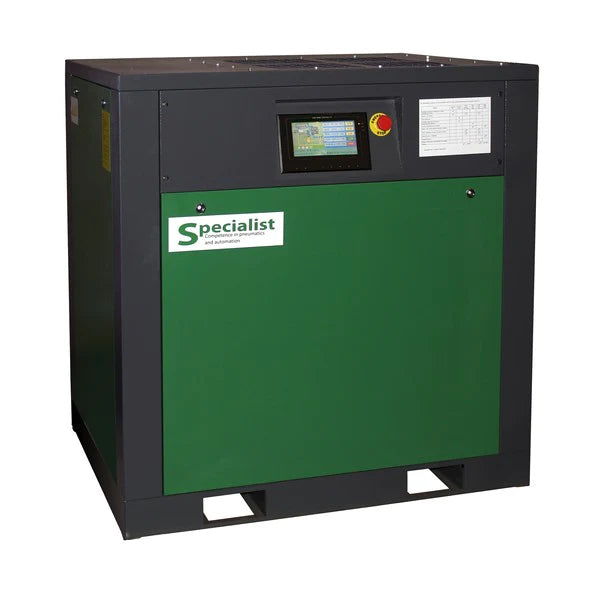
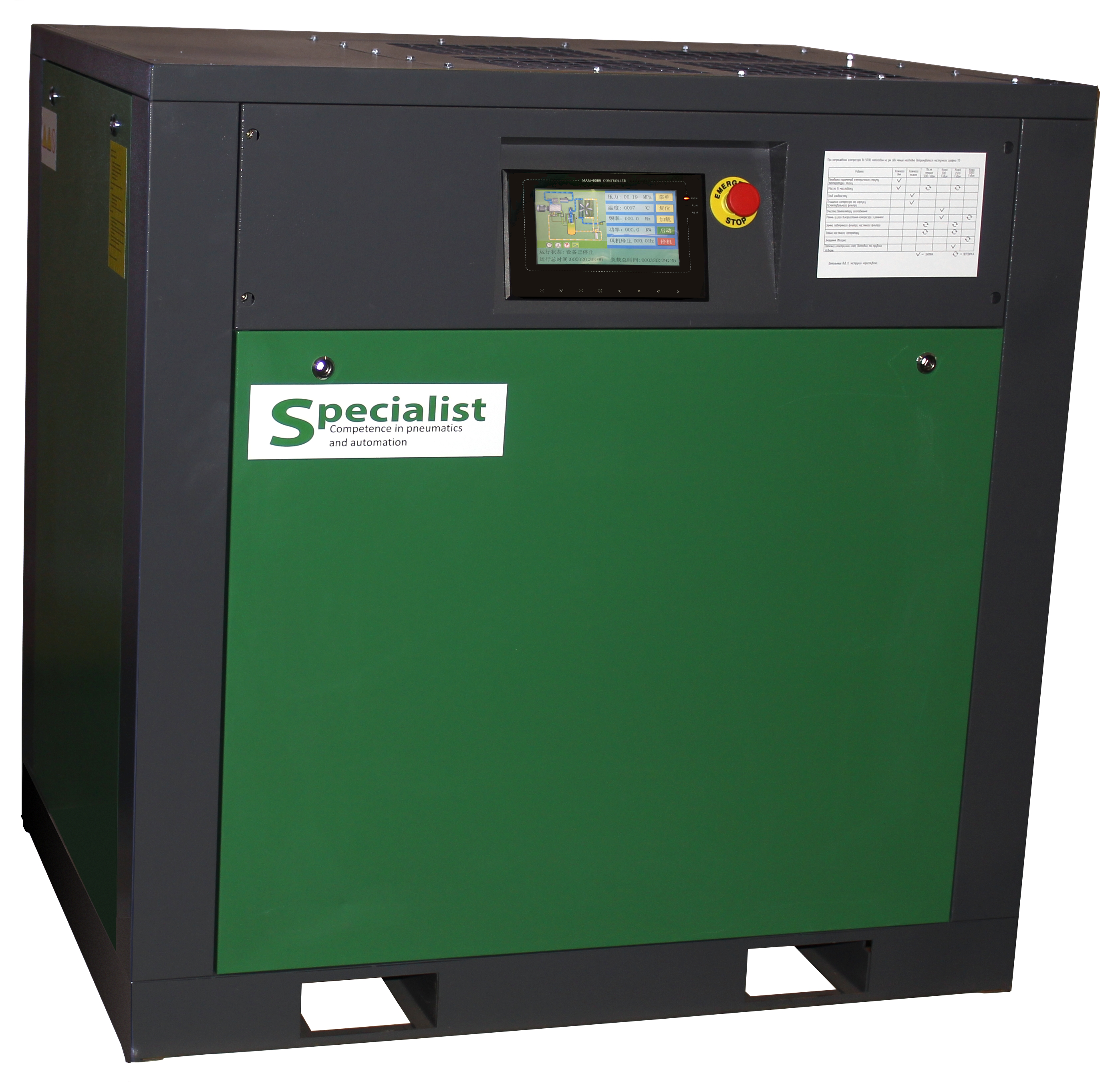
Traditionally, for home use, piston compressors were chosen due to their affordable price. However, modern technologies have made screw compressors more accessible, and they have a number of significant advantages and a simple design that makes them easy to maintain:
- Continuous operation capability — unlike piston models, which require periodic breaks
- Significantly lower noise level — comfortable to use even in residential areas
- High efficiency — more effective conversion of electricity into compressed air
- Increased service life — fewer wearing parts
- Stable pressure — no pulsations
Compressor SCC-CM2.2-03: The Optimal Solution for Home and Small Workshops
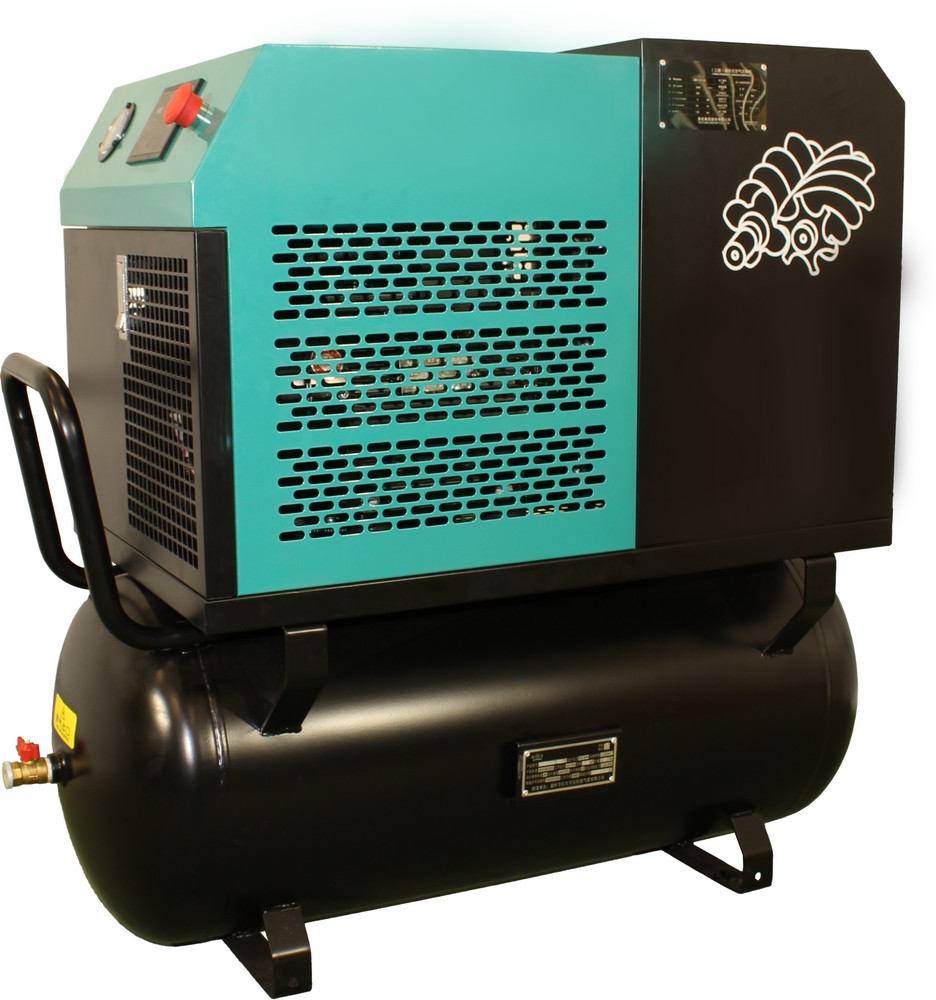
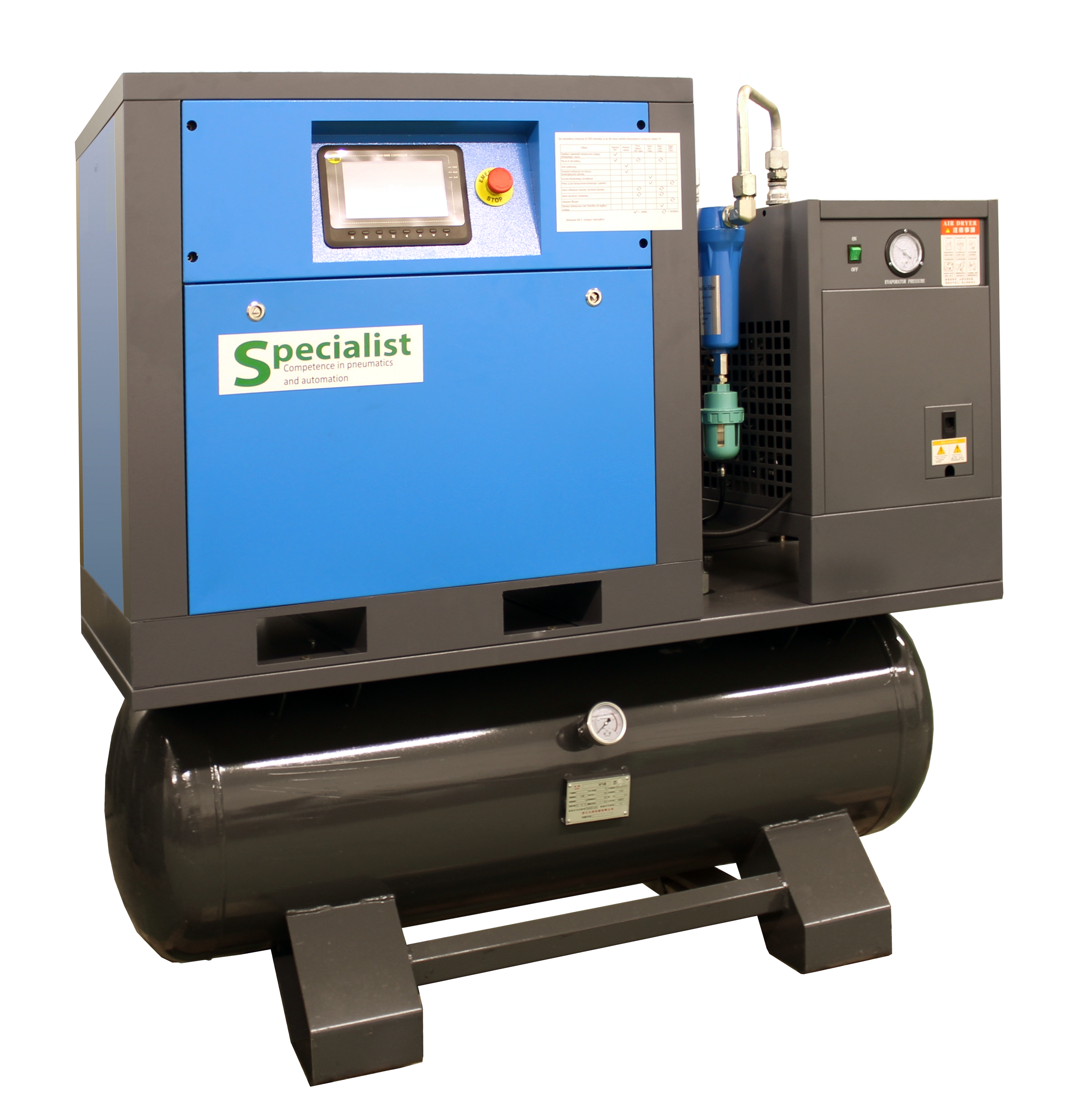
An excellent example of a modern screw compressor for home use is the SCC-CM2.2-03 Air Compressor 300 l/min. This setup is a ready-to-use mobile solution with a 60-litre receiver capable of creating pressure up to 8 atmospheres.
Main characteristics of SCC-CM2.2-03:
- Performance: 0.3 m³/min (300 l/min)
- Maximum pressure: 8 bar
- Motor power: 2.2 kW
- Power supply: 1 phase, 220 V (standard home socket)
- Receiver volume: 60 litres
- Dimensions: 990×440×960 mm
- Motor type: asynchronous on vibration-dampening mounts
- Drive type: direct (via elastic coupling)
- Net weight: 110 kg
- Warranty: 12 months
Design Features and Advantages
This compressor is designed considering the needs of both home craftsmen and small productions and features a simple design and is easy to maintain:
- Direct drive via an elastic coupling provides better efficiency compared to belt drive and greatly simplifies maintenance — no need to regularly tighten belts and change pulleys.
- Metal pipelines instead of rubber hoses increase the durability and reliability of the system.
-
Comprehensive filtration system:
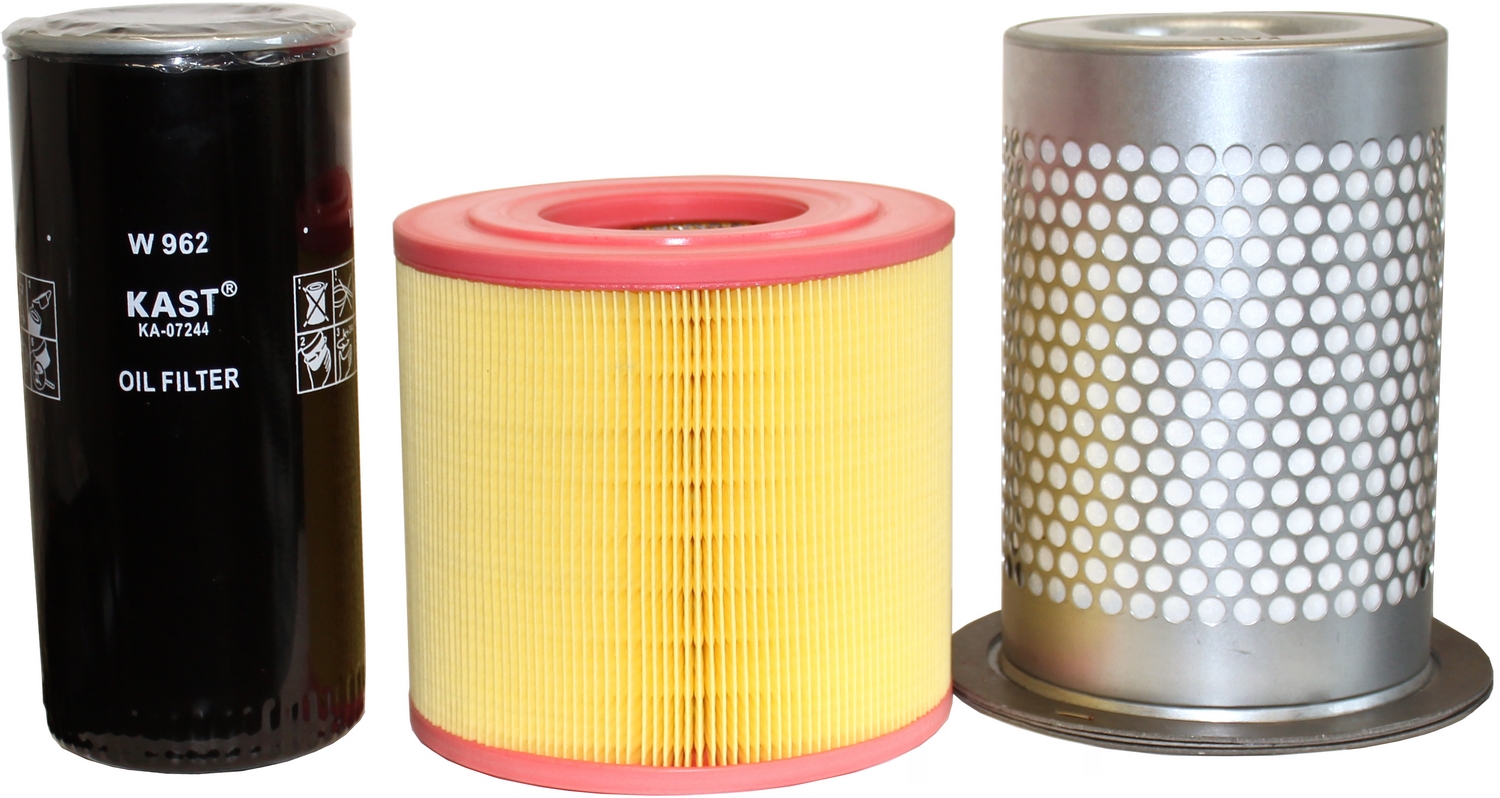
- Air filter at the inlet to protect against dust
- Oil filter to clean compressor oil
- Air-oil separator to obtain clean compressed air
- Effective cooling thanks to two fans: one for the entire unit and an additional one on the engine.
- Intelligent control with a controller featuring an LCD screen and touch buttons.
-
Mobility — the compressor is equipped with a handle and wheels, making it easy to move.
The Importance of Air Preparation Units and Pressure Regulators
The quality of compressed air directly affects the efficiency and longevity of pneumatic tools. That is why it is important to pay attention to air preparation systems.
Why are Air Preparation Units Needed?
- Moisture and oil removal — even the best compressor delivers air with some moisture content and oil mist, and other impurities, which can damage pneumatic tools or affect work quality (especially in painting).
- Extending tool life — clean air without abrasive particles greatly increases the lifespan of pneumatic equipment.
- Improving work quality — especially important in painting and sandblasting work.
Types of Air Preparation Units:
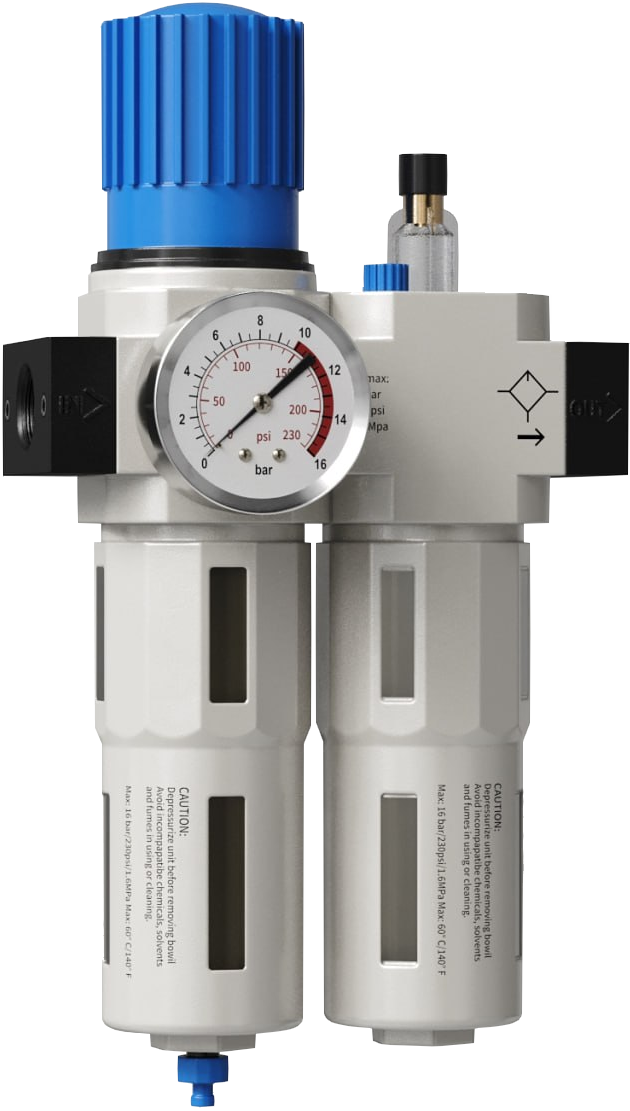
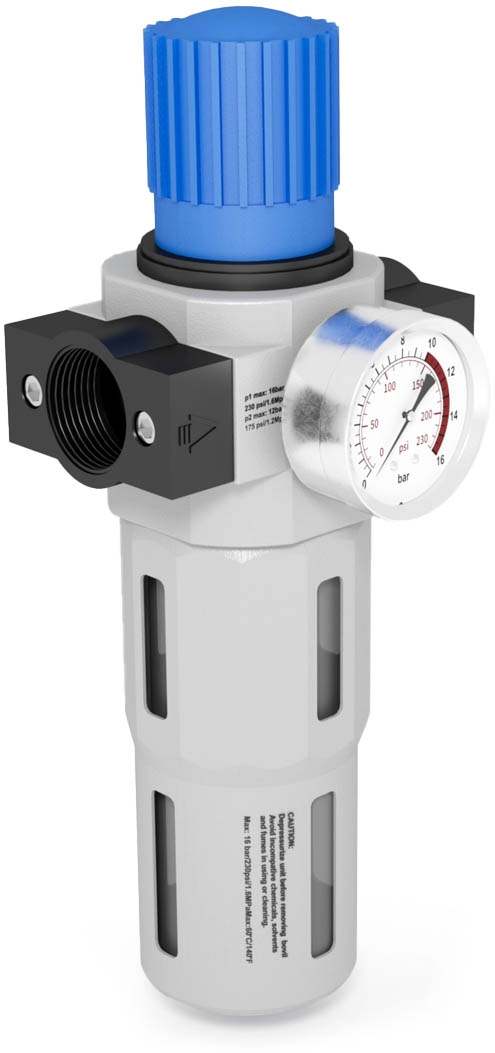
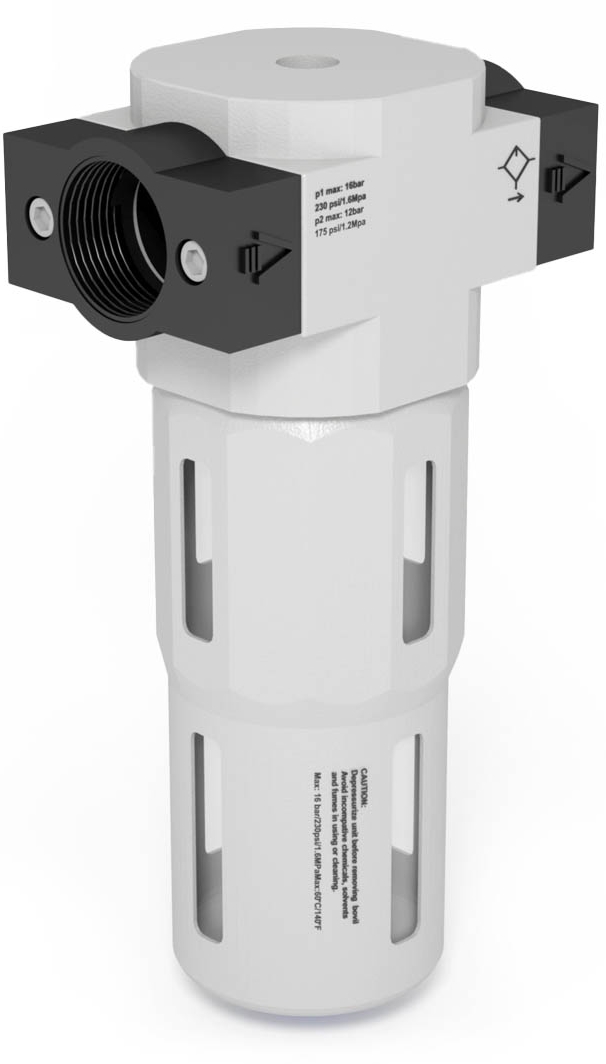
- Moisture separator filters — remove condensate and large particles
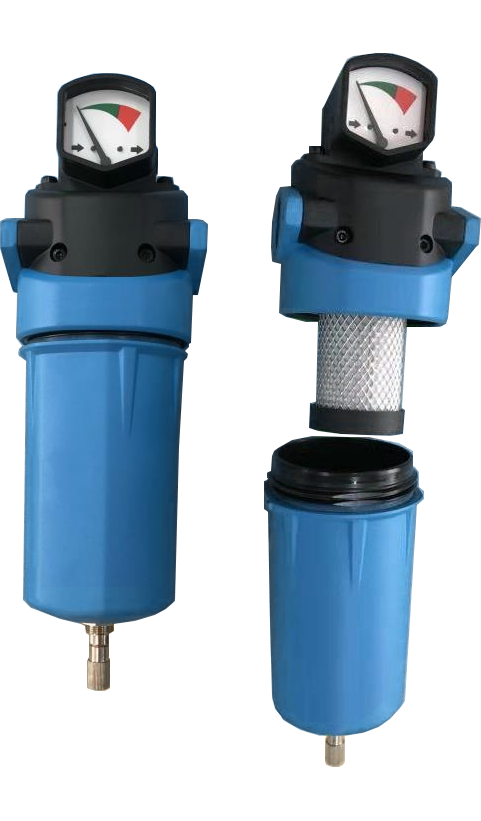
- Fine filters — trap the smallest particles and oil mist
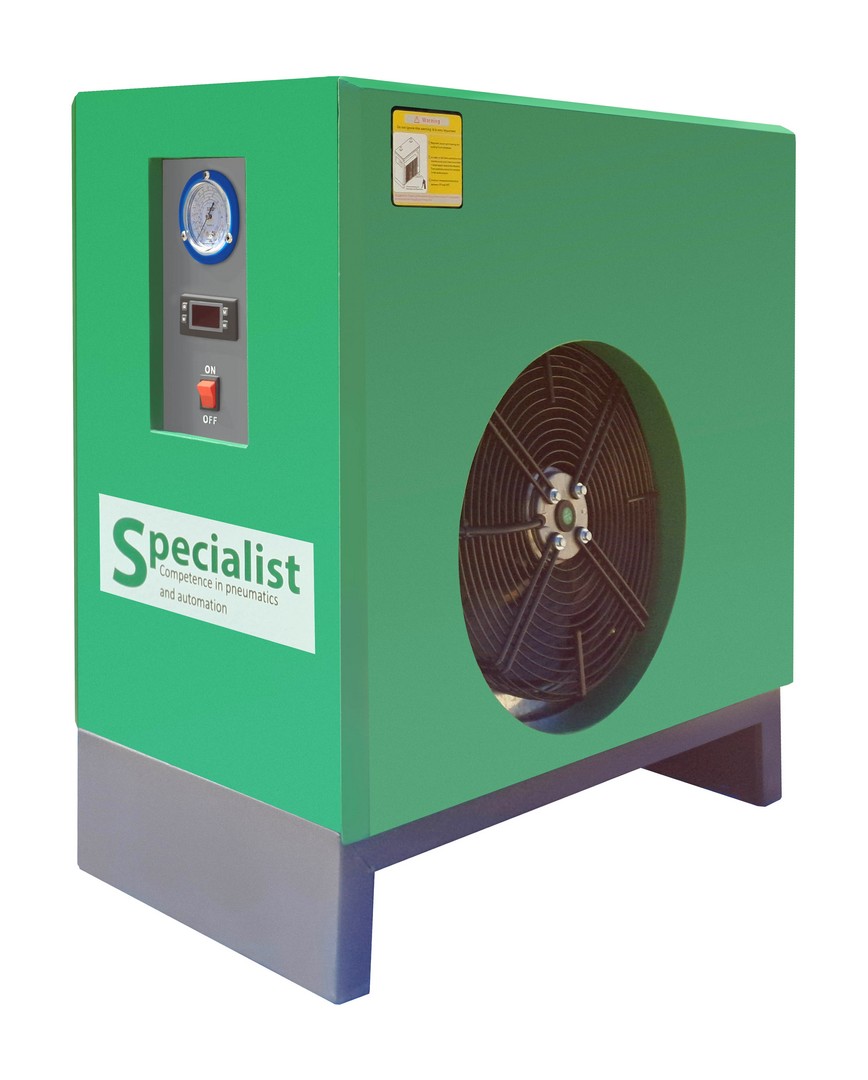
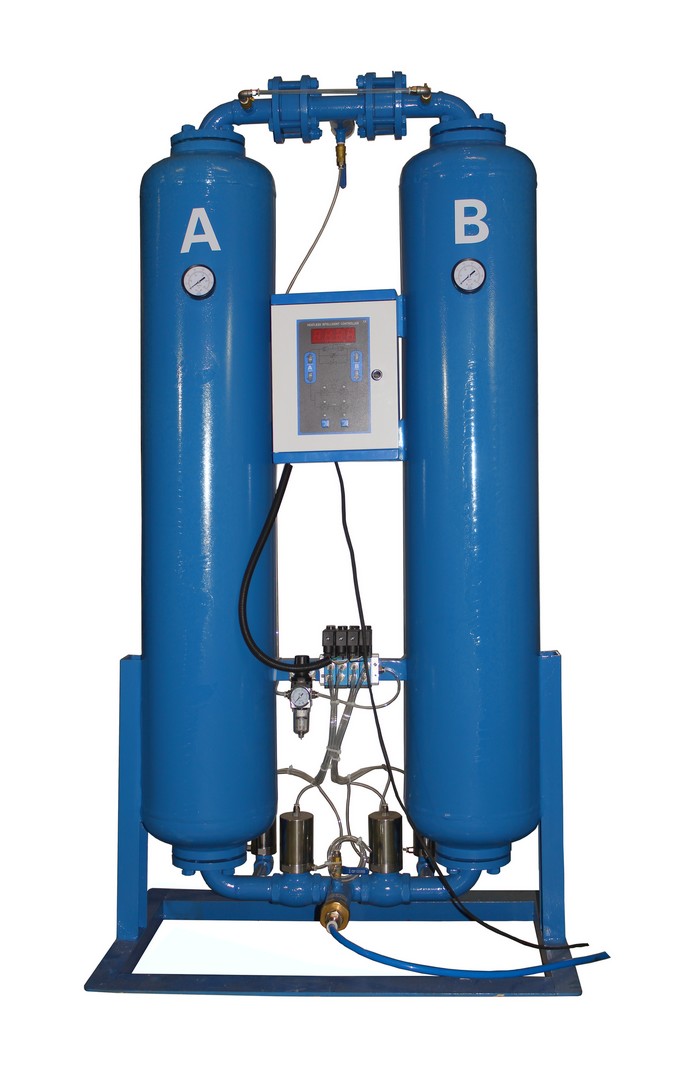
- Air dryers — refrigerated or adsorption type, maximize the dew point reduction of compressed air
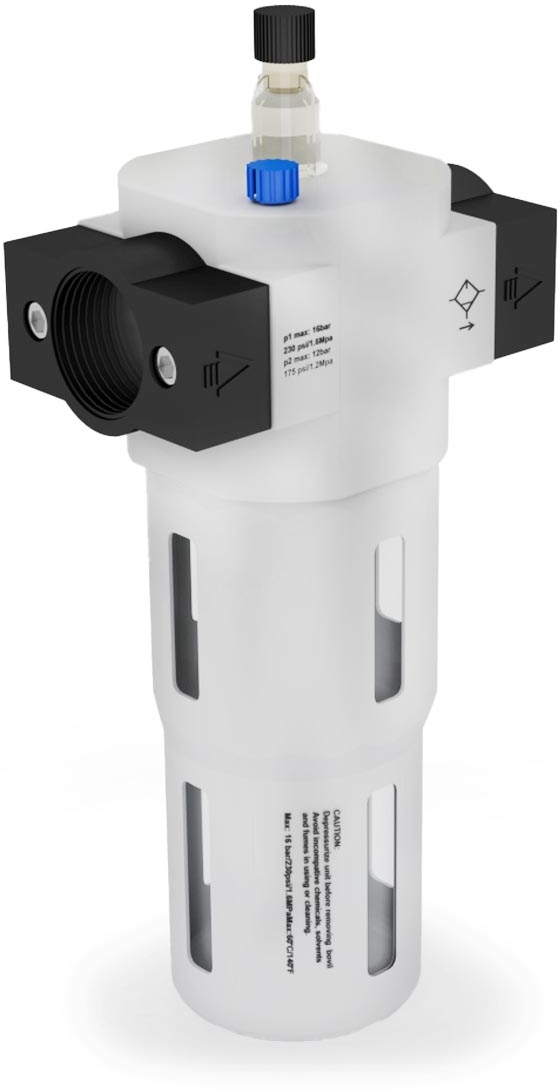
- Lubricators — add oil mist if needed for certain types of tools
Pressure Regulators and Their Importance
The SCC-CM2.2-03 compressor with direct drive provides pressure up to 8 bar; however, different tools and tasks require different pressures:
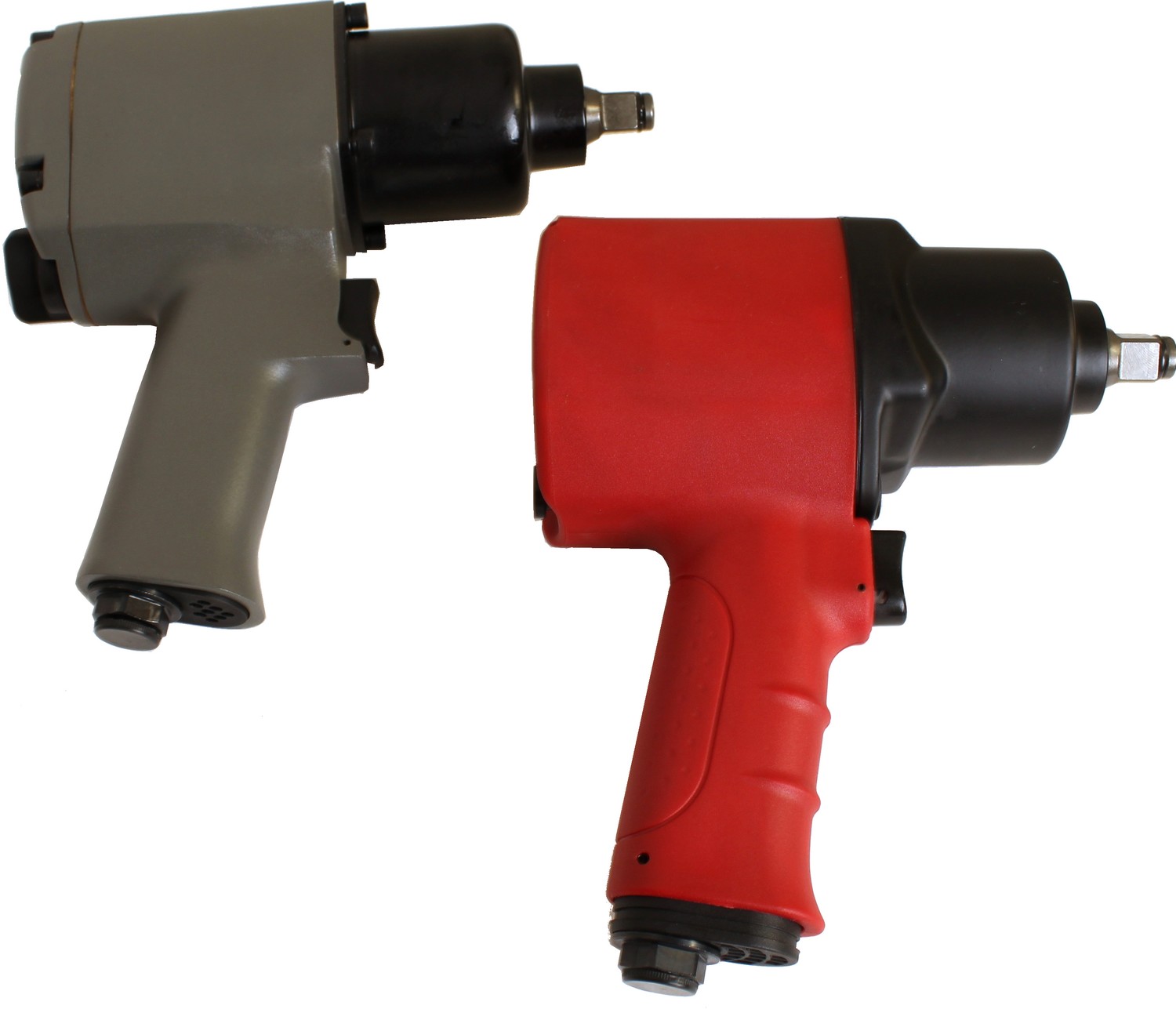
- Air impact wrenches: 6-7 bar
- Spray guns: 2-4 bar
- General purpose pneumatic tools: 4-6 bar
- Sandblasting machines: 5-7 bar
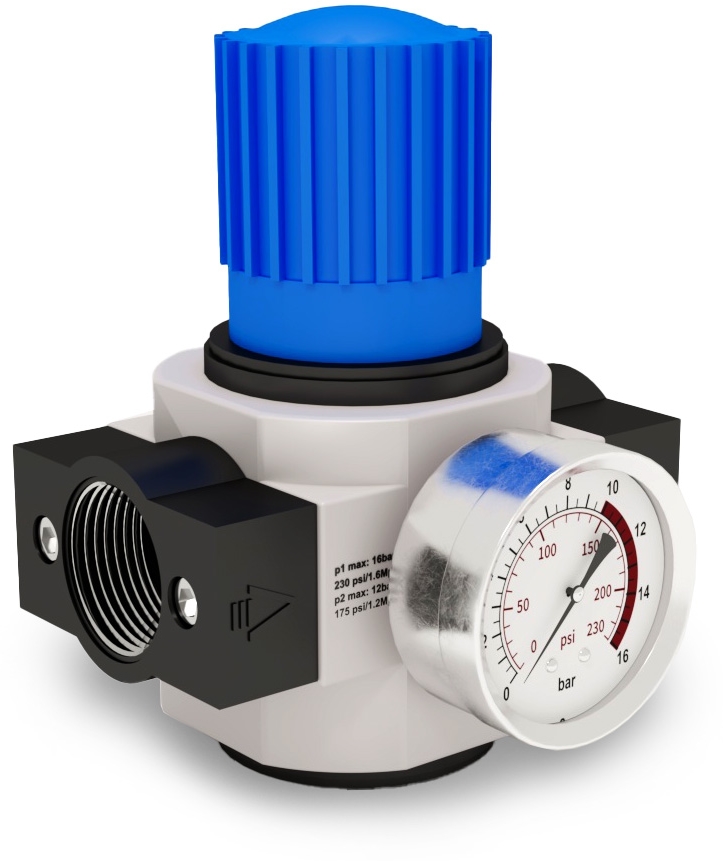
A pressure regulator allows you to accurately adjust the required pressure for each specific application, which:
- Saves energy at home and in productions
- Increases the accuracy of tool operation
- Prevents premature equipment wear
- Reduces air consumption
Application of SCC-CM2.2-03 Screw Compressor in Domestic Use
Due to its characteristics, this compressor is ideal for:
- Garage work: tire fitting, painting, cleaning parts
- Carpentry workshops: pneumatic tools, painting products
- Home repairs: finishing work, installation
- Hobbies and creativity: airbrushing, modeling
Power supply from a standard 220 V network makes it a universal solution, not requiring special electrical connections.
Related Accessories and Components
For optimal operation of the SCC-CM2.2-03 compressor, it is recommended to additionally purchase:
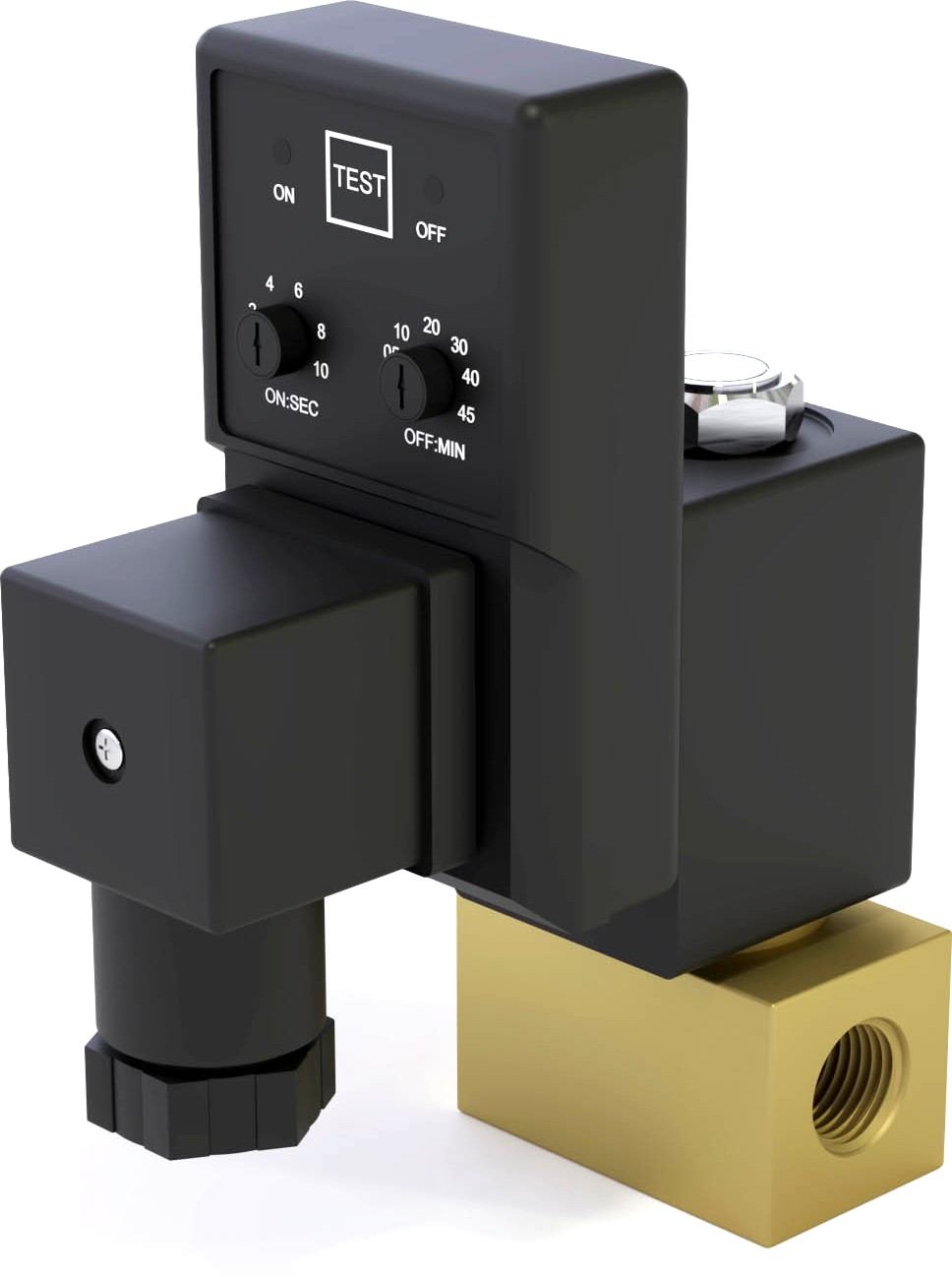
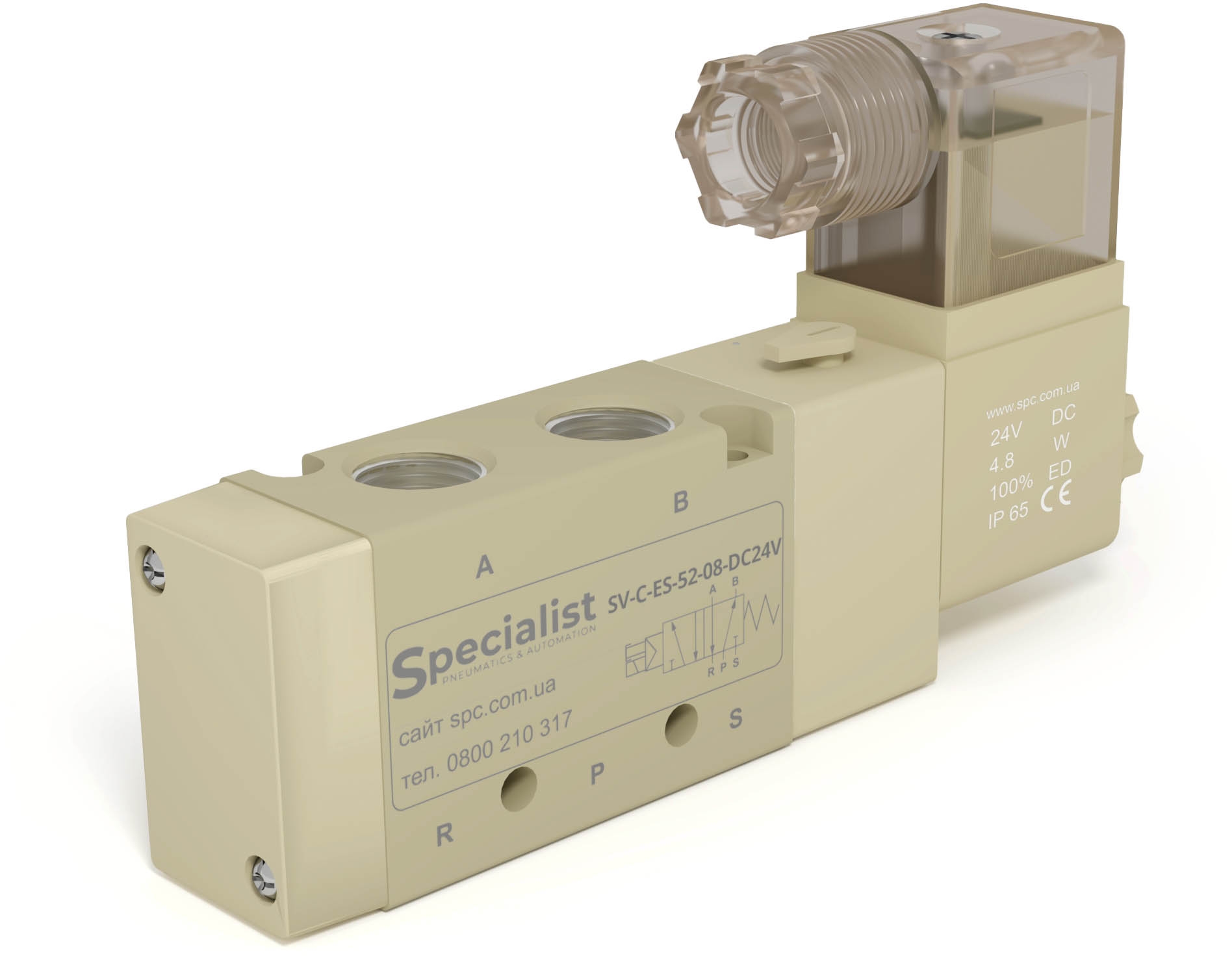
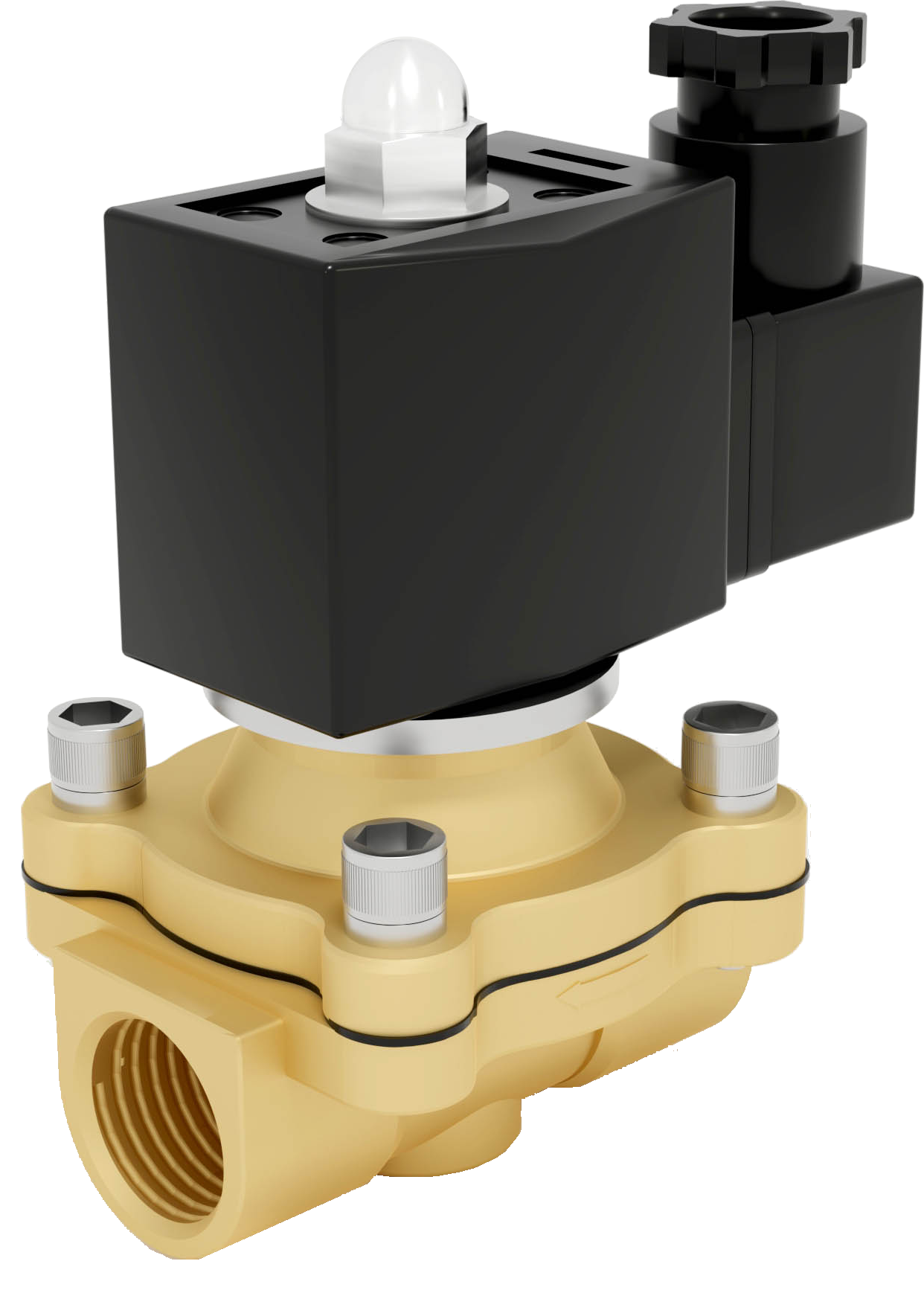
- Automatic condensate drain valve from the SV-FDA series with a built-in pre-filter, protecting against rust particles.
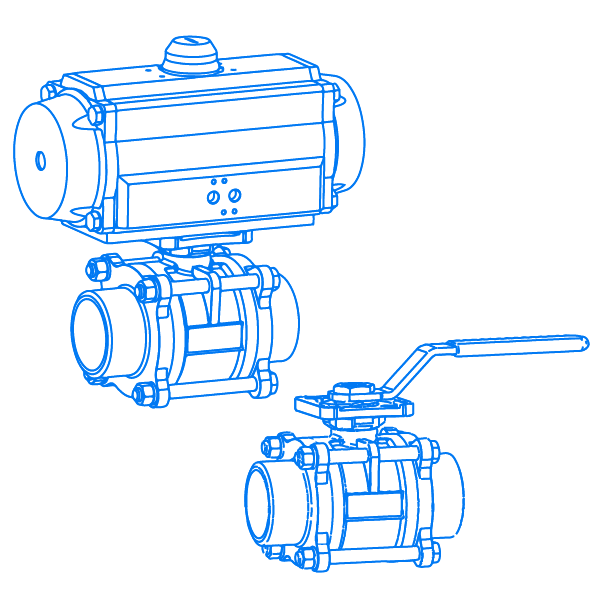
- Ball valves for convenient compressor system installation.
- Specialized compressor oil, ensuring optimal operation and extended service life.
-
Air preparation units:
- Filters of various filtration grades
- Refrigerated or adsorption air dryers
- Pressure regulators for precise adjustment to specific tasks.
What to Consider When Choosing a Home Compressor
- Performance — for home use, 200-300 l/min is usually sufficient.
- Compressor type — for continuous work, it is better to choose a screw type like SCC-CM2.2-03.
- Receiver volume — larger volume (from 50 l) provides more stable pressure and allows the compressor to turn on less frequently.
- Vibration — especially important for use in residential spaces or attached garages.
- Power supply — more convenient from a standard 220 V network.
- Mobility — having wheels and a handle allows for easy compressor movement.
- Filtration system — a high-quality system will prolong the life of both the compressor and the tools.
Conclusion
A low-power screw compressor, such as SCC-CM2.2-03, with 220 V power supply, with a performance of 300 l/min, is the optimal solution for home use and small workshops. It combines the advantages of professional equipment (possibility for continuous operation, high efficiency) with compactness and the ability to power from a standard electrical network. These air compressors have wheels for easy transport, a large receiver volume, and are suitable for many tasks.
When choosing a compressor, it is important to consider not only its basic characteristics but also the possibility of expanding the system with air preparation units and pressure regulators, which will significantly improve work quality and extend the service life of both the compressor and the pneumatic equipment connected to it.
The SCC-CM2.2-03 compressor, available from warehouses in Lviv and Kamianske (Dnipropetrovsk region), is the ideal choice for those who value quality, reliability and efficiency of their equipment.
Which Compressor is Best for Home Use?
A low-power screw compressor, such as the SCC-CM2.2-03 with a performance of 300 l/min, is an excellent choice. It offers significant advantages over piston models: it can operate continuously, produces less vibration, has high efficiency, and is powered by a standard 220V network. Our online store maintains a stock of spare parts and components for the repair and maintenance of all air compressors.
What to Know When Buying a Compressor?
- Performance — for home, 200-300 l/min is usually sufficient.
- Compressor type — screw is better than piston for continuous use.
- Receiver volume — from 50 l for stable pressure.
- Power supply — more convenient from a standard 220V network.
- Mobility — having wheels and handle for easy movement.
- Filtration system — important for the longevity of both the compressor and connected tools.
- Need for air preparation units and pressure regulators — to ensure clean air and precise pressure settings.
What Can a Compressor Be Used for in Everyday Life?
- Garage work: tire fitting, painting, cleaning parts.
- Carpentry work: using pneumatic tools, painting products.
- Home renovation: finishing work, installation.
- Hobbies and creativity: airbrushing, modeling.
- Working with various pneumatic tools: air impact wrenches, spray guns, sanders.