
Compressors for PET Bottle Blowing
Compressor for Blowing PET Bottles: How to Choose the Best Option
In modern PET packaging production, the compressor plays a key role. The right choice of compressor directly affects the quality of PET bottle blowing, production line efficiency, and the economic viability of the entire enterprise. In this article, we examine the specifics of selecting compressors for PET bottle blowing, compare different types of equipment, and provide practical recommendations for manufacturers.
The Two Main Types of Compressors for Blowing PET Bottles
Today, PET packaging production primarily employs two types of compressor systems, differentiated by operating pressure:
1. High-Pressure Compressors (16 bar and above)
High-pressure compressors are the standard in industrial PET bottle production. They provide pressure from 16 bar and above (in some cases up to 30-40 bar), which allows achieving the following advantages:
- High Blowing Speed – bottle formation occurs faster, increasing the line's productivity
- Enhanced Detailing – high pressure allows for more accurate reproduction of complex bottle design elements
- Compatibility with Thick-Walled Products – producing high-strength bottles requires high pressure
- Quality Stability – even distribution of material in the mould
-
Versatility – compatibility with various preform types and forms
However, high-pressure compressors also have their drawbacks:
- Higher equipment cost
- Increased energy consumption
- Complicated technical maintenance
- Elevated noise levels
2. Medium-Pressure Compressors (around 10 bar)
Medium-pressure compressors operating in the range of about 10 bar are an alternative option for certain types of production:
- Economy – lower electricity expenses and reduced equipment cost
- Simplified Servicing and Cost Reduction – simpler design eases regular maintenance
- Reduced Noise Level – operating at lower pressure usually produces less noise
- Sufficient Output for small and medium-sized productions producing standard packaging.
Drawbacks of medium-pressure compressors:
- Limited capabilities with complex shapes
- Lower blowing speed, potentially reducing productivity
- Not suitable for producing certain types of especially durable packaging
Compressor Types by Design
Apart from classification by pressure, compressors for PET bottle blowing vary in design characteristics. Here are the main types:
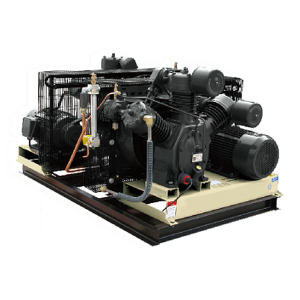
Type No.1: High-Pressure Piston Compressors
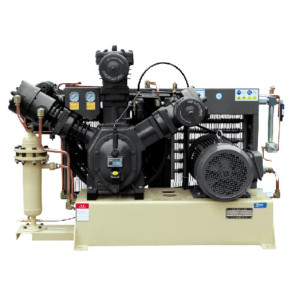
An effective solution for PET packaging production is the two-stage piston compressor. Consider, for example, the model SSC-PS-15-30 by Specialist:
Features of the SSC-PS-15-30:
- Two-stage high-pressure piston compressor
- Two 3-cylinder compressor heads
- Performance: up to 1100 l/min
- Maximum pressure: 30 bar
- Two asynchronous motors at 760 rpm
- Total power: 15 kW
- Belt drive
- 380 Volt power supply
The operating principle of this compressor involves two-stage compression of atmospheric air to 30 atmospheres. The lubrication system significantly reduces friction and extends the lifespan of the compressor block.
Advantages of High-Pressure Piston Compressors:
- Capability of creating very high pressure (up to 30-40 bar)
- Reliable construction with proper maintenance
- Repairability
- Relatively low cost of spare parts
Drawbacks:
- High noise and vibration levels
- Large size and weight
- Regular technical maintenance required
- Pulsating airflow
You can also order spare parts and the compressor by indicating your requirements, and our managers will be happy to assist you in completing the form.
Type No.2: Screw Compressors for Blowing Bottles
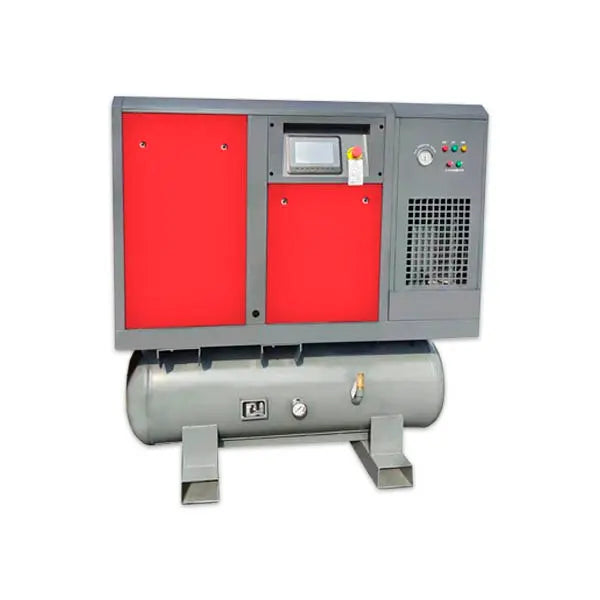
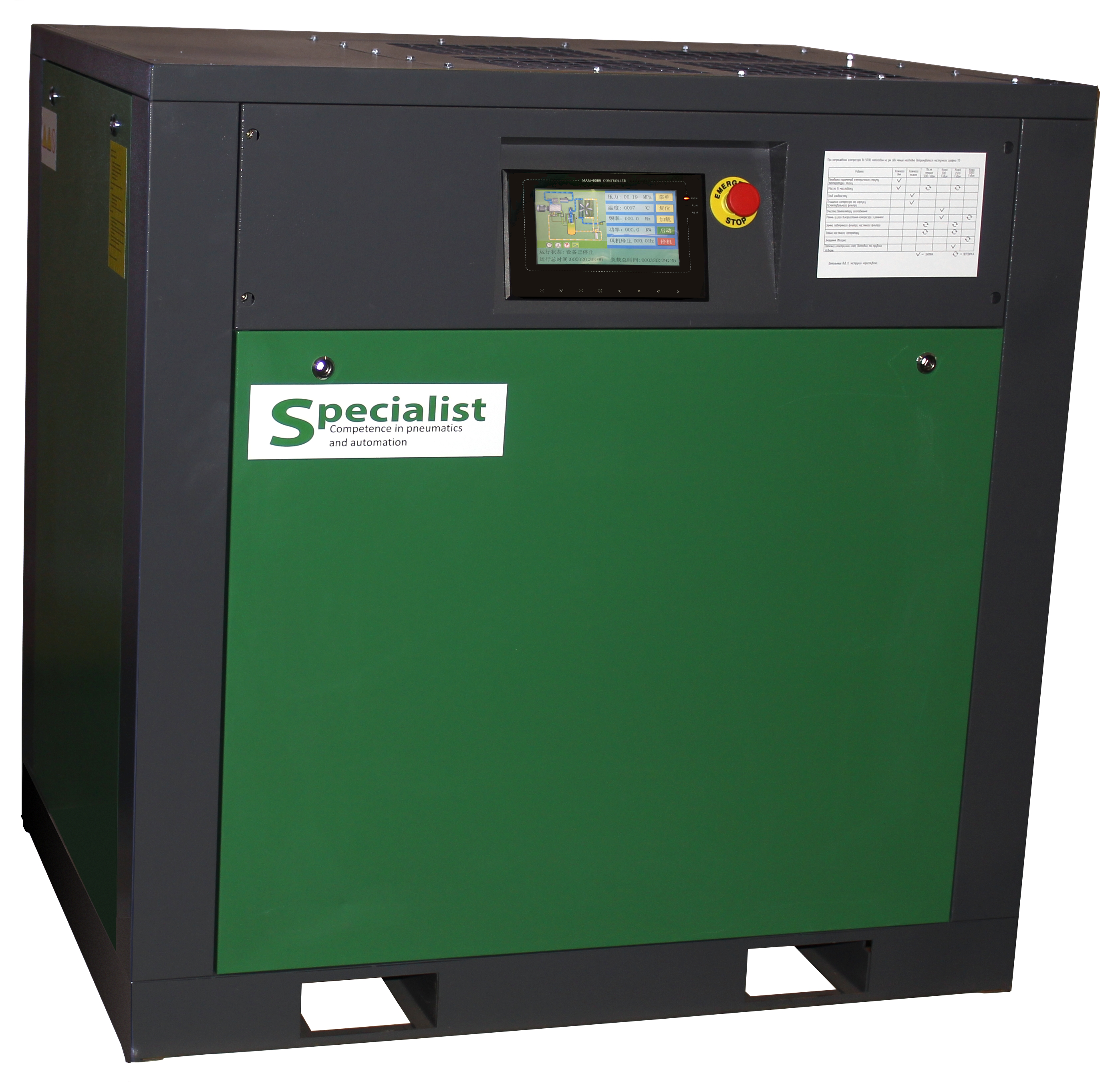
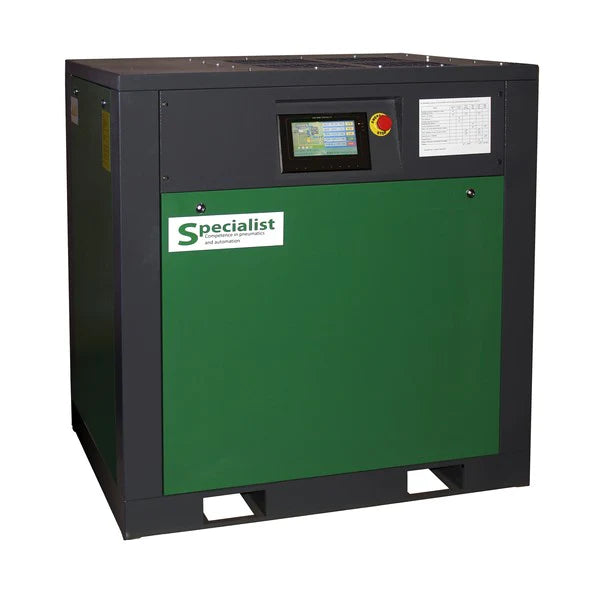
An alternative to piston compressors is screw systems, which are becoming increasingly popular in the PET packaging industry. Consider the 2024 novelty, one of the world's most efficient – the SCC-ZAY-30-16BAR model by Specialist:
Features of the SCC-ZAY-30-16BAR:
- Single screw oil-injected compressor
- Adjustable pressure: from 5 to 16 bar (find information on how to change the pressure on our YouTube channel)
- Power: 22 kW
- Performance at various pressures:
- 0.7 MPA (7 bar): 3800 l/min
- 0.8 MPA (8 bar): 3600 l/min
- 1.0 MPA (10 bar): 3200 l/min
- 1.2 MPA (12 bar): 2900 l/min
- 1.6 MPA (16 bar): 1800 l/min
- Frequency drive with permanent magnet synchronous motor
- Robust direct drive (no couplings or belts)
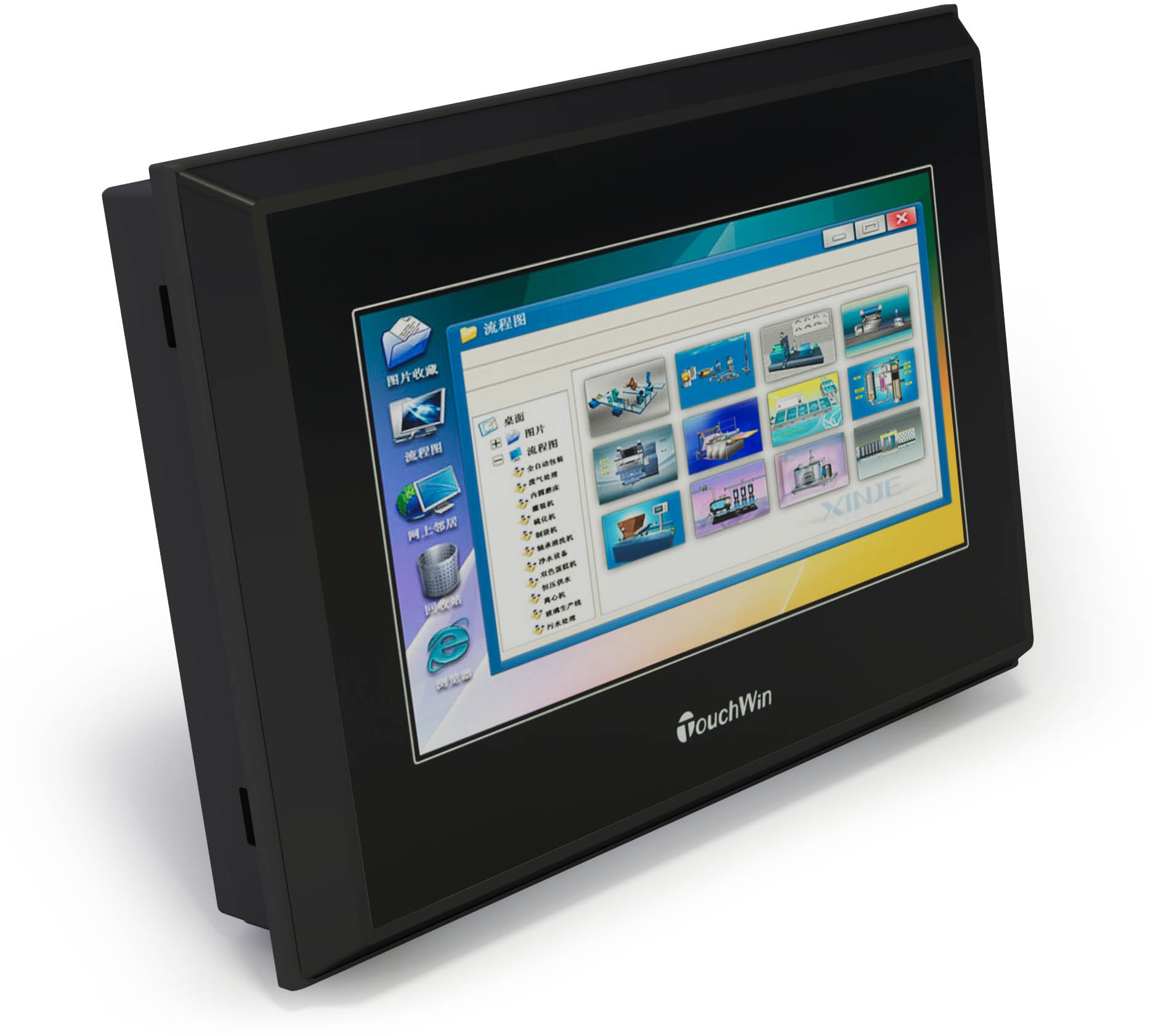
- Controller with touchscreen and Wi-Fi connectivity
- Power supply: 3-phase 380 V, 50 Hz
Design Features:
- Screw pair (German rotor manufacturing technology)
- Air and oil separator (separator)
- Gravity oil circuit with metal pipelines
- Cooling radiator with a large fan
- Built-in electrical cabinet with frequency converter
Advantages of Screw Compressors:
- Smooth pressure adjustment over a wide range
- High energy efficiency thanks to the frequency drive
- Even airflow without pulsations
- Low noise and vibration levels
- Increased service life due to better oil and air filtration
- Smaller dimensions at equivalent performance
- Easy control and monitoring through a touchscreen
- Remote control capabilities with Wi-Fi
Drawbacks:
- Higher initial cost
- More complex oil filtration system
- Need for specialized servicing
You can also order parts and the compressor for PET bottle blowing, specifying your requirements, necessary power, the desired energy-saving class, and your equipment.
Criteria for Selecting a Compressor for Blowing Plastic Bottles
When choosing compressor equipment for PET bottle production, consider the following parameters as well as information about your mechanisms:
1. Required Pressure for Blowing PET Bottles.
Determine the pressure needed for your specific tasks, as this will determine the compressor:
- Standard thin-walled small-volume bottles may require a pressure of 10 bar
- For bottles with complex shapes, large volume, or increased strength, compressors with pressures from 16 bar and above are recommended
2. Performance
The calculation of the necessary compressor performance for blowing PET bottles depends on:
- The number of blowing forms in the machine
- The volume of preforms and finished products
- Production cycle (machine cycle)
- Required product output per hour
For example, the SSC-PS-15-30 compressor with a performance of 1100 l/min is suitable for a medium-power line, while the SCC-ZAY-30-16BAR model with a performance of up to 3800 l/min (at 7 bar) can support larger production.
3. Energy Efficiency
Given that compressor equipment is one of the most energy-consuming elements of production, pay attention to:
- Specific energy consumption (kW per m³/min of produced air)
- Availability of frequency regulation (as in the Specialist SCC-ZAY-30-16BAR model)
- Drive system efficiency (direct drive is more efficient than belt)
4. Reliability and Durability
Factors affecting compressor reliability:
- Quality of components and materials
- Efficacy of the cooling system
- Overload and overheat protection system
- Quality of lubrication and filtration
5. Ease of Control and Maintenance
Modern equipment should have:
- User-friendly interface (e.g., touchscreen in the SCC-ZAY-30-16BAR)
- Maintenance notification system
- Remote monitoring capability (Wi-Fi connectivity)
- Availability of spare parts and consumables
Comparison of Piston and Screw Compressors for Blowing PET Bottles
Recommendations for Selecting a Compressor for Different Business Types
For Small Productions (up to 500 bottles per hour):
- A medium-pressure piston compressor (10 bar) can be an optimal choice due to low initial cost
- For non-standard form production, a lower productivity high-pressure compressor may be required
For Medium Productions (500-2000 bottles per hour):
- A high-pressure piston compressor like the SSC-PS-15-30 provides the necessary pressure at moderate expenses
- A screw compressor with adjustable pressure can be a more energy-efficient solution under uneven load
For Large Productions (over 2000 bottles per hour):
- A high-pressure screw compressor like the SCC-ZAY-30-16BAR with frequency regulation ensures optimal productivity and energy efficiency
- Very large productions may require multiple compressors operating in cascade
Conclusion
Selecting a compressor for PET bottle blowing is a significant strategic decision that directly impacts product quality, productivity, and the company's economic efficiency. The current market offers two main pressure-based solutions (about 10 bar and from 16 bar) and two main designs (piston and screw).
High-pressure piston compressors, such as the SSC-PS-15-30, have proven effective in PET packaging production due to their ability to generate pressures up to 30 bar, ensuring high-quality forming even for the most complex bottle shapes. However, these compressors have limitations in terms of energy efficiency and noise levels.
Screw compressors, represented by the new Specialist SCC-ZAY-30-16BAR model, offer a more modern approach with smooth pressure adjustment from 5 to 16 bar, high energy efficiency thanks to the frequency drive and permanent magnet synchronous motor, and enhanced management capabilities through a touchscreen and Wi-Fi connection.
When choosing between medium (10 bar) and high (16+ bar) pressure compressors, consider the specifics of your production, the types of products being made, and quality requirements. For standard small-volume packaging, a medium-pressure compressor might be sufficient, whereas complex shape, large volume, or high-strength packaging production will require compressors of high pressure.
The right compressor not only ensures high product quality but also allows optimizing energy consumption, maintenance, and repair costs, ultimately positively affecting your business's profitability.
Send us a request using the contacts on our website, and we as a reliable manufacturer will make you the best offer and provide all the information about our products and try to advise how else you can improve your equipment.