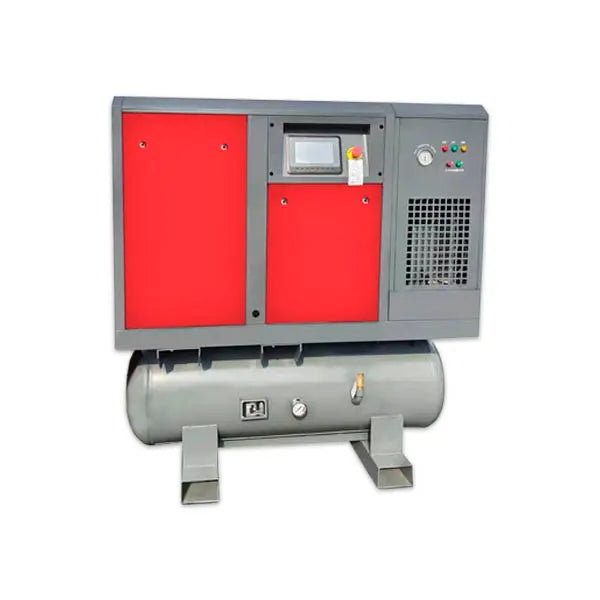
The Best Compressor for Plasma Cutters: How to Choose for Effective Operation
In the world of metalworking, plasma cutting is one of the most efficient technologies, allowing high accuracy in cutting metal products and processing speed. However, the quality of cutting directly depends on the stability of compressed air supply, making the choice of compressor a critically important stage. In this article, we will explore why a screw compressor for plasma cutters is the optimal choice and what characteristics should be considered when choosing and how easy it is to operate.
Plasma Cutting Technology and Compressed Air Requirements
Before diving into the comparison of compressors, it is important to understand the principle of operation of a plasma cutter and what requirements it places on the quality of compressed air during metal processing and product release.
Plasma cutting is based on creating an electric arc between the electrode and the workpiece. The resulting plasma, with a temperature of up to 30,000°C, allows cutting almost any electrically conductive material. Compressed air in this process performs several critical functions:
- Focuses the plasma arc, increasing the accuracy and quality of the cut
- Cools plasma torch components, preventing premature wear
- Blows molten metal out of the cutting zone
- Protects the cutting zone from oxidation
For effective operation of the plasma cutter during metal processing, the working fluid must have the following characteristics:
- Stable pressure without pulsations, presence of a receiver.
- Absence of moisture and oil
- Minimal content of mechanical impurities
- Sufficient volume for continuous cutting
Instability in pressure or the presence of contaminants in compressed air leads to a decrease in the quality of metal cutting, rapid wear of consumables, and reduced equipment lifespan.
Comparative Analysis and Selection of Screw and Piston Compressors for Plasma Cutting
Principle of Operation:
Piston Compressor: Piston compressors operate on the principle of reciprocal motion of a piston in a cylinder. As the piston moves downward, a vacuum is created, drawing the working fluid into the cylinder through the intake valve. As the piston moves upwards, the air is compressed and pushed through the exhaust valve into the receiver. This cycle repeats continuously, providing a supply of compressed air.
Screw Compressor: Screw compressors operate on the principle of rotating two screw rotors (drive and driven) in a sealed casing. When the rotors rotate, air is trapped between the screw threads and the casing, gradually compressed and moved to the outlet. The compression process occurs continuously, without the pulsations typical of piston compressors.
Pressure Stability:
Piston Compressor: Due to the cyclic process in piston compressors, pressure pulsations inevitably occur in the system. Even with a receiver that smoothes these pulsations, they still exist and can negatively impact the quality of plasma cutting, especially when working with thin materials or performing precise cuts.
Screw Compressor: Thanks to the continuous compression process, screw compressors provide practically constant pressure without pulsations. This creates ideal conditions for metal cutting, ensuring stable cutting and welding quality regardless of the plasma cutters' continuous operation length. Furthermore, modern screw compressors with frequency converters can precisely maintain the set pressure even when airflow changes.
Operating Mode and Service Life:
Piston Compressor: Most piston compressors have an intermittent operating mode (duty cycle 50-75%), which necessitates periodic stops for cooling. This can create inconveniences during intensive work with a plasma cutter, requiring breaks or the use of a compressor with reserve capacity. The average operating resource before capital repair is about 5,000-10,000 hours.
Screw Compressor: Screw compressors are designed for continuous operation (duty cycle 100%) and can operate around the clock without cooling breaks. This is especially important for production conditions, where equipment downtime leads to financial losses. The average operational resource of the screw unit before capital overhaul is 40,000-60,000 hours, which is 4-6 times more than that of a piston compressor.
Quality of Compressed Air:
Piston Compressor: In piston compressors, oil used for lubricating cylinders inevitably gets into the compressed air. Besides, due to the high compression temperature, a significant amount of condensate forms in the air. To achieve the air quality needed for plasma cutting, additional filters and dryers must be installed, increasing the overall system cost and requiring regular maintenance.
Screw Compressor: Screw equipment has a more efficient oil separation system, ensuring minimal oil content in compressed air (less than 3 mg/m³). Additionally, due to the lower compression temperature, less condensate is produced. This results in a cleaner working fluid with lower costs for additional purification, which is critical for extending the lifespan of plasma cutter consumables.
Energy Efficiency:
Piston Compressor: Piston compressors have a relatively high efficiency when operating under full load, but their efficiency drops sharply when running at idle. Moreover, they lack the ability to smoothly adjust output based on actual air demand, leading to increased energy consumption in variable load modes.
Screw Compressor: Modern screw compressors with frequency converters, such as the Specialist SCC-ZAY-10 series, can smoothly adjust output according to actual air demand. This significantly reduces energy consumption: when air consumption decreases by 20%, energy savings can amount to up to 30%. In the long term, this leads to significant reductions in operating costs, especially with intensive use.
Noise and Vibration Levels:
Piston Compressor: Piston compressors are characterized by high noise levels (80-95 dB) and vibration due to the reciprocating motion of the piston. This necessitates the installation of the compressor in a separate room or the use of special noise-insulating shells, which is not always convenient in small workshops.
Screw Compressor: Screw compressors operate much quieter (65-75 dB) and with less vibration thanks to the rotational motion of the rotors. This allows them to be installed directly in the working area, improving working conditions and not requiring additional noise insulation costs.
Cost of Ownership:
Piston Compressor: Piston equipment for plasma cutting has a lower initial cost, making it attractive for small workshops with a limited budget. However, high operating costs (frequent replacement of consumables, higher energy consumption, additional air cleaning costs) and a lower resource increase the overall cost of ownership in the long term.
Screw Compressor: Screw equipment for plasma cutting has a higher initial cost, but significantly lower running costs due to a larger operational resource, lower energy consumption, and less maintenance requirement. For professional use of a plasma cutter in production conditions, a screw compressor is a more economically viable solution in the long run.
Specialist Compressors SCC-ZAY-10 Series: The Ideal Solution for Plasma Cutting
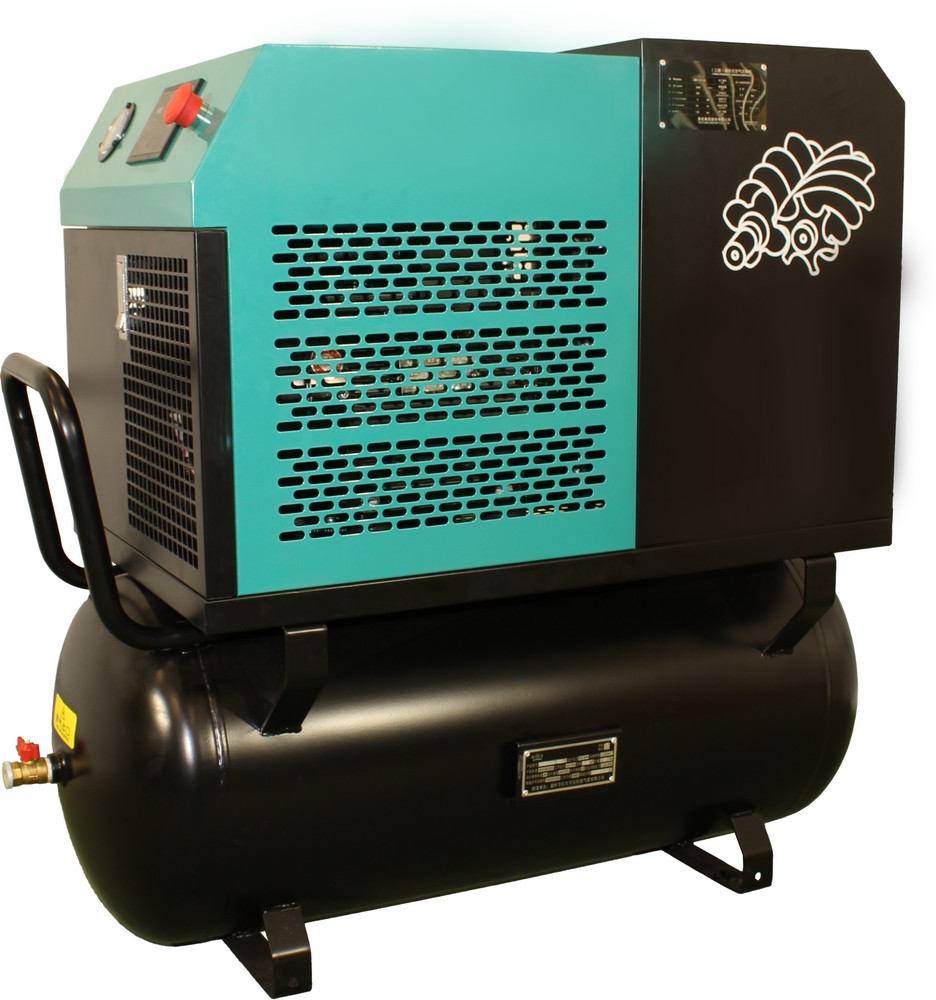
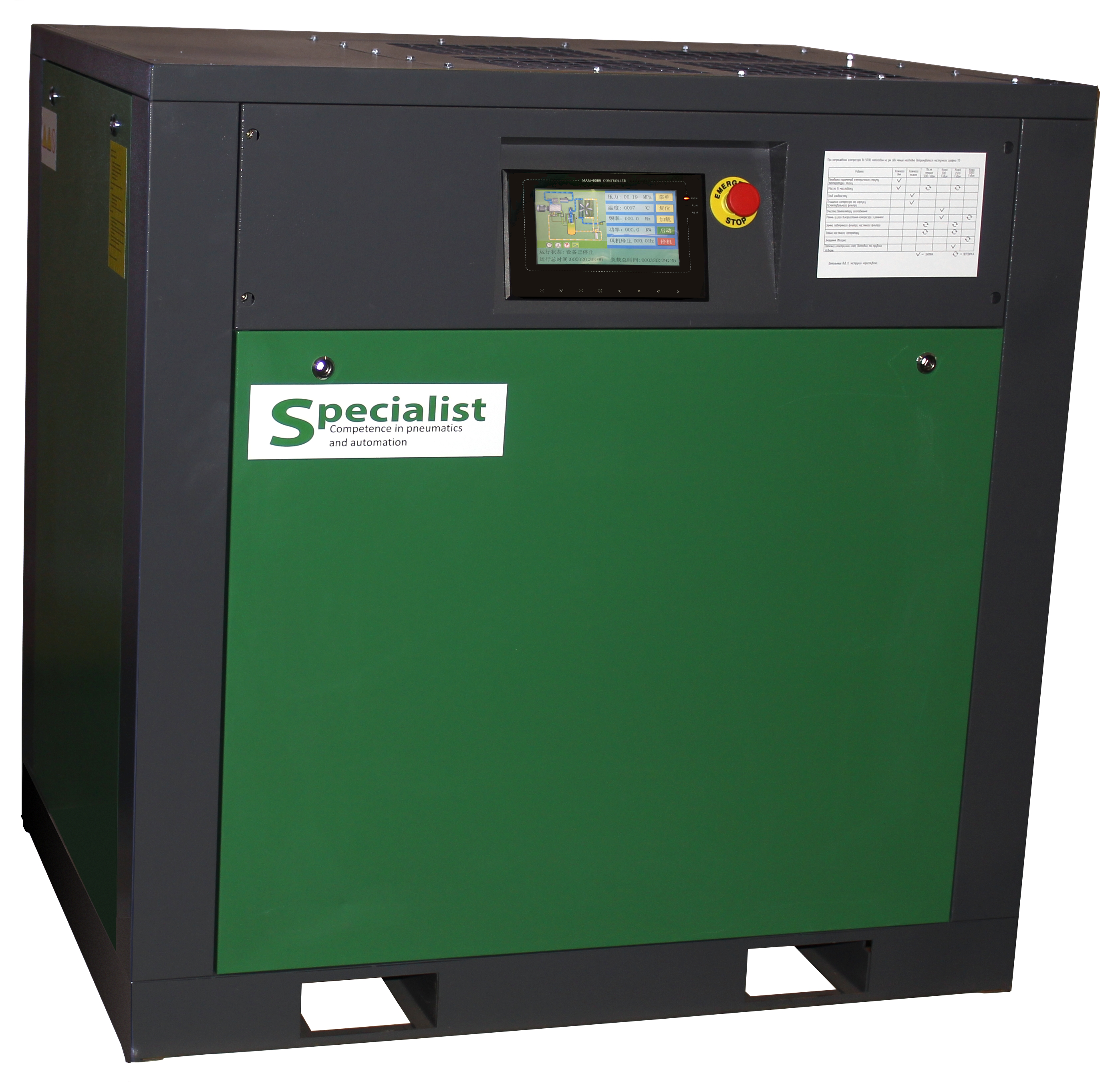
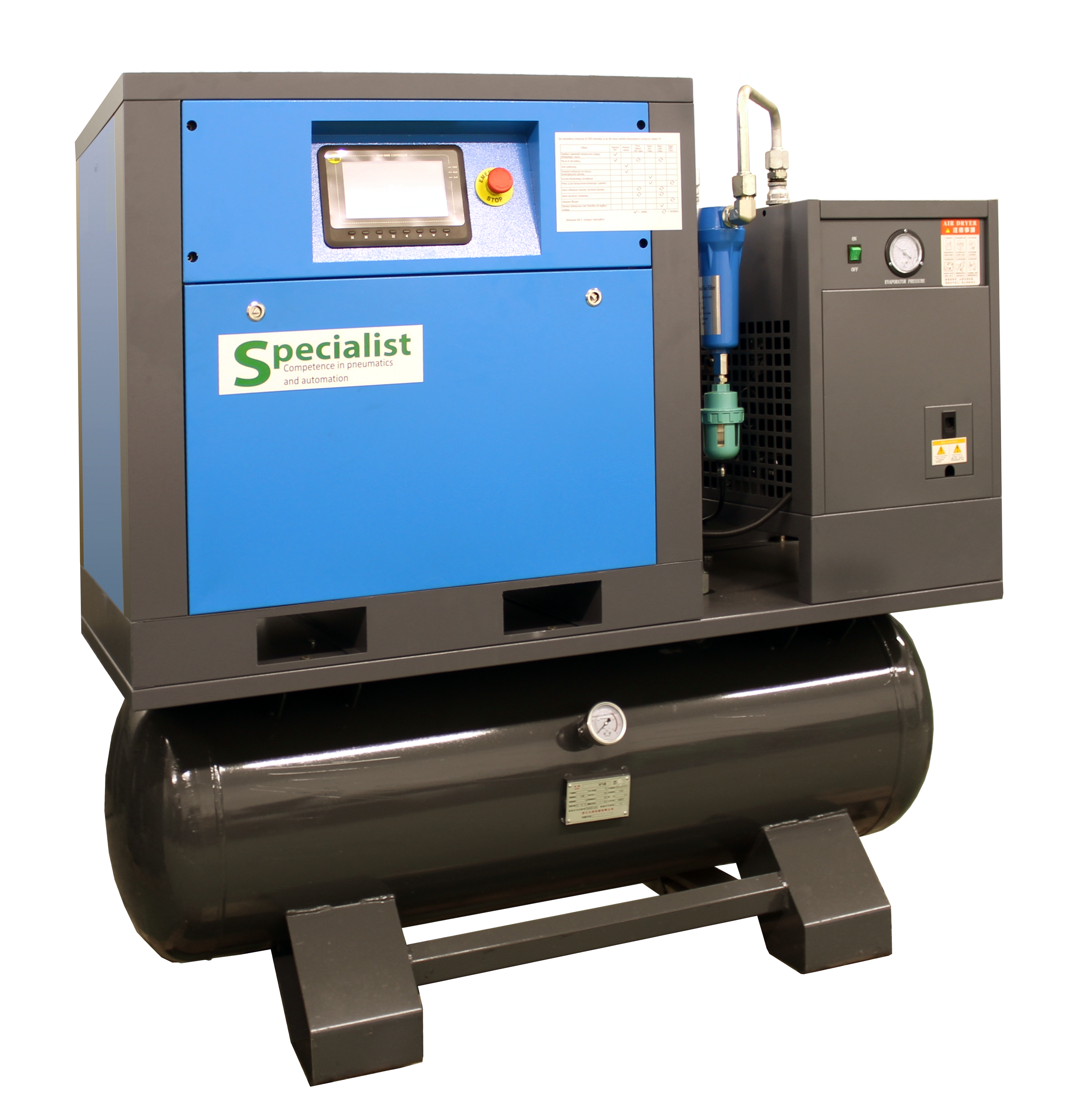
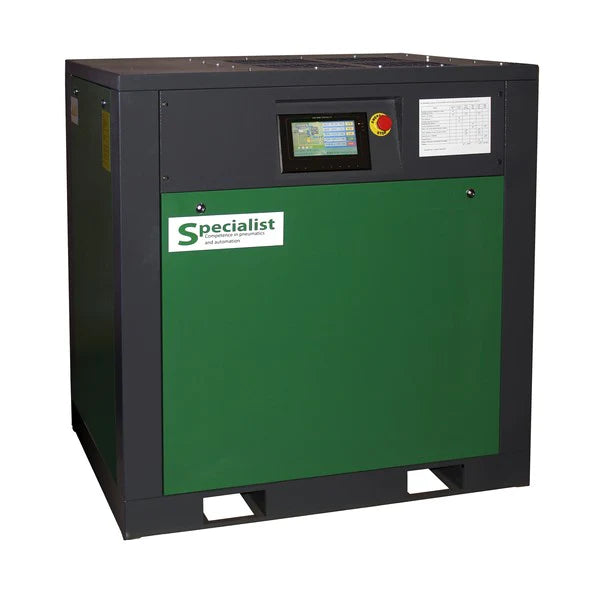
The Specialist SCC-ZAY-10 series equipment is a complete assembly of an oil-injected screw compressor for stationary installation. These devices are specifically designed to ensure stable plasma cutting and other pneumatic equipment requiring high-quality compressed air.
Compressor for Plasma Cutter SCC-ZAY-10, main advantages:
-
Adjustable Pressure: Ability to adjust pressure from 7 to 10 bar (standard), which also affects performance (usually specified in l/min), with the possibility of increasing to 12 bar on request.
-
Intelligent Control: Controller with a touch screen display supporting Cyrillic simplifies the adjustment and control of working parameters when cutting metal.
-
Remote Monitoring: Wi-Fi connection allows tracking the compressor's condition and receiving filter replacement notifications on a mobile device or computer.
-
Protection from External Influences: Housing with IP23 dust and moisture protection ensures reliable operation even in production workshops.
-
Energy Saving: The built-in frequency converter allows adjustment of not only pressure but also compressor output, significantly reducing energy consumption and extending equipment lifespan during metal cutting with the compressor.
Selecting a Model by Performance
When selecting a screw compressor for a plasma cutter, it is essential to consider that the compressor's output depends on the installed pressure (usually specified in l/min). For the SCC-ZAY-10 model, the standard power is 7.5 kW when connected to a 380 V network; the performance is:
- At 0.7 MPa pressure: 1200 l/min
- At 0.8 MPa pressure: 1100 l/min
- At 1.0 MPa pressure: 950 l/min
- At 1.2 MPa pressure: 800 l/min
It is important to note that although the controller can be set to a pressure of up to 11-12 bar, the manufacturer does not recommend continuous operation at the maximum allowable values. For systems requiring constant high pressure, it is advised to choose specialized equipment intended for 16 bar with higher productivity (usually specified in l/min).
Design and Reliability
The SCC-ZAY-10 compressor consists of the following main elements:
- Screw block (pair)
- Electric motor with direct drive
- Air-oil separator
- Oil piping system
- Cooling system
- Air duct system
- Electrical control system (controller and built-in electrical cabinet)
Recommendations for Choosing a Compressor for Plasma Cutters
When purchasing a compressor for a plasma cutter, several factors should be considered:
-
Plasma Cutter's Output: Different models of plasma cutters have different air consumption requirements. Usually, this information is specified in the technical documentation for the equipment. It is recommended to choose a compressor with at least a 30% output surplus to ensure stable plasma cutting and reduce downtimes.
-
Operating Mode: If intensive use of a plasma cutter is planned (more than 4-5 hours a day), then a screw compressor is an unquestionable choice for continuous plasma cutting.
-
Quality of Products: To obtain high-quality cuts and minimize burr formation, stable pressure without pulsations is necessary, which is ensured by screw compressors.
-
Long-term Perspectives: When planning production expansion or increasing the usage intensity of the plasma cutter, it is recommended to select a compressor with output reserve for completing even more tasks at enterprises engaged in metal products manufacturing.
-
Total Cost of Ownership: Cost calculations should consider both initial investments and operating expenses.
Mainline Filters for Improved Air Quality
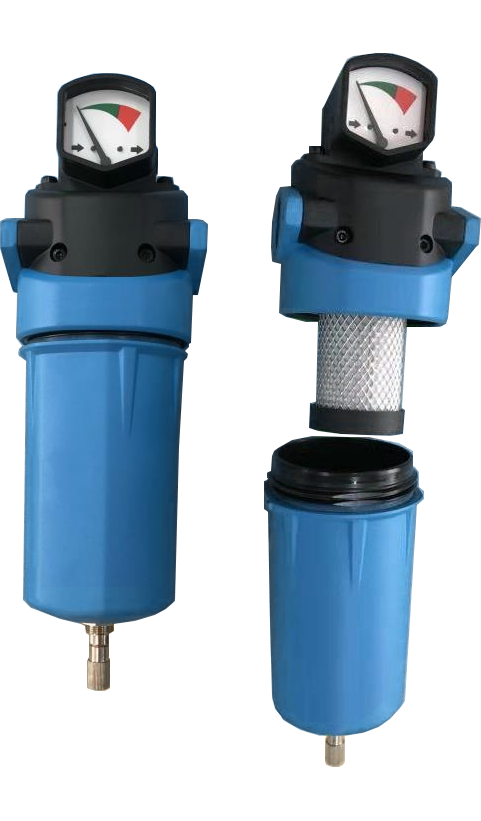
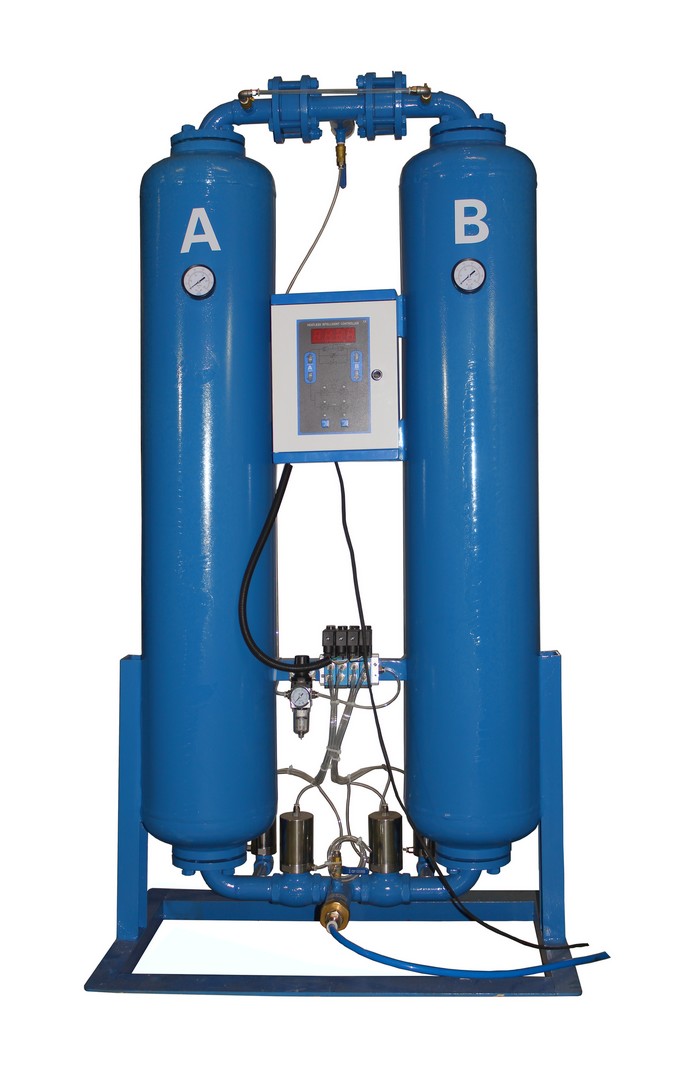
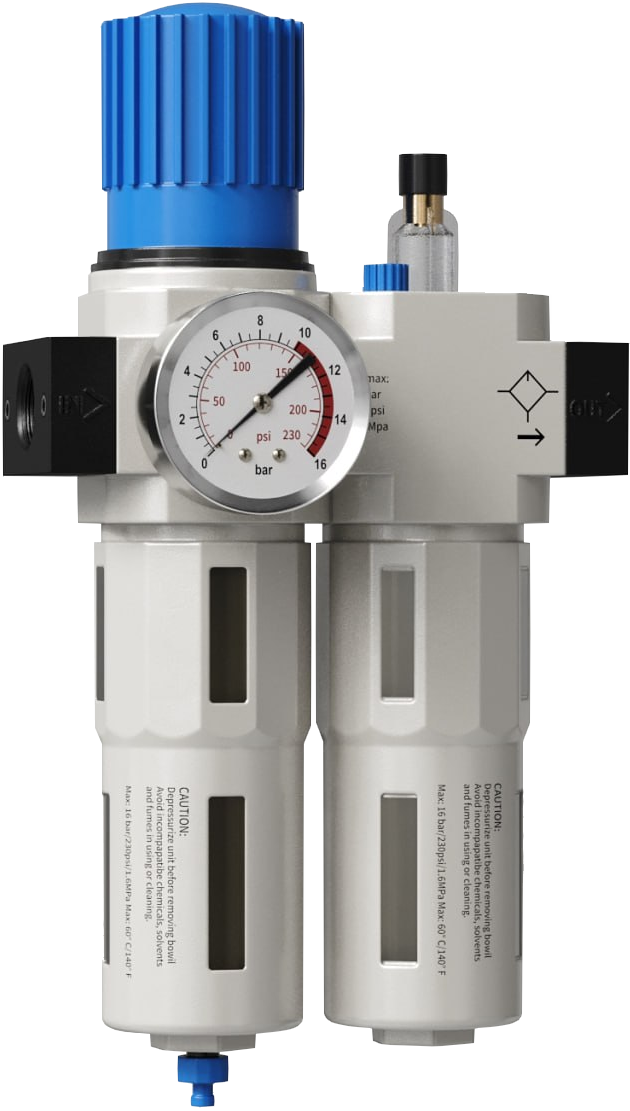
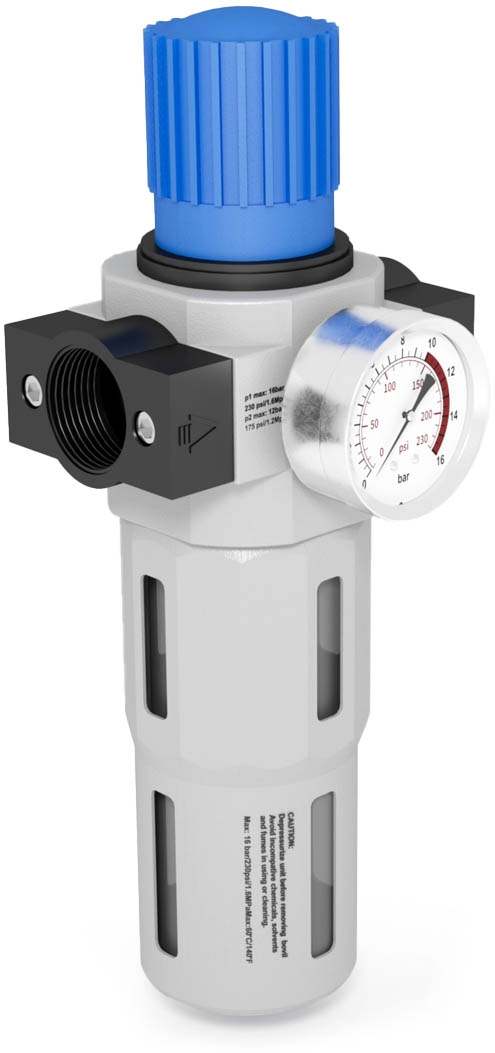
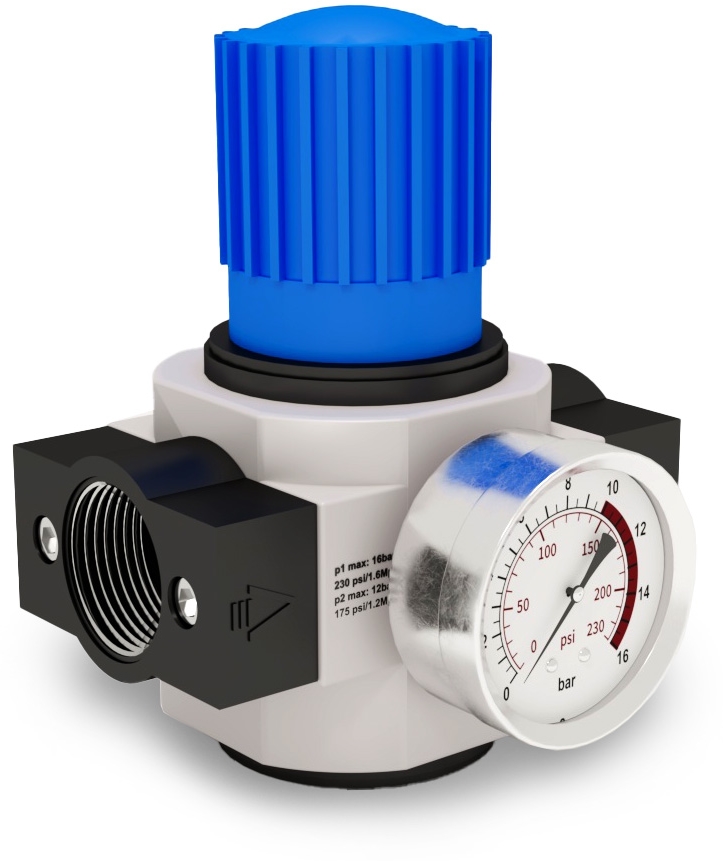
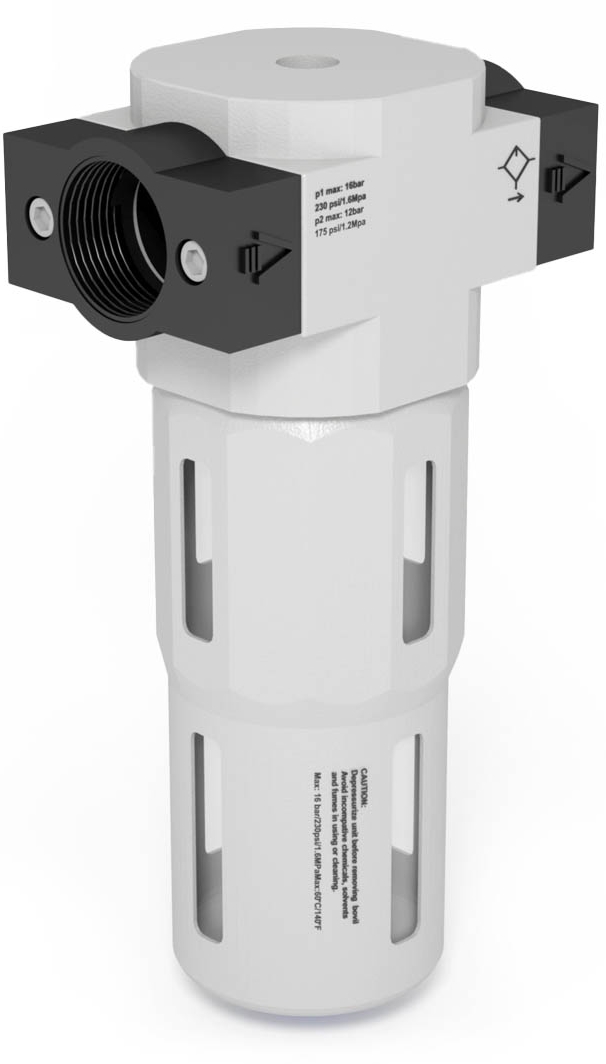
For maximum efficiency in plasma cutting, critical not only is the stability of air pressure but also its cleanliness. Our range includes high-efficiency mainline filters capable of purifying the working fluid to particles of 0.01 microns in size. The use of such filters addresses these tasks:
-
Increase the Life of the Plasma Nozzle by 2-3 times due to the absence of mechanical damage from microparticles during metal processing tasks.
-
Improving Product Quality due to a stable and clean air stream in metal cutting.
-
Cost Reduction on the replacement of plasma torch components.
-
Protect Internal Components of the plasma cutter from contamination and premature wear during air supply.
-
Minimize Equipment Downtime related to maintenance and repair.
These specialized filters are the perfect complement to a screw compressor and complete the formation of a comprehensive air preparation system for the highest quality plasma cutting of metal.
Connection and Installation of the Compressor
SCC-ZAY-10 compressors are supplied fully ready for connection and operation. To begin operation, you must:
- Connect the compressor to a three-phase AC network with a voltage of 380 V and a frequency of 50 Hz.
- Connect to the air line using a pipe with a cylindrical pipe thread.
To ensure optimal operating conditions, it is recommended that the compressor for plasma cutters be:
- Installed in a well-ventilated room with an ambient air temperature of +5°C to +40°C.
- Provide free space around the compressor for access to controls and maintenance.
Conclusion
Choosing the right compressor for a plasma cutter is an investment in cutting quality and equipment longevity.
Comparative analysis shows significant advantages of screw compressors over piston ones in the context of use for plasma cutting: stable pressure without pulsations, continuous cutting mode, high-quality compressed air, longer lifespan, and lower operating costs in the long term.
When selecting a compressor, one should consider not only current compressed air needs but also the potential for future production expansion. Investments in a high-quality screw compressor with sufficient output reserve and high-efficiency mainline filters will ensure stable and effective operation of a plasma cutter for years, as well as significantly extend the lifespan of expensive consumables.
Frequently Asked Questions:
What Compressor Do I Need for My Plasma Cutter?
For a plasma cutter, a screw compressor is the optimal choice as it:
- Ensures constant pressure without pulsations
- Can operate continuously without cooling breaks
- Has high productivity when connected to a 380 V network
- Provides cleaner air thanks to an efficient filtration system
- Is energy efficient due to the frequency converter
- Produces less noise
What Air Pressure Does a Plasma Cutter Need?
According to the article, for effective operation of a plasma cutter, a pressure of 7 to 10 bar (standard) is needed, and the presence of a receiver will help reduce pulsations. In some cases, a pressure of up to 12 bar may be required, but the manufacturer does not recommend continuous operation at the maximum allowable values.
What Power Compressor Do I Need for Plasma Cutter operation?
The specific power choice depends on the required output of your plasma cutter. It's important to consider not only current needs but also the potential for future production expansion; hence, it is recommended to choose a compressor with some performance reserve.
It is also crucial to supplement the system with mainline filters that purify air to particles as small as 0.01 microns, significantly extending the life of the plasma nozzle and positively impacting the plasma torch.





 In Stock

 Out of Stock
 On order