



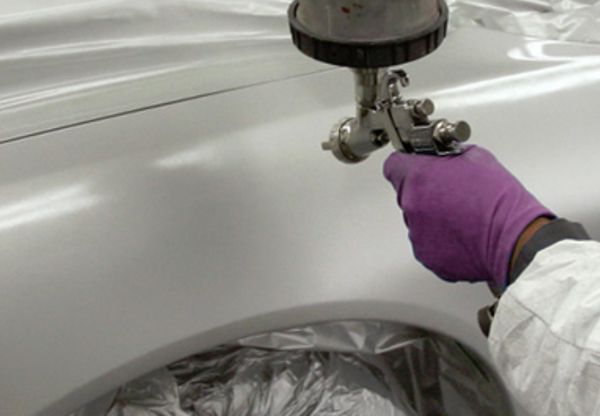
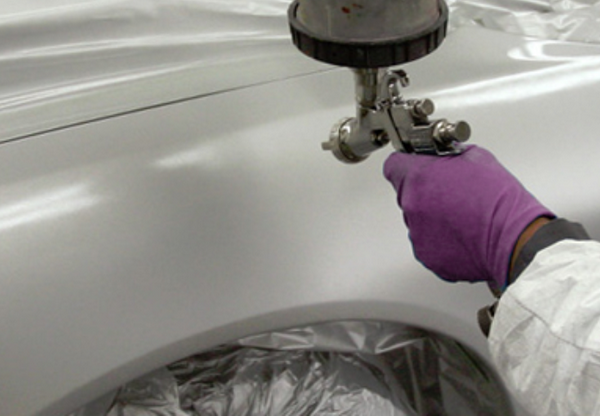
Painting a Car Fender
In industrial environments, painting of vehicles, metal products, and even furniture is carried out in specialized paint booths. Pneumatic spray guns are used much more frequently despite the availability of compact electric alternatives — pneumatic spray guns are capable of providing perfect professional surface finishing, are more efficient, and allow the use of virtually all types of paint and coating materials. These advantages of pneumatic paint guns compensate for the need for additional space in workshops not only for an air compressor but also for air purification and preparation equipment.
Why Is Air Purification Necessary for Painting?
Depending on the intake location, atmospheric air drawn in by a compressor contains up to 180×106 dust particles ranging in size from 0.01 to 100 μm, 23 g of water vapor, and 0.03 mg of oil aerosols per cubic meter. The mass fraction of impurities per cubic meter of air increases proportionally to the compression ratio.
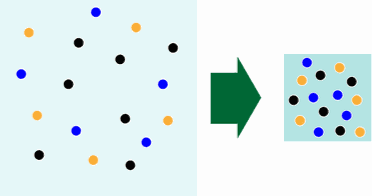
Increase in Impurity Concentration During Compression
All types of contamination negatively affect painting quality and cause various defects when painting vehicles and other surfaces:
- graininess caused by dust particles trapped under the paint during the painting process;
- the presence of small partially burst bubbles;
- the appearance of small circular craters on freshly painted surfaces, also known as "fish eyes";
- clouding of the glossy surface after painting.

Types of Defects Caused by Poor Air Quality
To What Degree Should Air Be Purified Before Painting?
As a rule, the required level of purification is specified in the spray gun's technical documentation as an air purity class according to ISO 8573-1:2010. In this case, the requirements are indicated in square brackets after the standard designation. For example, ISO 8573-1:2010 [1:4:1] means:
- Class 1 for solid particles: less than 20'000 particles per cubic meter of compressed air with a size not exceeding 0.5 μm;
- Class 4 for moisture content: dew point temperature not higher than 4° C (humidity not exceeding 35% at 20° C);
- Class 1 for oil content: not more than 0.01 mg/m3.
Manufacturers may directly specify the maximum allowable content — for example, for powder coating applications, air with solid particles smaller than 0.3 μm and an oil content of no more than 0.1‰ (per mille) is considered acceptable.
The direct relationship between coating quality and air cleanliness makes pneumatic systems in paint booths more demanding in terms of compressed air purification than general industrial applications.
Which Compressor Is Best for a Paint Booth?
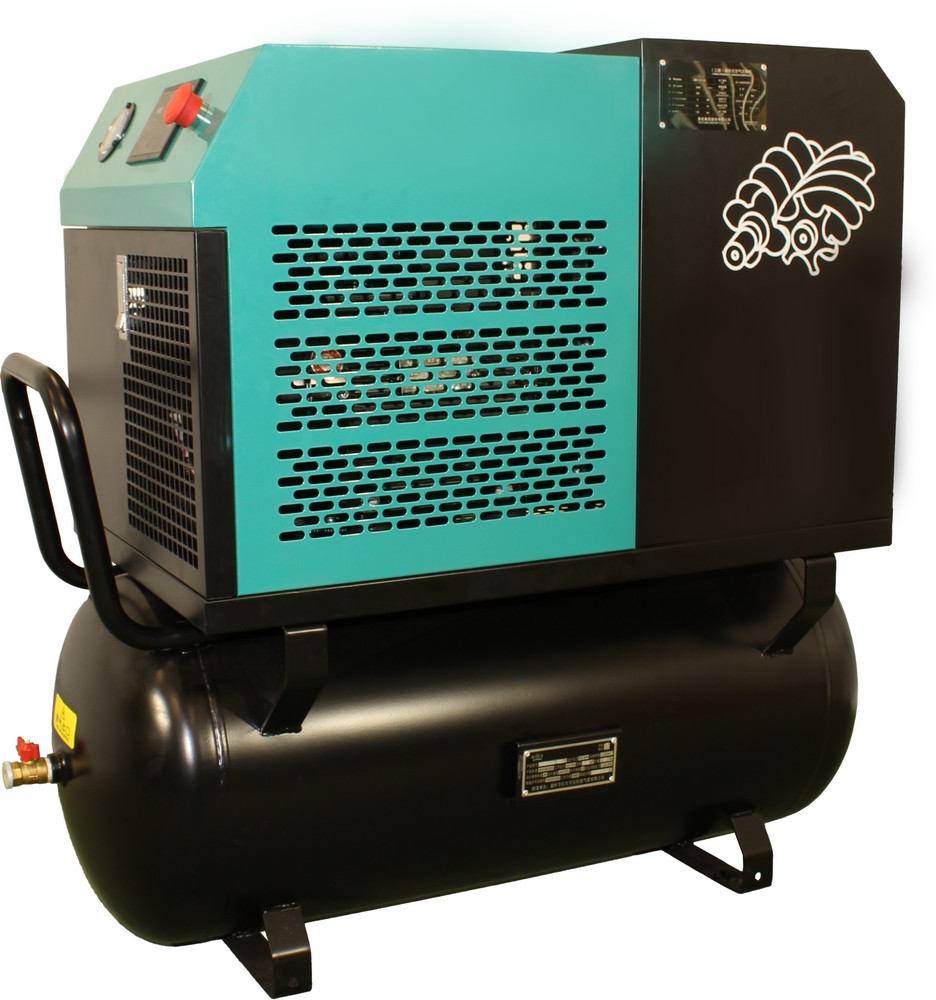
If you paint surfaces in small volumes and do not have other compressed air consumers, a low-power piston compressor may be suitable. However, if you perform painting professionally, a screw compressor is definitely the better choice.
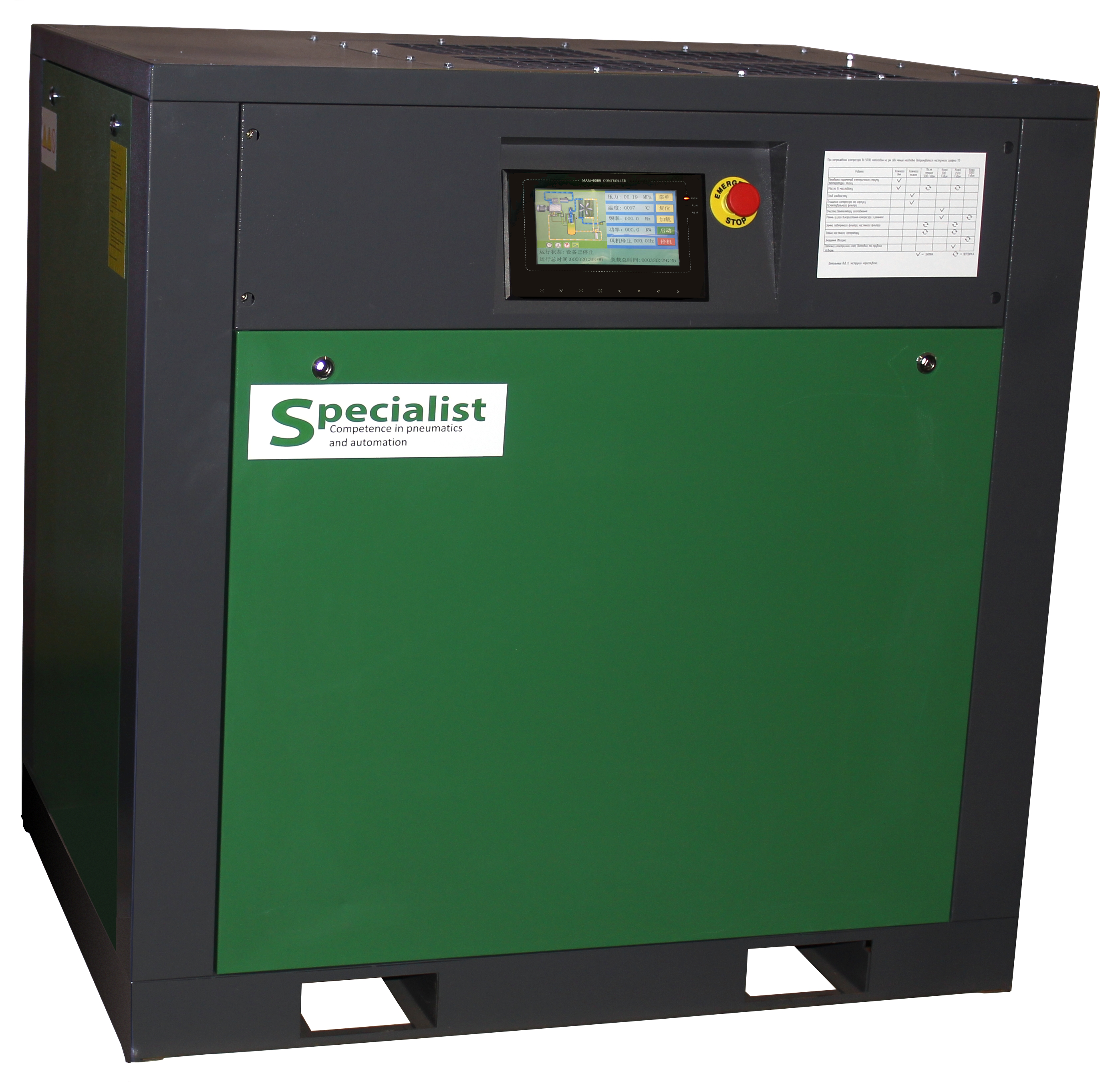
We previously published an article on selecting compressors, so here we will list the advantages of screw compressors that are particularly important for air preparation before spray painting:
- Less compressor oil. During operation, a screw compressor introduces less oil into the air than a piston compressor.
- Lower air temperature. Screw compressors have a lower outlet air temperature, which significantly simplifies moisture removal because excess water is removed more effectively when the air is cooled.
Of course, screw compressors have many other advantages over piston compressors, but these two factors are the primary reasons for choosing a screw compressor from an air quality perspective. In addition, advances in technology and increased production volumes have significantly reduced the price of screw compressors in recent years.
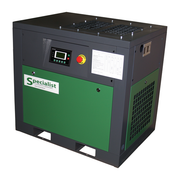
Air Preparation for Painting
Air Receiver
After the compressor, the air must be supplied to the receiver. The air storage capacity of the receiver should exceed or at least match the compressor's output capacity. If your compressor is designed to deliver 1000 L/min at a maximum pressure of 7 bar, the ideal solution would be a receiver with a volume of 1 m3.
For air preparation before painting, we recommend installing the largest receiver possible. In addition to its primary functions (air storage and smoothing pressure pulsations in the pneumatic system), a large-capacity receiver also promotes air cooling. The larger the receiver, the longer the air remains inside it and cools down after compression, making subsequent moisture separation in condensate separators more effective and potentially eliminating the need for additional air coolers.
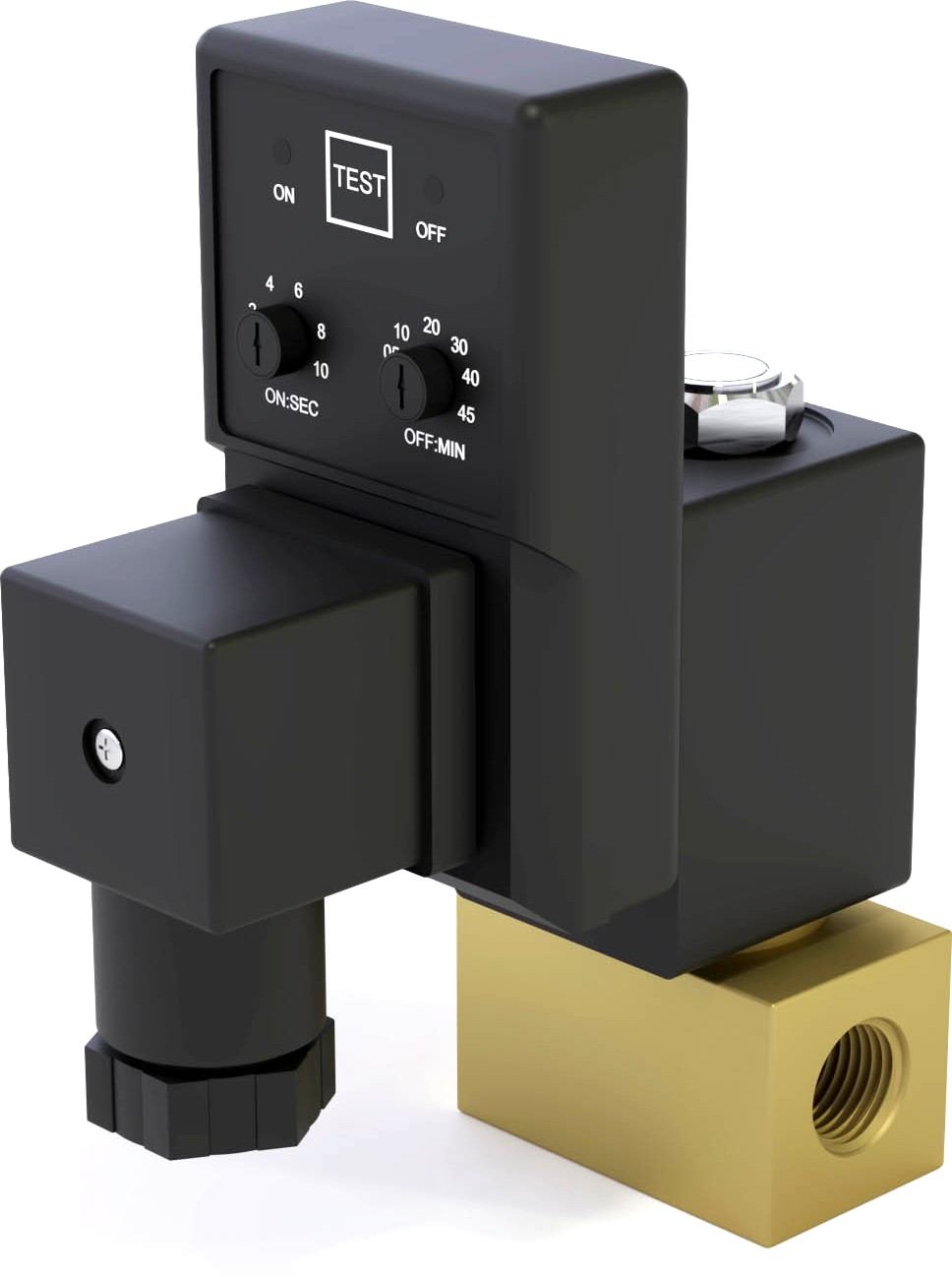
Do not forget to install an automatic condensate drain valve on the receiver.
Air Cooler
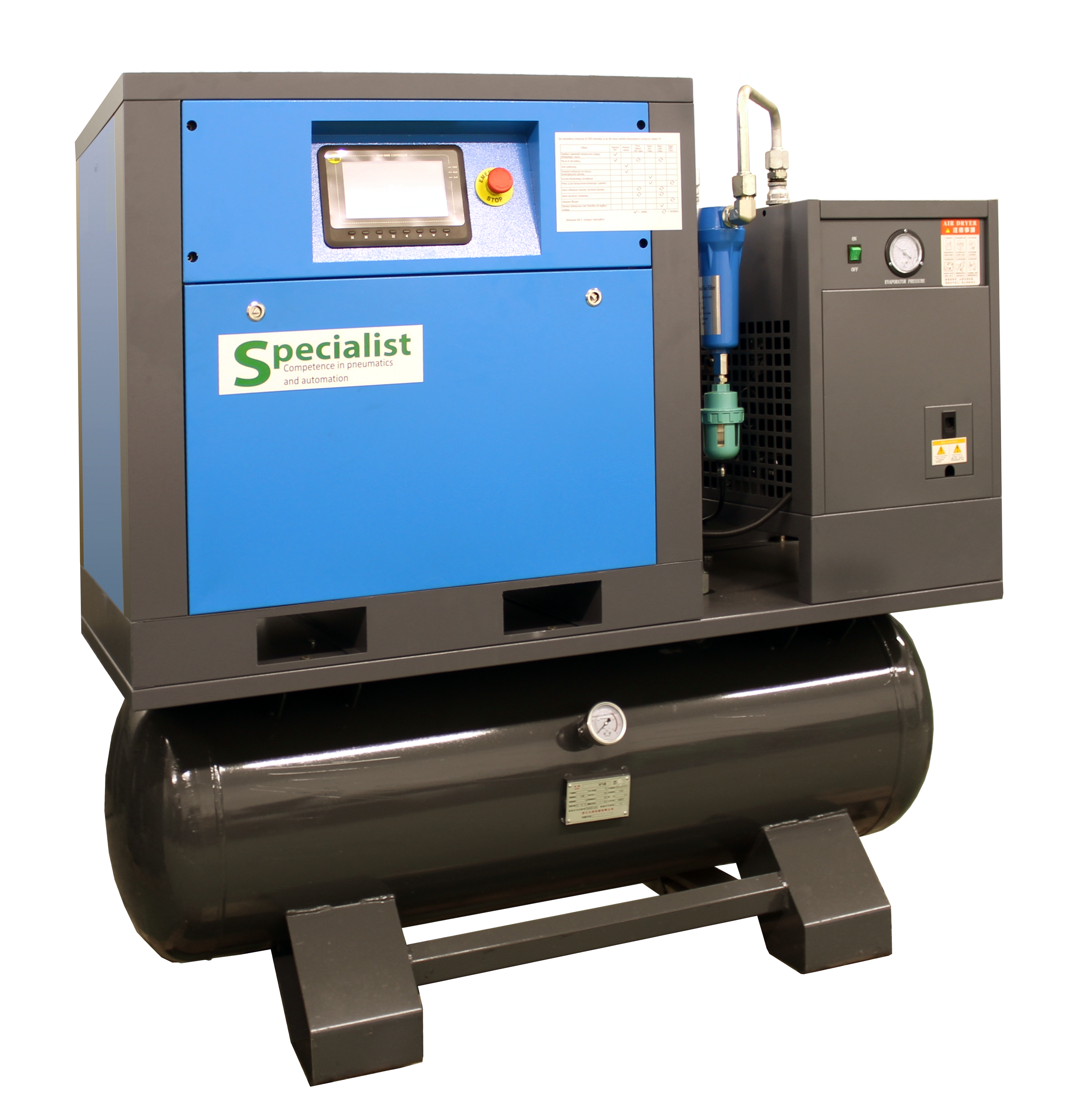
Although Specialist screw compressors are equipped with an internal radiator and aftercooler, an additional external air cooler may be required if it is not possible to use a sufficiently large receiver or if the air consumption is too high. Such a cooler consists of a radiator with a fan for forced airflow.
An external air cooler is needed to improve the efficiency of refrigerated air dryers, which require an inlet air temperature of no higher than 40°C.
Refrigerated Air Dryer
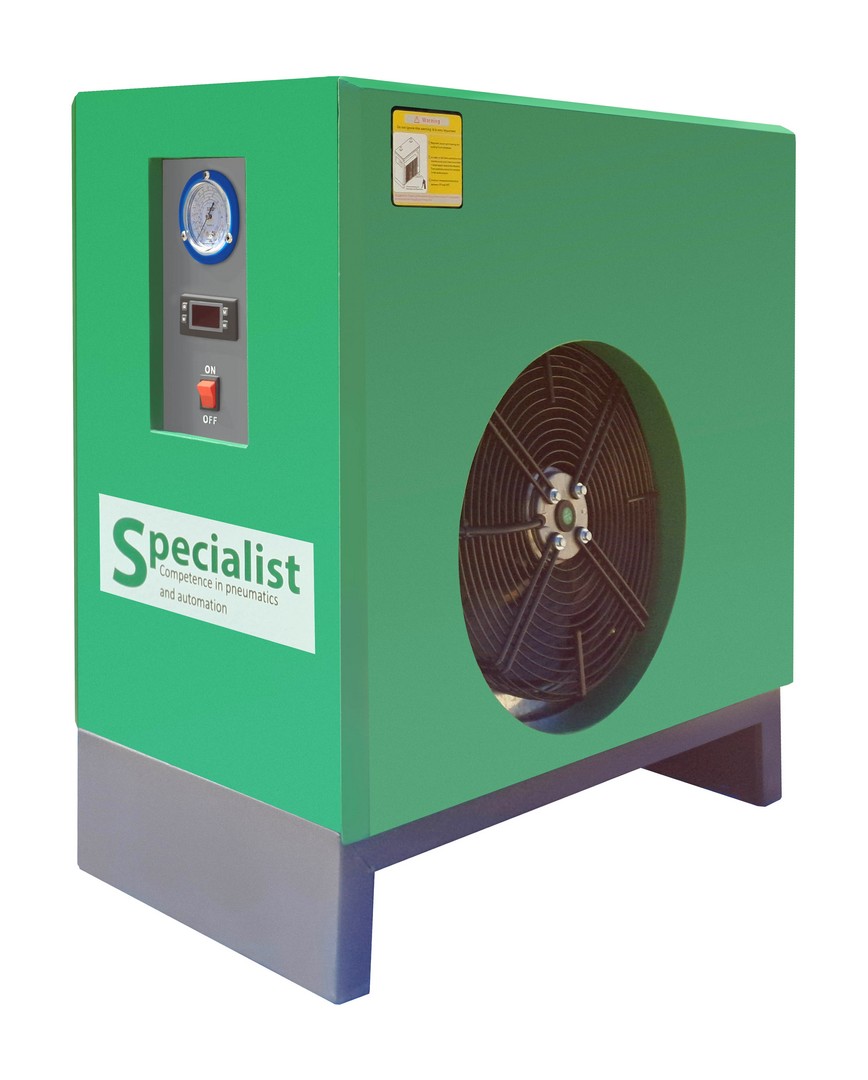
Only after preliminary cooling of compressed air to 40°C can it be supplied to a refrigerant-based refrigerated dryer. The dryer cools the air to its dew point so that moisture condenses and can then be removed using a condensate separator.
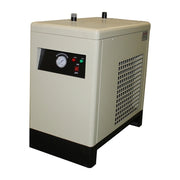
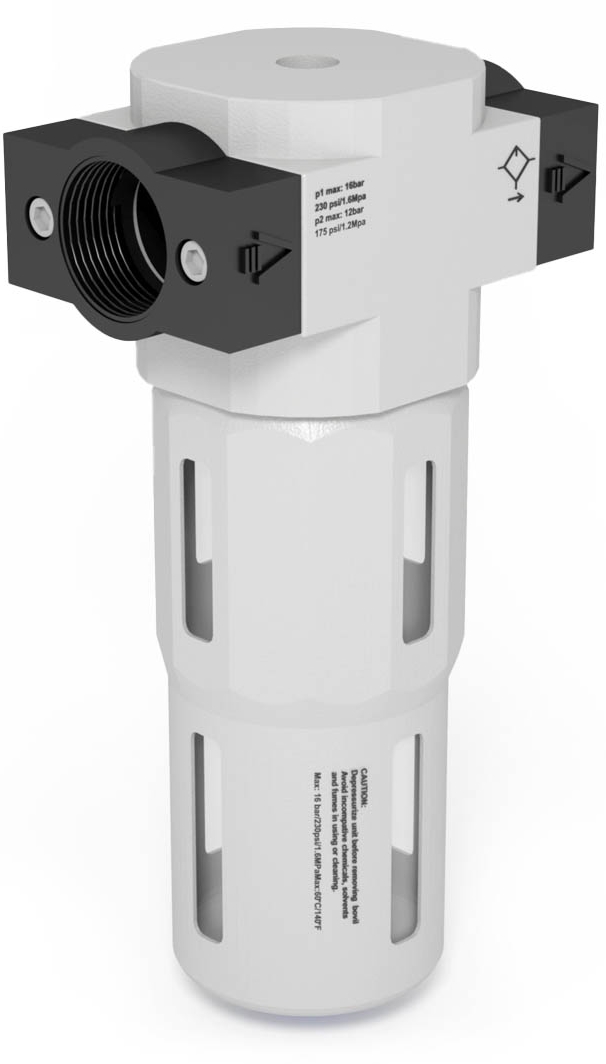
Main Condensate Separator
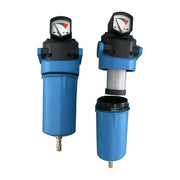
After cooling, the moisture in the air condenses into very fine droplets that are carried further by the airflow. A main separator efficiently removes this condensate with minimal pressure loss.
The combination of an air receiver and a main separator can remove up to 60% of all moisture from compressed air. For some industrial applications, this level of air preparation is sufficient. However, for high-quality air preparation before painting, additional equipment is required.
Air Pressure and Paint Quality
Air preparation before painting vehicles or other parts involves not only removing moisture and contaminants from the air stream but also maintaining the pressure supplied to the spray gun at a specified level. Pressure fluctuations during painting affect the coating quality:
- High pressure can cause a dull finish, rough texture (overspray), and small bubbles;
- Low pressure can lead to runs, uneven coverage, and the so-called "orange peel" effect.
Therefore, without a proper air preparation system, it is impossible to achieve a smooth and evenly painted surface. Of course, coating quality is influenced not only by the factors listed above but also by the painting technique itself.
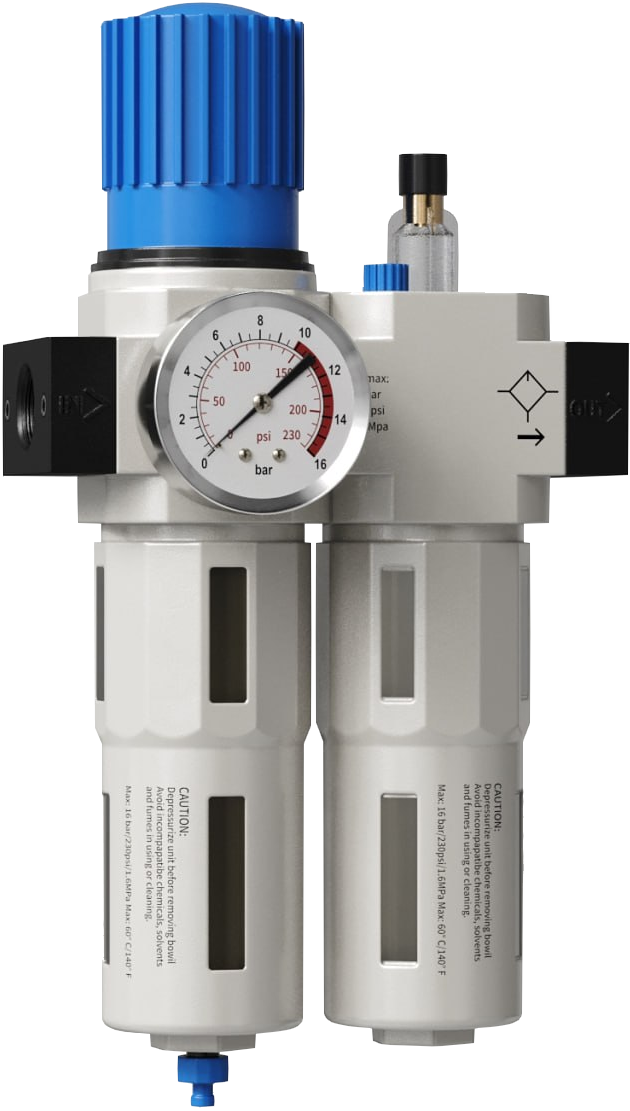
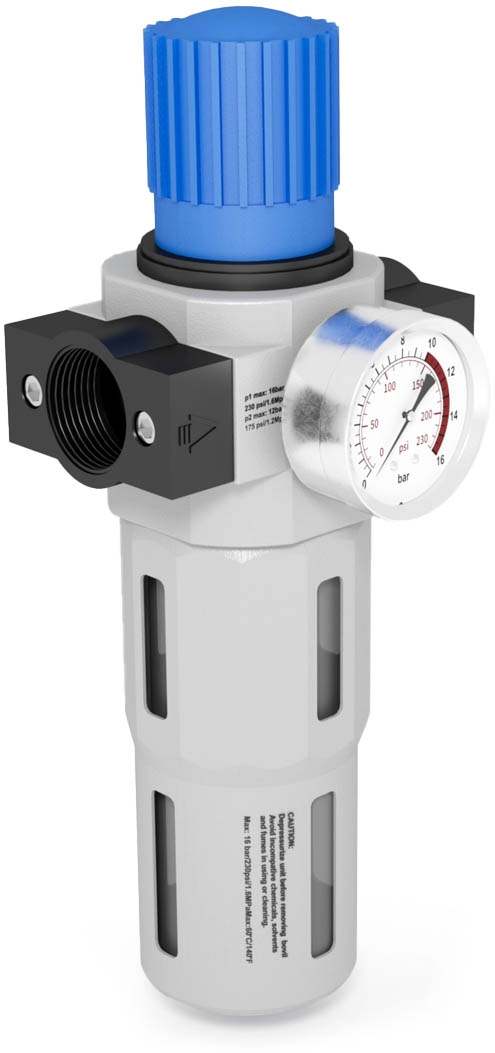
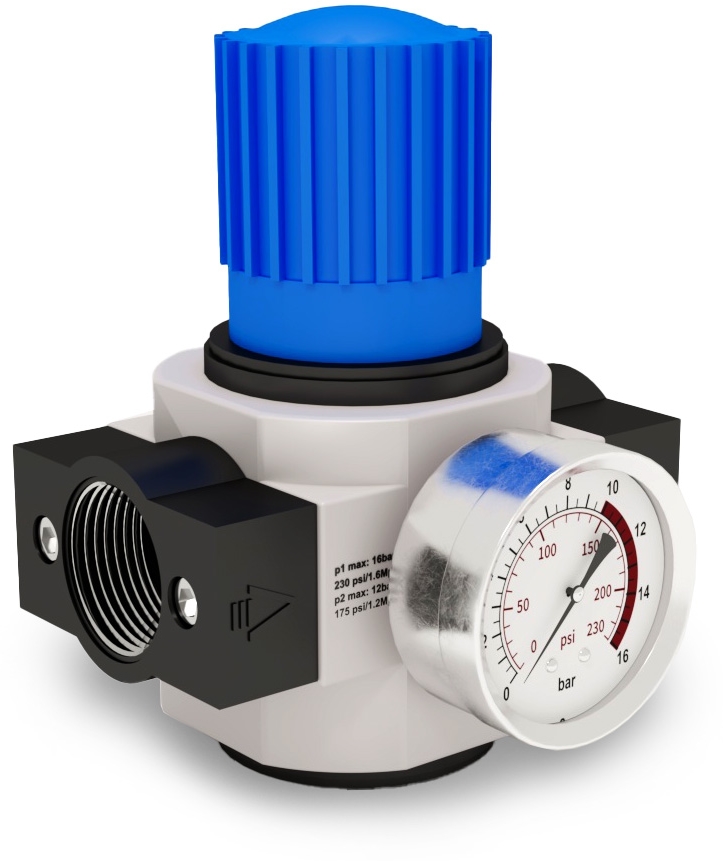
Small filter regulators or pressure regulators are commonly used to control pressure before the spray gun.
Most paint spray guns operate at relatively low pneumatic pressure levels — from 0.7 to 5 bar. The nominal value is specified by the manufacturer in the operating manual and may be adjusted by the painter depending on the type and viscosity of the coating material.
For painting applications, standard industrial filter regulators and regulators are often used because they are relatively inexpensive and effective. However, it should be noted that these devices may have significant deviations from the set pressure value. While this is acceptable for most technical tasks, stable pressure is extremely important when applying paint coatings and especially powder coatings. In such cases, the use of more expensive but highly accurate precision regulators may be necessary.
Air Filter Regulator with Pressure Gauge for Spray Guns
The filter regulator simultaneously performs pre-filtration of solid particles, removes moisture that has condensed inside the pipeline, and reduces the outlet pressure to the required level.
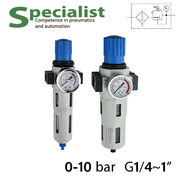
Like standard pneumatic regulators, filter regulators are highly dependent on airflow consumption. If adjustment is performed without airflow at the outlet, the actual operating pressure will be lower because increased airflow always causes a pressure drop, resulting in a deviation of ΔP up to -1 bar. This relationship is illustrated by pressure-versus-flow graphs.
The outlet pressure drop ΔP can be compensated by setting a higher pressure value on the regulator. For example, if the spray gun consumes 400 Nl/min of compressed air, then to achieve a working pressure of 2 bar, the regulator should be adjusted to 2.6 bar without airflow. During operation, the pressure will decrease to the required 2 bar.
However, this method does not always provide the high accuracy required for spray guns. The lower adjustment limit of most filter regulators and regulators is around 1.5 bar, meaning they cannot provide the pressure required for spray guns operating at 0.7 to 1.5 bar. In addition, switching other air consumers on and off can cause pressure fluctuations throughout the pneumatic system. In such cases, a high-precision regulator should be included in the air preparation unit.
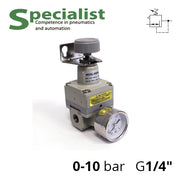
Precision Pressure Regulator for Spray Guns
A precision regulator operates using a more advanced principle and allows highly accurate pressure control starting from 0.05 bar. Changes in airflow consumption do not affect its outlet pressure.
Air Preparation for Painting. Conclusions
- Use a screw compressor.
- After the screw compressor, always install a receiver of sufficient volume equipped with an automatic condensate drain.
- Install a main condensate separator after the receiver.
- Install a refrigerated air dryer after the separator.
- After the refrigerated dryer, install an additional main separator to remove moisture condensed inside the dryer.
- Then install a filtration unit capable of removing solid particles down to 5 microns or smaller if required by your application.
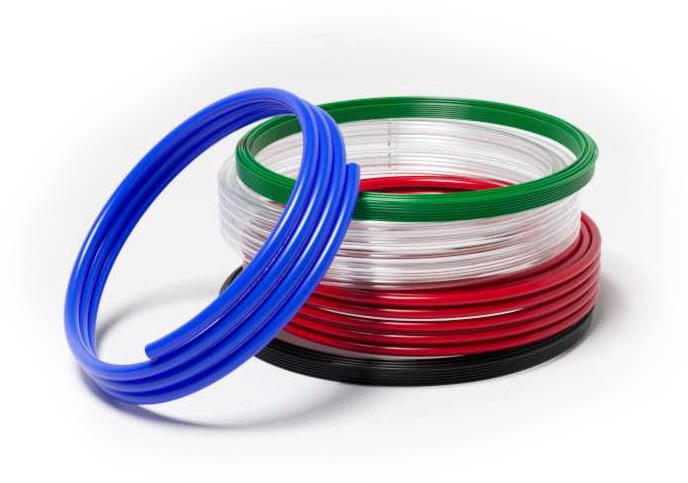
- Use plastic piping for all compressed air distribution lines.
- Use a precision regulator as part of the air preparation unit before the spray gun.
Need a Complete Solution?
At the Specialist online store, you can purchase individual pneumatic pressure regulators for spray guns, mechanical or digital pressure gauges, and related fittings. You can also order a complete assembled air preparation system with all components required for painting vehicles, metal products, or wood.
Free calls within Ukraine
+38 0800 210 317
