


Contents:
- The role of a frequency inverter on a compressor.
- Frequency inverter for a piston compressor.
- Frequency inverter for a screw compressor.
- Which frequency inverter should you choose for a compressor: scalar or vector?
- Screw or piston compressors – where will a frequency inverter provide greater efficiency?
- How to run a 380V motor compressor from a single-phase 220V network?
- Buy a compressor with a frequency inverter or assemble it yourself?
- Frequently Asked Questions.
Frequency inverters are key components in modern compressor control systems. Regulating the rotational speed of the compressor motor provides flexibility in settings and optimization of power consumption. In this article, we will examine the specifics of using frequency inverters with piston and screw compressors, help you choose between scalar and vector control, and discuss the pros and cons of building the system yourself versus purchasing a ready-made solution.
Our compressors with frequency inverters
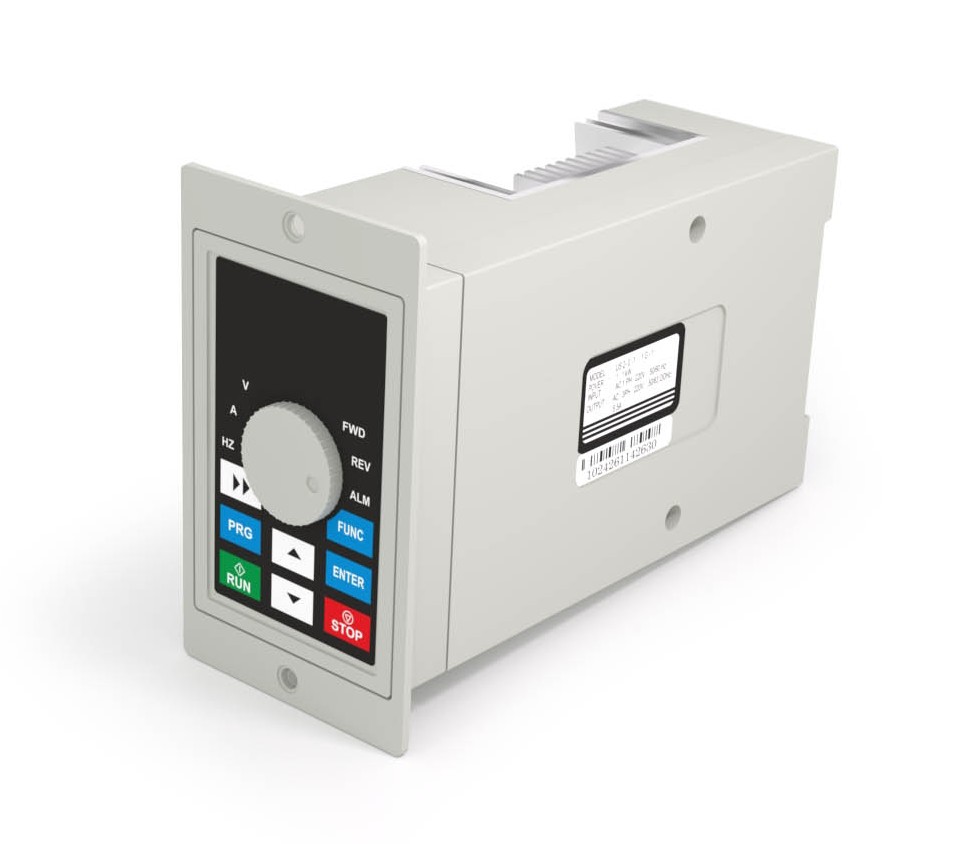
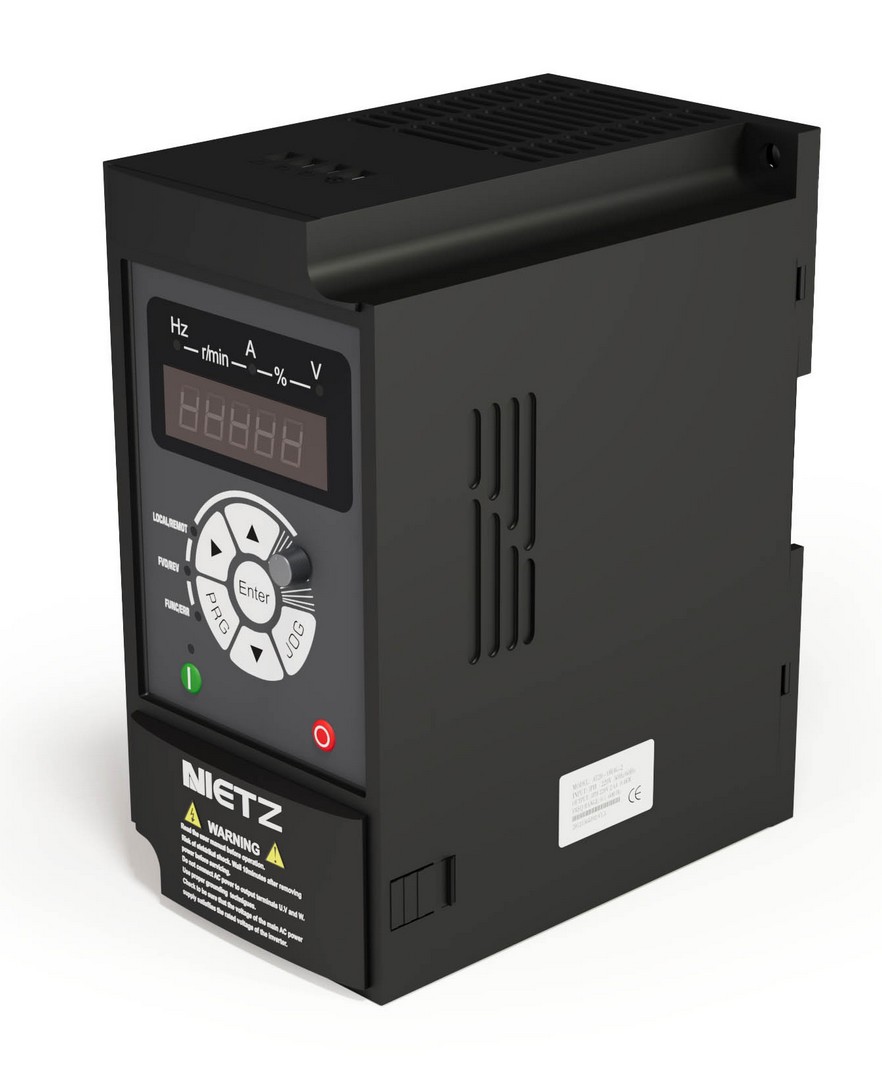
Our frequency inverters for compressors
The Role of a Frequency Inverter on a Compressor
A frequency inverter (frequency drive, inverter) plays a key role in compressor operation, especially when it is necessary to regulate the motor speed.
Functions of a frequency inverter on a compressor:
- Capacity control. Frequency inverters change the frequency and voltage supplied to the electric motor, thereby regulating compressor performance.
- Energy savings. When the compressor operates under partial load, the inverter automatically reduces motor power, helping to lower electricity consumption.
- Smooth start and stop. Frequency inverters provide smooth compressor startup and shutdown. Smooth starting also reduces motor inrush currents, helping to avoid overloading the power supply line.
- Equipment protection. Frequency inverters protect the compressor against various emergency situations such as overloads, short circuits, phase loss, and others.
- Improved performance: Thanks to precise speed control, a compressor with a frequency inverter can achieve optimal performance and system efficiency. This is especially important for facilities that require stable pressure maintenance.
Features of Using Frequency Inverters on Screw and Piston Compressors
The operating principle of a frequency inverter on screw and piston compressors is very similar. As a rule, screw compressors are equipped with advanced controllers, while most piston compressors are not.
Depending on air consumption and system pressure, controllers can manage a group of compressors and send control signals to frequency inverters to set the motor speed required to maintain the desired system pressure.
Frequency Inverter for a Piston Compressor
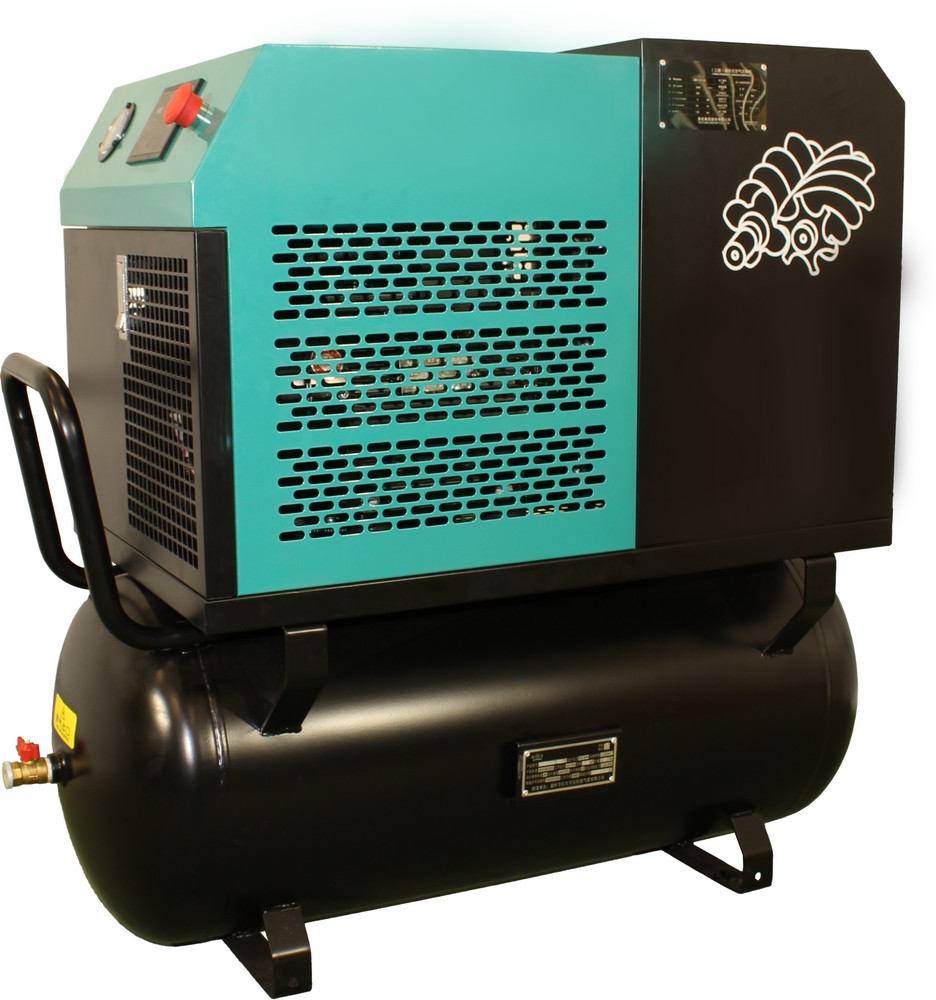
Regardless of the compressor size, using a frequency inverter on piston compressors provides the following benefits:
-
Smooth start and stop
-
Pressure regulation
-
Control of maximum speed
-
Efficiency optimization
Using a pressure switch signal indicating that pressure has dropped below the minimum level, frequency inverters provide smooth motor startup by gradually increasing speed to the nominal value according to the configured acceleration time. Pressure will continue to build until the control signal is removed.
By connecting a pressure sensor with a 4...20 mA or 0...10 V signal, PID control can automatically adjust motor speed based on compressed air consumption, although this is rarely done because piston compressors are not designed for long-term operation.
Using a frequency inverter can significantly reduce the required cable cross-section due to lower starting currents and allows the compressor to be powered from a lower-capacity generator.
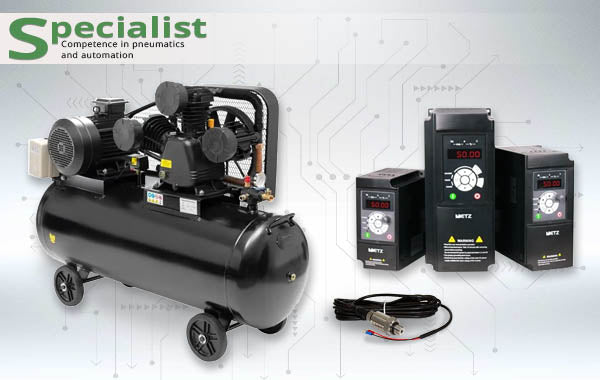
Frequency Inverter for a Screw Compressor
The role of a frequency inverter on screw compressors includes:
-
Capacity adjustment
-
Pressure stabilization
-
Efficiency optimization
-
Possibility of operating without an air receiver
-
Smooth startup and shutdown
The effectiveness of a frequency inverter on a screw compressor directly depends on the installed controller, since outdated controller models only allow the inverter to be used for smooth startup and maintaining a fixed motor frequency.
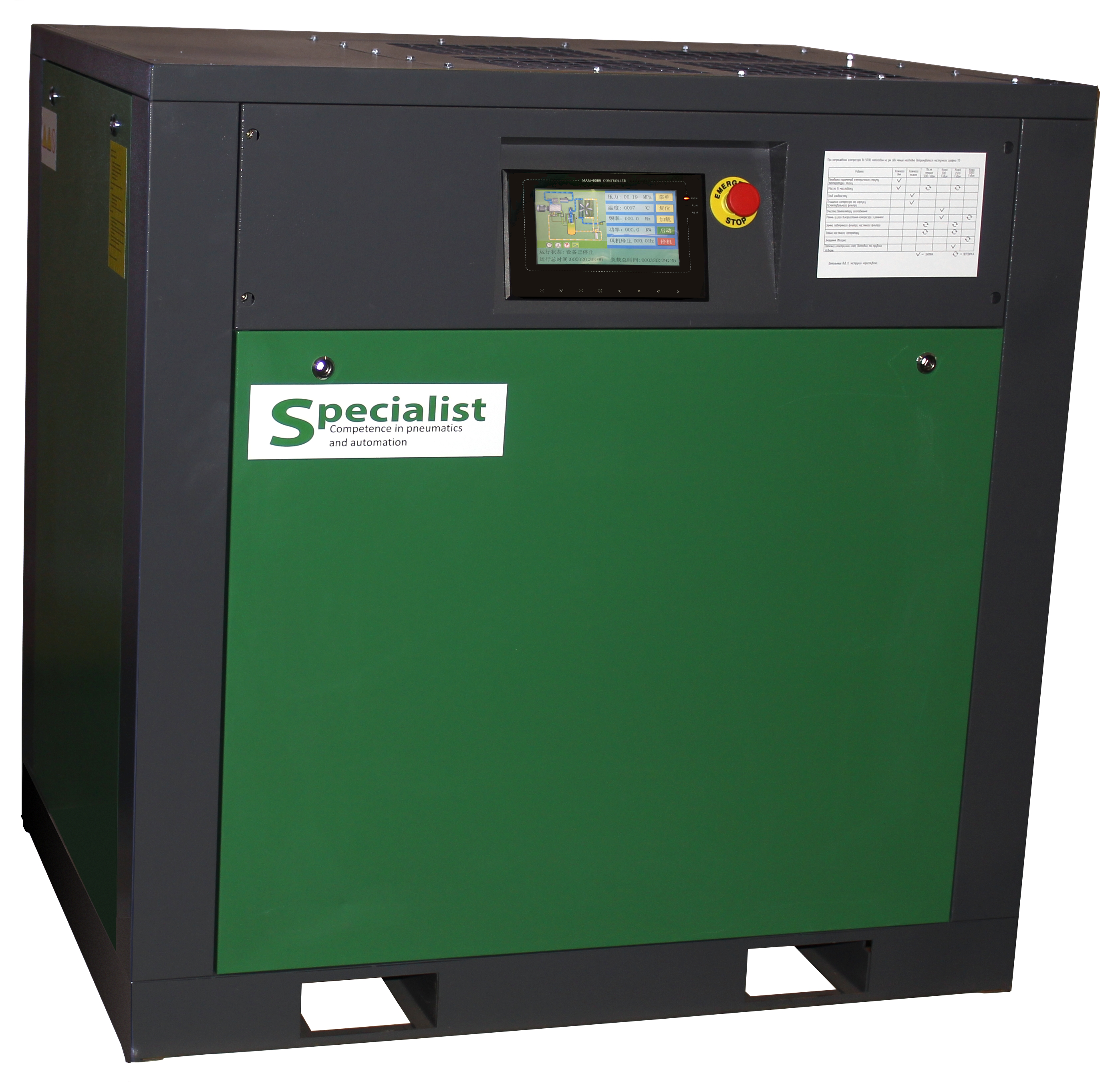
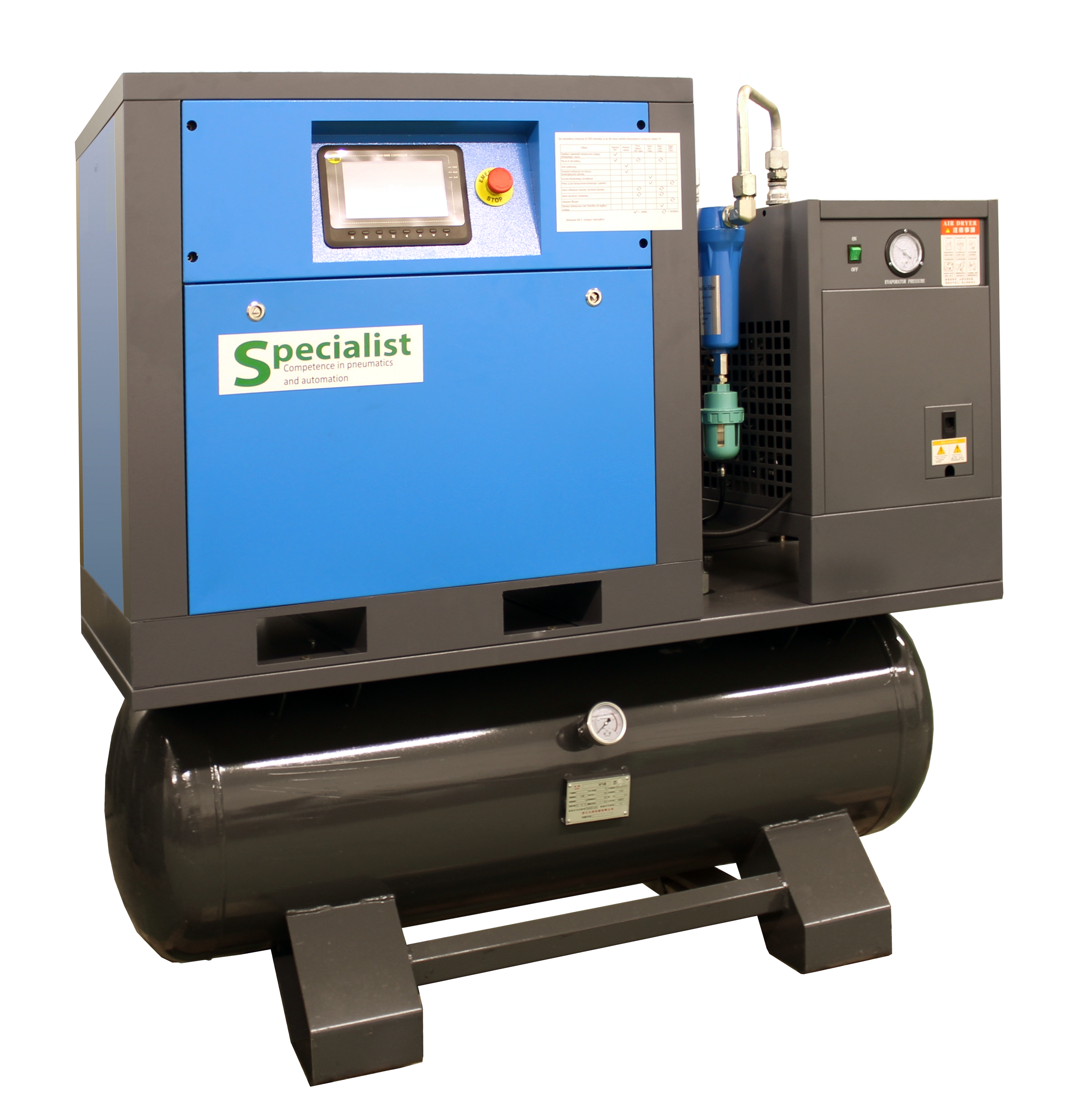
The controllers installed on "Specialist" screw compressors allow full utilization of the inverter's capabilities and enable motor speed regulation within a range of 50–100% of the rated speed, which not only reduces power consumption but also allows the compressor to operate without an air receiver. This is especially important because screw compressors are designed for continuous 24/7 operation.
Installing frequency inverters on motors above 22 kW can provide significant energy savings and help recover equipment costs.
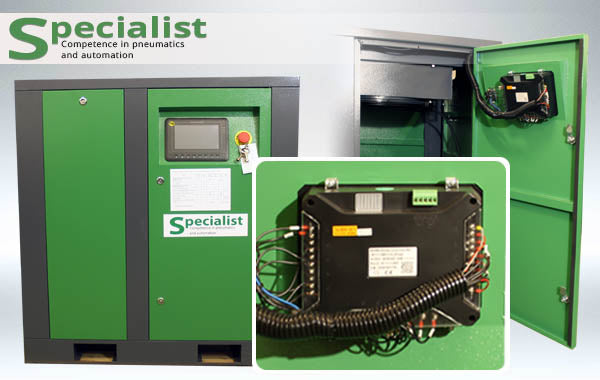
Which Frequency Inverter Should You Choose for a Compressor: Scalar or Vector?
When choosing a frequency inverter type, it is important to consider the characteristics and requirements of your equipment. Here are our general recommendations:
Scalar frequency inverter:
This is a budget-friendly solution, but it should only be used for smooth compressor startup. Scalar control cannot fully maintain torque or operate correctly when the motor enters generator mode (which occurs when the compressor enters unloading mode).
Vector frequency inverter:
Currently, this is the best solution for both piston and screw compressors due to three advantages of vector control:
- Ability to maintain torque at low frequencies.
- Ability to control the motor when it begins operating in generator mode.
- More advanced control and optimal frequency selection.
Screw or Piston Compressors – Where Will a Frequency Inverter Provide Greater Efficiency?
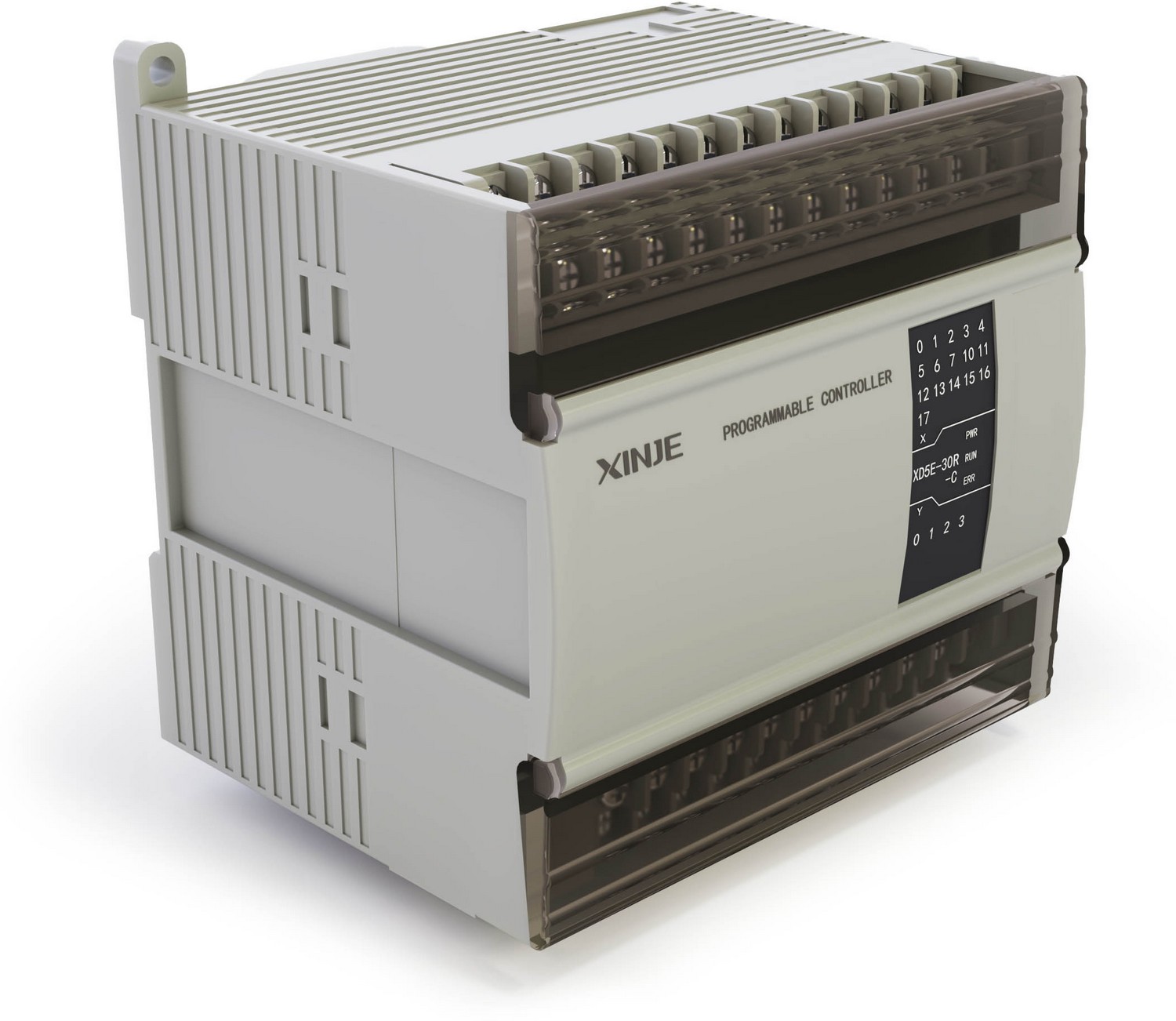
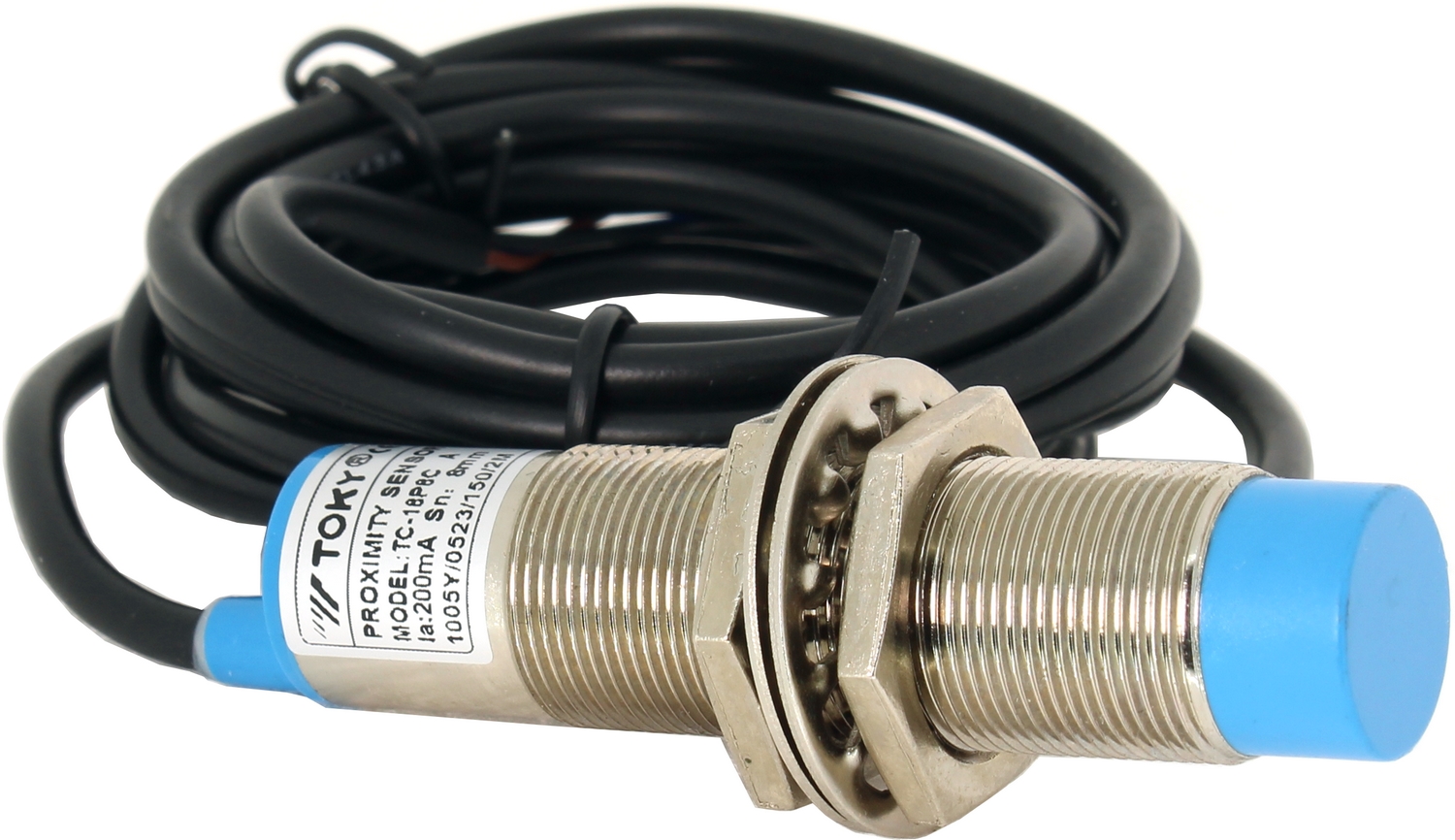
Since the full functionality of a frequency inverter can only be utilized with an advanced controller, upgrading older systems may require replacing the existing controller with a PLC. The controller must receive information simultaneously and directly from multiple sensors (system pressure, screw block pressure, oil pressure, motor temperature, and air temperature) to ensure safe long-term operation at low frequencies.
Piston compressors generally operate for short periods. Installing a frequency inverter on such compressors is usually not highly effective.
Screw air compressors equipped with frequency inverters offer more flexible adjustment and significantly lower energy consumption.
How to Run a 380V Motor Compressor from a Single-Phase 220V Network?
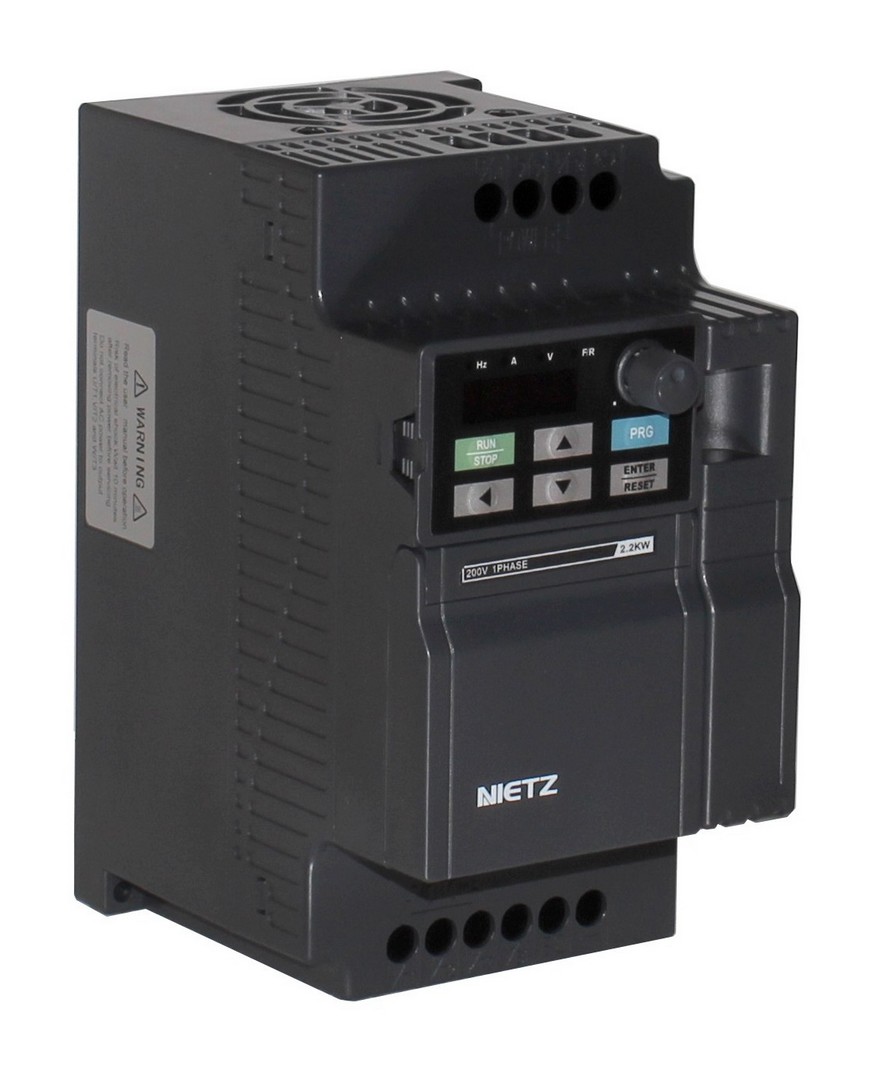
One of the simplest solutions for connecting a 380V motor compressor to a 220V network is using the NZ2200. These step-up frequency inverters convert a 220V input into a three-phase 380V output, allowing the motor to operate at full power.
Connecting high-power compressors (above 15 kW) may heavily overload a residential power line and cause the protection system to trip.
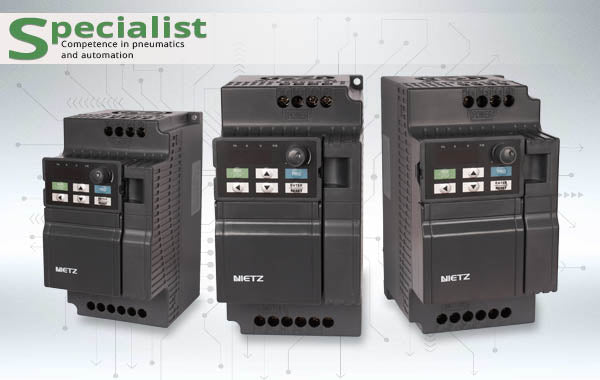
Buy a Compressor with a Frequency Inverter or Build It Yourself?
We recommend purchasing a ready-made compressor with a frequency inverter, because when assembling the system yourself, you may get limited inverter functionality on a piston compressor and face compatibility issues between the controller and inverter on a screw compressor. This may require redesigning the electrical circuit, checking for phase imbalance, and ensuring there are no relays or contactors between the inverter and motor.
Advantages of building it yourself:
- Suitable for technically skilled users with experience in assembling and configuring similar systems.
- Allows precise customization of the compressor system to meet your requirements and create a highly individualized solution.
Purchasing a ready-made solution:
- Recommended if you have limited time or experience with configuring frequency drives and compressors.
- Saves time and provides a proven, guaranteed solution that is pre-configured and ready for operation.
In any case, professionalism matters — entrust such tasks to specialists in the field.
Get Technical Support
Qualified automation engineers at PE "Specialist" will provide consultation on selecting, installing, and configuring frequency inverters. We can also help select the necessary peripheral equipment and repair your inverter.
Call toll-free within Ukraine
+38 0800 210 317Frequently Asked Questions:
What is the difference between a screw compressor and a piston compressor?
Piston and screw compressors are two types of gas compression equipment (most often air compressors). They differ in their recommended operating mode, compression mechanism, smoothness of operation, efficiency, size, and service life. Read more in our article.
When is it advisable to use a frequency inverter for a compressor?
When you need to:
-
achieve smooth startup with reduced inrush current.
-
adjust compressor output according to compressed air consumption.
What happens if a motor with higher power is connected to a frequency inverter?
Depending on the difference between the inverter and motor power ratings, several outcomes are possible: the frequency inverter may constantly trip due to overload, or it may fail completely.