




- What is a pneumatic cylinder?
- What is a pneumatic cylinder used for?
- Types of pneumatic cylinders.
- How does a pneumatic cylinder work?
- How to calculate the diameter of a pneumatic cylinder?
- How to calculate the force of a pneumatic cylinder?
- How to choose a pneumatic cylinder?
- How is a pneumatic cylinder installed?
- Pneumatic cylinder control.
- Pneumatic cylinder adjustment.
- Does a pneumatic cylinder need lubrication?
What is a pneumatic cylinder?
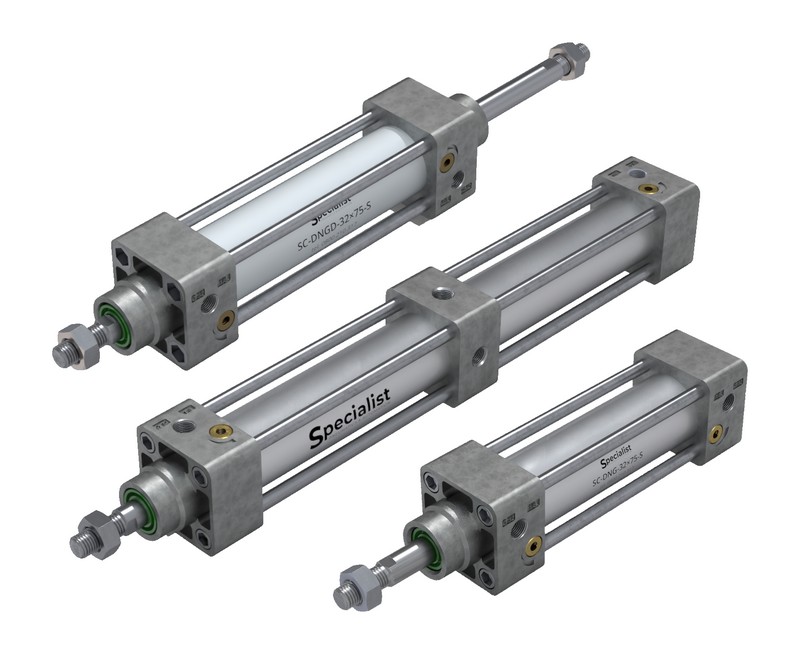
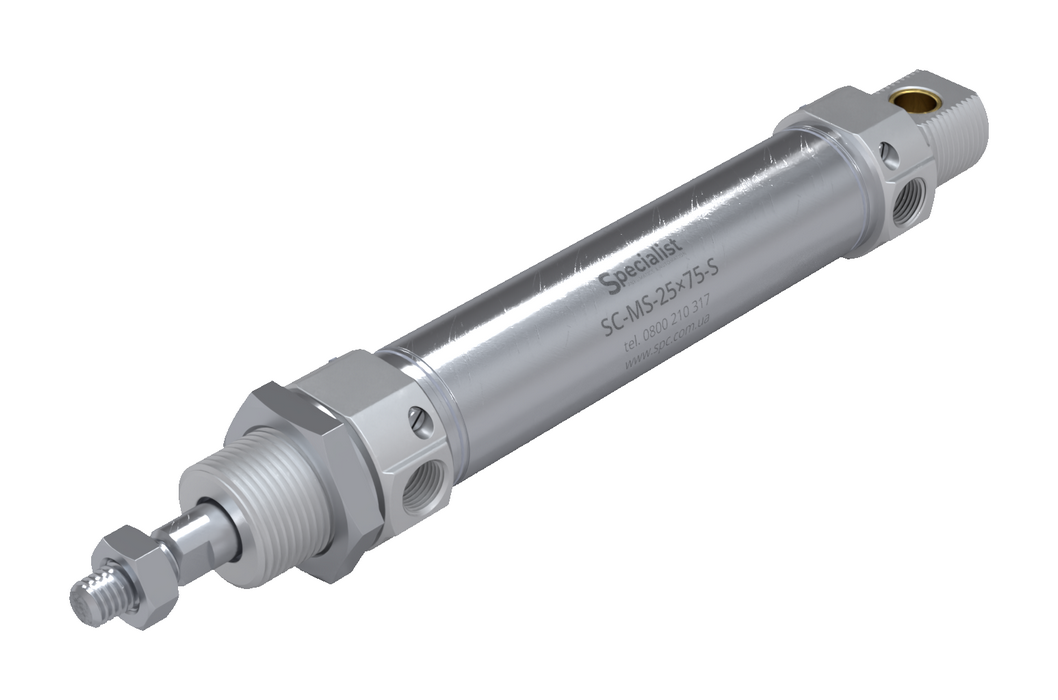
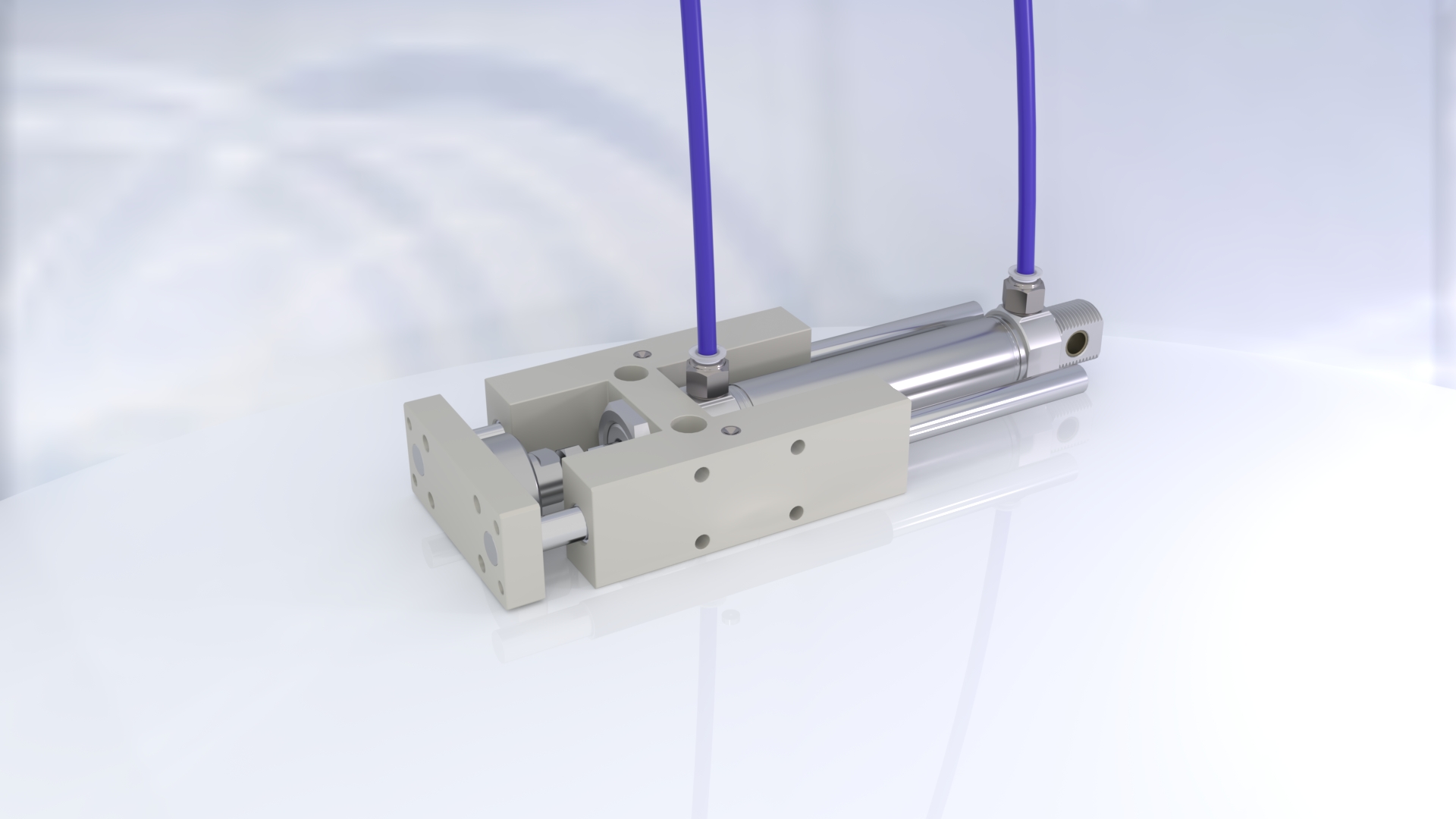
A pneumatic cylinder is a device used to create linear motion in pneumatic systems. It consists of a piston that moves inside a cylinder and a rod connected to a working tool or mechanism. A pneumatic cylinder operates using compressed air supplied through inlet ports. This causes the piston and rod to move.
What is a pneumatic cylinder used for?
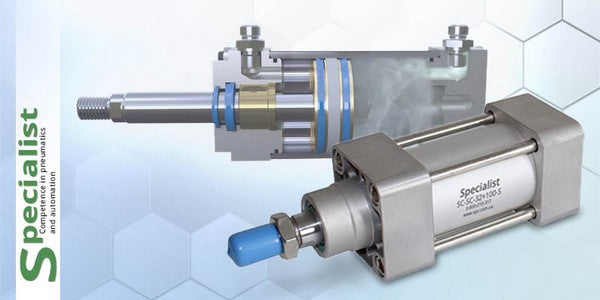
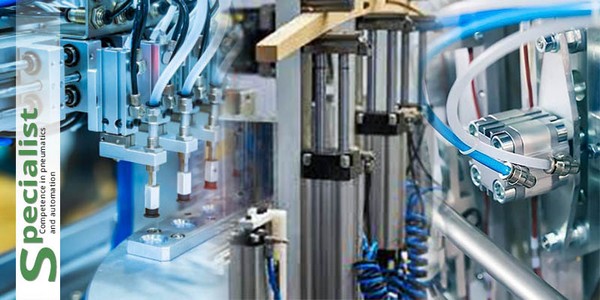
Pneumatic cylinders are widely used for automating manufacturing processes and controlling mechanisms. They can be used for moving and positioning materials, parts, and equipment, as well as for driving robots, presses, conveyors, and other mechanisms in various industries.
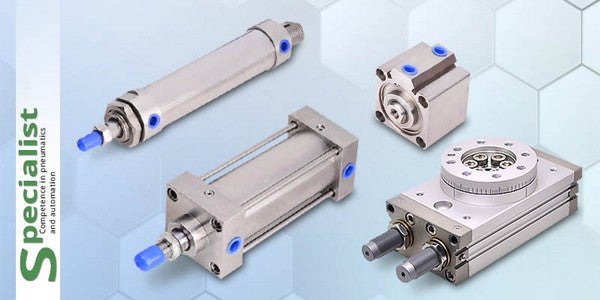
Our company manufactures various types of pneumatic cylinders with a production lead time of 1 to 3 days.
Types of pneumatic cylinders
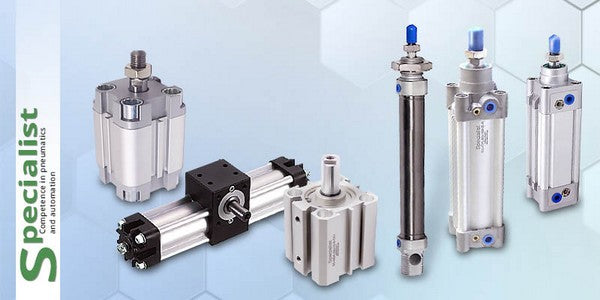
Pneumatic cylinders can be divided into four types:
- Linear cylinders — this group includes single-acting and double-acting cylinders.
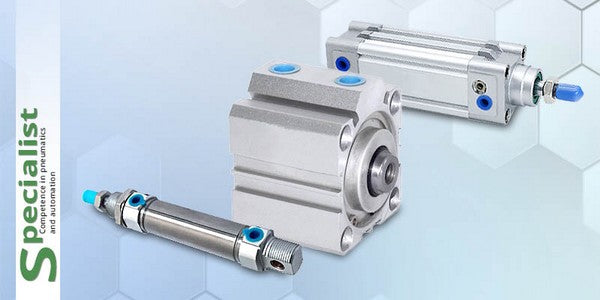
- Rotary cylinders — this group includes limited-rotation cylinders and pneumatic motors.
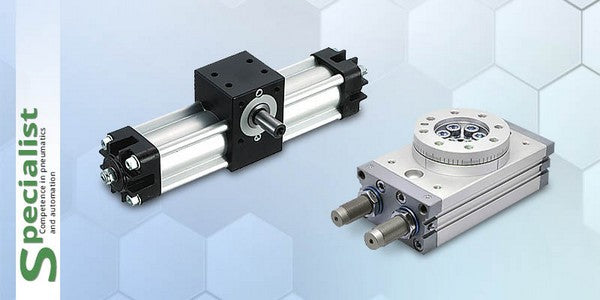
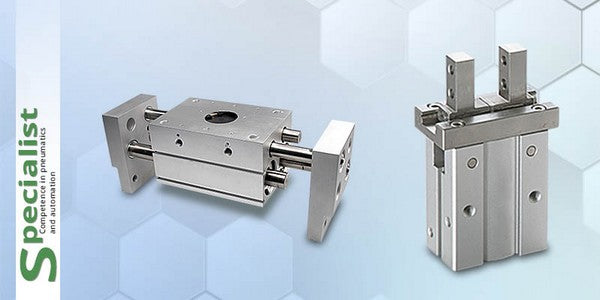
- Pneumatic grippers – this category includes pneumatic grippers of various designs, most commonly based on linear cylinders.
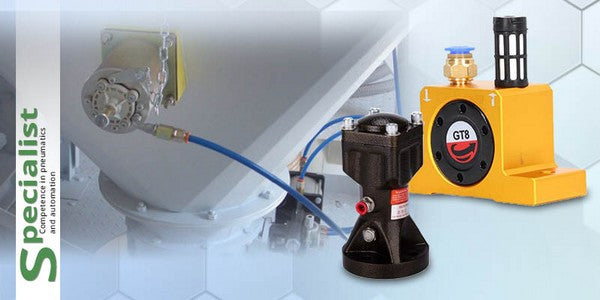
- Custom pneumatic actuators — this group includes pneumatic hammers, pneumatic vibrators, and other non-standard mechanisms that often do not have a moving or rotating output shaft.
How does a pneumatic cylinder work?
A pneumatic cylinder is a device that uses compressed air to create mechanical motion. It consists of two main components: a cylindrical body and a piston.
The cylindrical body is usually made of aluminum or stainless steel. Inside the body is a piston that divides the cylinder into two chambers – front and rear. The piston is also made of aluminum or stainless steel and has a sealed gasket to prevent air leakage.
Operation of a double-acting cylinder
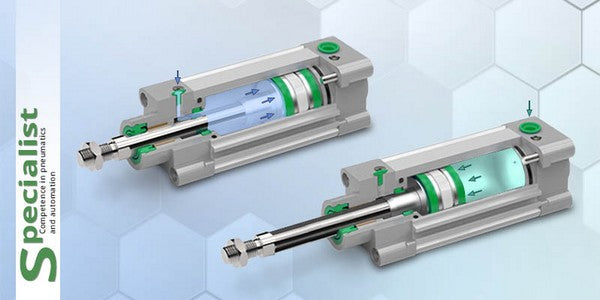
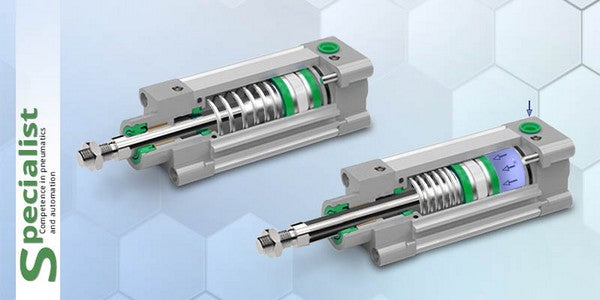
The movement of a double-acting cylinder is achieved by supplying compressed air to either the rod-side chamber or the cap-end chamber of the pneumatic cylinder. When compressed air is supplied to the rod-side chamber, the rod retracts. When compressed air is supplied to the cap-end chamber, the rod extends. The force of a double-acting pneumatic cylinder depends on the piston diameter, rod diameter, and the pressure supplied to the cylinder chamber.
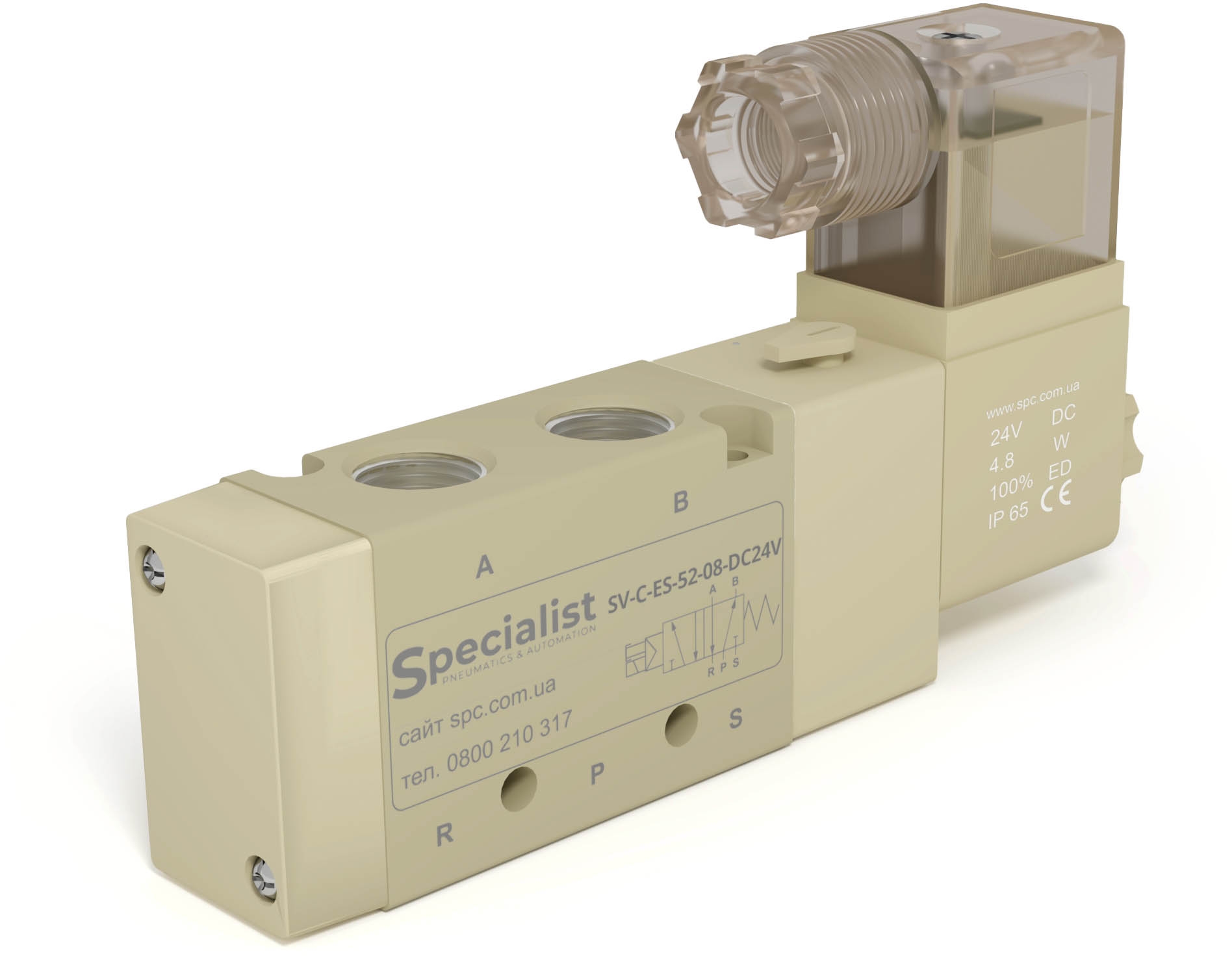
To control double-acting pneumatic cylinders, five-port two-position and five-port three-position pneumatic valves are used.
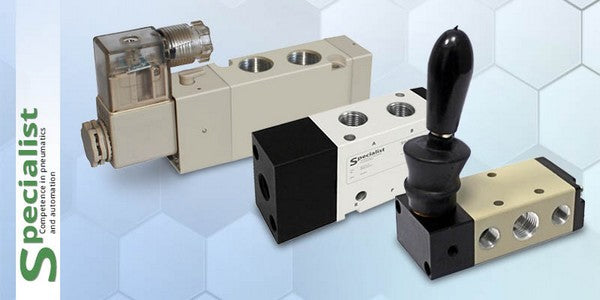
5/2 Pneumatic Valves
Operation of a single-acting cylinder
In single-acting cylinders, compressed air is supplied to only one chamber, either the rod-side or cap-end chamber, depending on the cylinder design. A mechanical spring is usually installed in the opposite chamber to return the rod to its initial position after pressure is released.
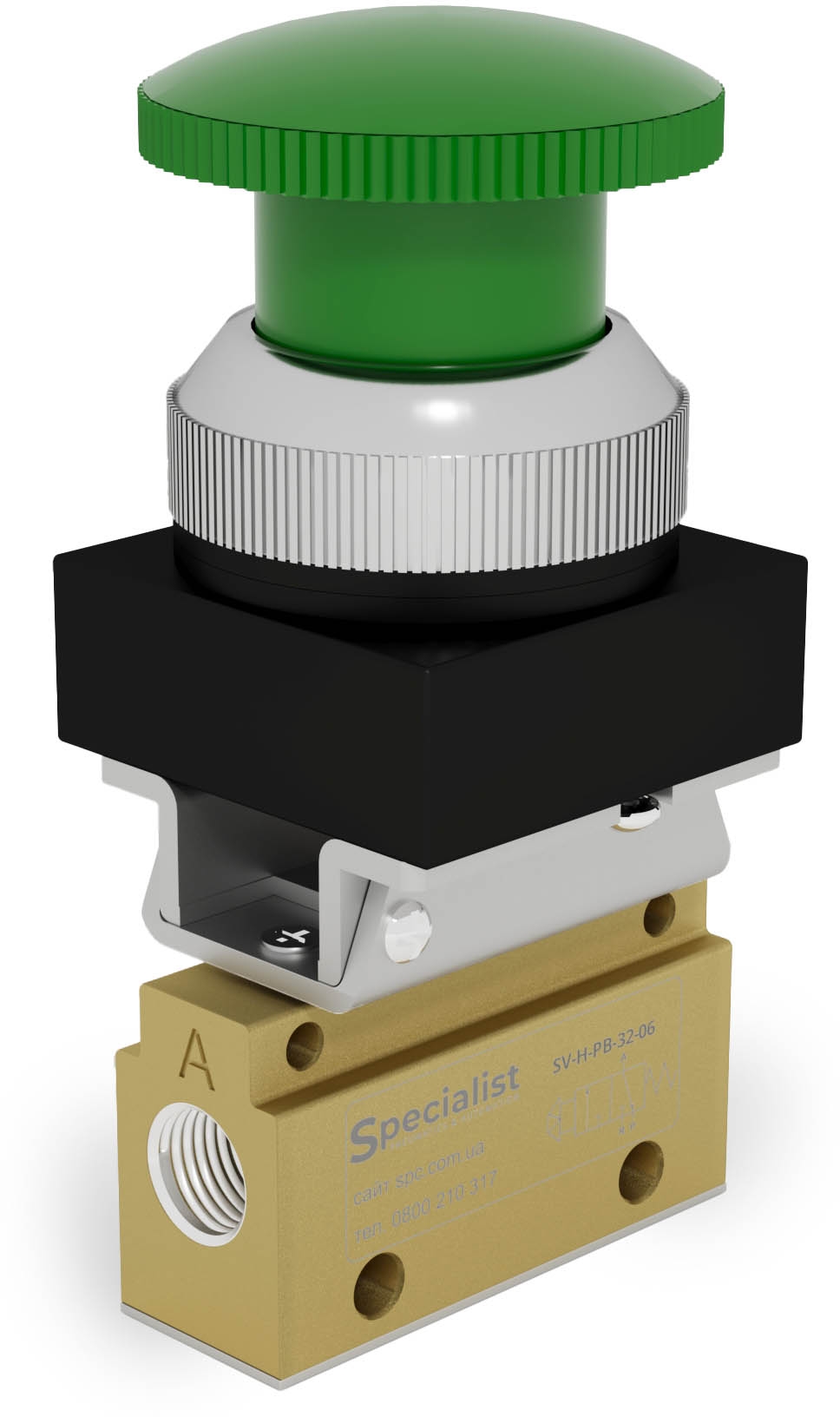
To control single-acting pneumatic cylinders, three-port two-position normally open or normally closed valves are used.
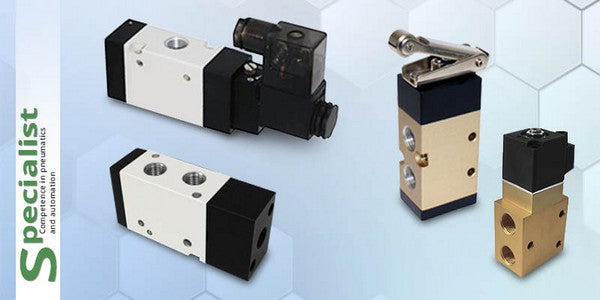
3/2 Pneumatic Valves
How to calculate the diameter of a pneumatic cylinder?
To calculate the diameter of a pneumatic cylinder, it is necessary to know the air pressure in the pneumatic system that will be used to operate the cylinder, as well as the force the cylinder must generate.
When designing general industrial pneumatic systems, it is recommended to provide a working pressure of 6–7 bar, taking into account pressure losses in devices and pipelines.
To approximately determine the cylinder diameter in millimeters, the following formula can be used:
![Pneumatic cylinder diameter formula D = sqrt[(4*F*η)/(P*π)]*1000](https://spc.com.ua/image/catalog/shopify/article/the-construction-of-a-one-way-and-two-way-pneumatic-cylinder_10e9cb726b.png)
where D is the cylinder diameter in mm,
F is the required force in Newtons,
P is the compressed air pressure (in Pascals),
k is a coefficient that takes into account additional loads on the piston (typically from 1.2 to 1.4),
π is Pi (approximately 3.14).
For example, if a force of 300 N is required using an air pressure of 0.7 MPa (7 bar), the cylinder diameter will be:
D = sqrt[(4 x 300 x 1.4)/(700'000 x 3.14)] x 1000 = 28 mm
The piston diameter is then selected from the standard piston diameter range: 6, 8, 10, 12, 16, 20, 25, 32, 40, 50, 63, 80, 100, 125, 160, 200, 250, 320 mm.
If the calculated value falls between two standard sizes, the larger size should be selected. In this case, it would be 32 mm.
How to calculate the force of a pneumatic cylinder?
Double-acting pneumatic cylinders – force calculation
When calculating the force of a pneumatic cylinder, it is important to remember that for double-acting cylinders, extension and retraction forces are calculated using different formulas. This is because one chamber of the cylinder contains the rod, while the other does not.
Calculation of double-acting pneumatic cylinder extension force:
1 2 3 4 5 6 7 8 9 10 8 4 Cap end 50 5 9 14 18 23 27 32 36 41 45 Rod end 38 3 7 10 14 17 20 24 27 31 34 10 4 Cap end 79 7 14 21 28 35 42 49 57 64 71 Rod end 66 6 12 18 24 30 36 42 48 53 59 12 6 Cap end 113 10 20 31 41 51 61 71 81 92 102 Rod end 85 8 15 23 31 38 46 53 61 69 76 16 6 Cap end 201 18 36 54 72 90 109 127 145 163 181 Rod end 173 16 31 47 62 78 93 109 124 140 156 20 8 Cap end 314 28 57 85 113 141 170 198 226 254 283 Rod end 264 24 48 71 95 119 143 166 190 214 238 25 10 Cap end 491 44 88 133 177 221 265 309 353 398 442 Rod end 412 37 74 111 148 186 223 260 297 334 371 32 12 Cap end 804 72 145 217 290 362 434 507 579 651 724 Rod end 691 62 124 187 249 311 373 435 498 560 622 40 16 Cap end 1257 113 226 339 452 565 679 792 905 1018 1131 Rod end 1056 95 190 285 380 475 570 665 760 855 950 50 20 Cap end 1963 177 353 530 707 884 1060 1237 1414 1590 1767 Rod end 1649 148 297 445 594 742 891 1039 1188 1336 1484Single-acting pneumatic cylinders – force calculation
When calculating the force of a single-acting pneumatic cylinder, it is necessary to take into account the return spring force. It should also be remembered that the return spring is designed only to return the piston and cannot be used to move an external load.

where F — the force generated by the pneumatic cylinder (in Newtons),
P — the compressed air pressure supplied to the cylinder (in Pascals),
π — pi (3.14),
D — piston diameter (in meters),
d — rod diameter (in meters),
η – cylinder efficiency coefficient (usually taken as 0.9),
k – spring stiffness coefficient (for calculations, use 0.77)
x – pneumatic cylinder displacement.
How to choose a pneumatic cylinder?
A separate article is dedicated to selecting pneumatic cylinders (link to article). Here we will only describe the main conditions that must be considered when choosing one:
- Force: determine the force the cylinder must generate.
- Determine the required stroke of the pneumatic cylinder based on the design of your equipment.
- Diameter: choose the cylinder diameter depending on the required force, stroke, or design features of your equipment.
- Operating pressure: to correctly select a pneumatic cylinder, you must know the pressure at which it will operate. The standard operating pressure of cylinders usually does not exceed 10 bar.
- Mounting: make sure the selected pneumatic cylinder can be easily installed and connected to the system.
- Environment: consider the environmental conditions in which the pneumatic cylinder will operate. For example, if the cylinder will operate in an aggressive environment or at high temperatures, it is necessary to choose a cylinder made of materials resistant to such conditions.
- Speed: consider the required speed of movement of the load or mechanism when selecting a pneumatic cylinder.
For the correct selection of pneumatic cylinders, contact our company's technical department. We provide technical консультаtion on all issues related to the selection of pneumatic cylinders, mounting accessories, and control components required for your application.
Get technical support
Qualified automation engineers of PE "Specialist" will provide you with the necessary consultation regarding the selection, installation, and adjustment of pneumatic cylinders. We can also help you select the required peripheral equipment and repair your actuator.
Call toll-free within Ukraine
+38 0800 210 317How is a pneumatic cylinder installed?
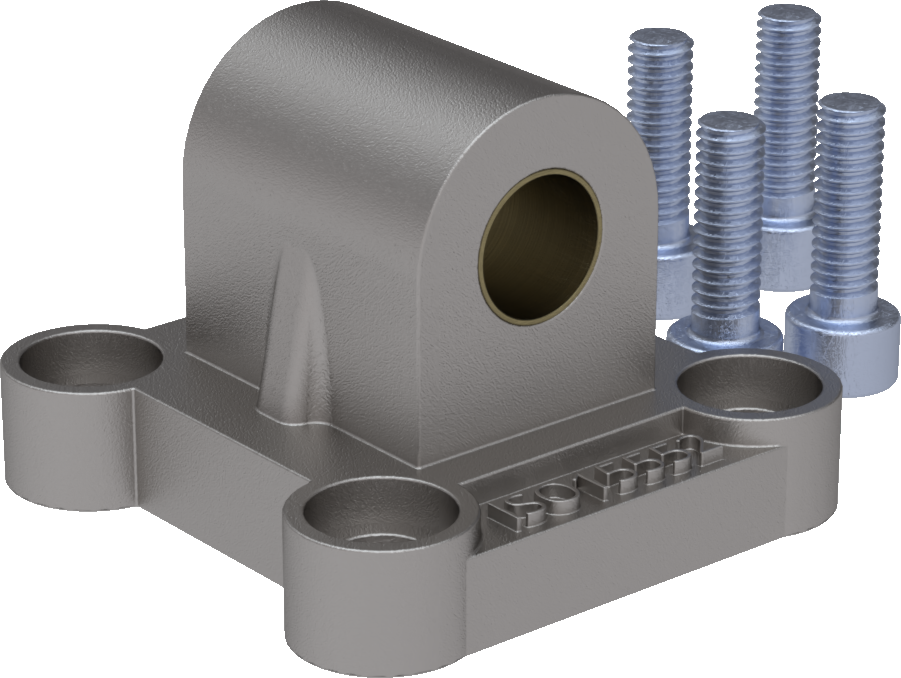
The installation of pneumatic cylinders may vary depending on the specific type, model, and application. A separate article will be dedicated to selecting mounting accessories, but here we will mention the basic installation requirements. The process is as follows:
- The surface on which the pneumatic cylinder is installed must be strong and reliable. Make sure your frame, platform, table, or other structure can withstand the weight of the pneumatic cylinder and the loads associated with its operation.
- Prepare the appropriate pneumatic cylinder and make sure it is assembled and operational.
- Determine the exact location where the mounting elements that will hold the pneumatic cylinder will be installed.
- Install the pneumatic cylinder on the mounting elements and tighten the screws to secure it. If necessary, connect the load to the rod.
- Make sure the pneumatic cylinder is mounted correctly and in accordance with safety requirements. Pay special attention to ensuring that the load is aligned properly and does not bend the rod during extension.
- Shut down the pneumatic system to release pressure and connect the air lines to the pneumatic cylinder. Connect the signal wires to the valve and control distributor coils if required.
- Apply pressure and test the pneumatic cylinder in operation. Follow the operating and maintenance instructions.
It is important to note that the installation of pneumatic cylinders is a responsible task that should be carried out by specialists with appropriate knowledge in mechanics and pneumatics. Violating safety rules and standards during installation may result in injury not only to the installer but also to others nearby. Always follow safety regulations and exercise caution.
Pneumatic cylinder control
Pneumatic valves are used to control pneumatic cylinders. As mentioned above, double-acting cylinders are controlled using five-port two-position and five-port three-position valves. Single-acting cylinders are controlled using three-port two-position valves. These valves may have electric, pneumatic, or mechanical actuation.
This topic will be covered in detail in the article Selecting a valve and connecting a pneumatic cylinder.
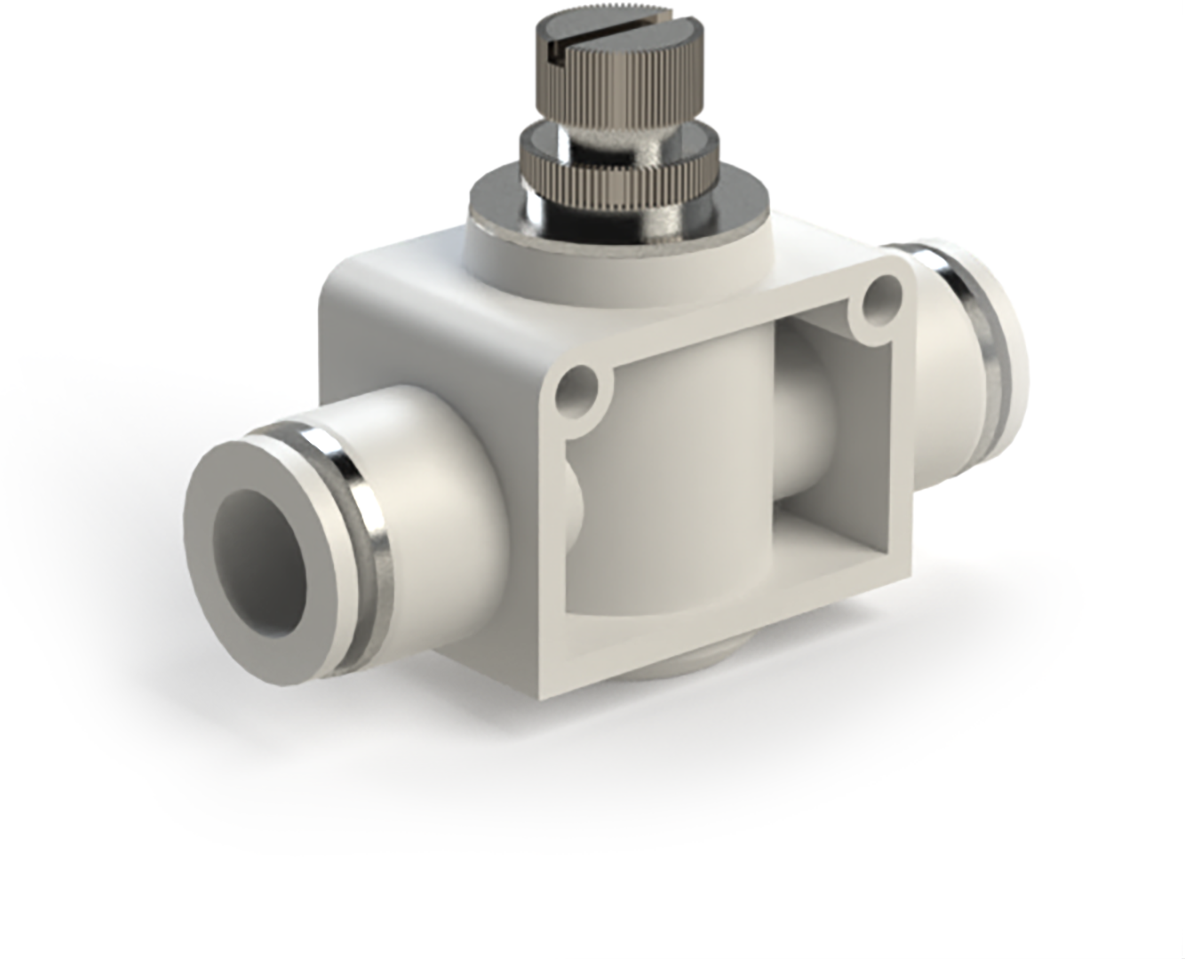
Flow control valves are used to regulate the speed of a pneumatic cylinder. They can be installed either directly on the cylinder or on the valve controlling it.
Reed switches or Hall effect sensors are used to monitor the position of the pneumatic cylinder piston.
Pneumatic cylinder adjustment
Below are the main parameters that can be adjusted to ensure proper operation of a pneumatic cylinder.
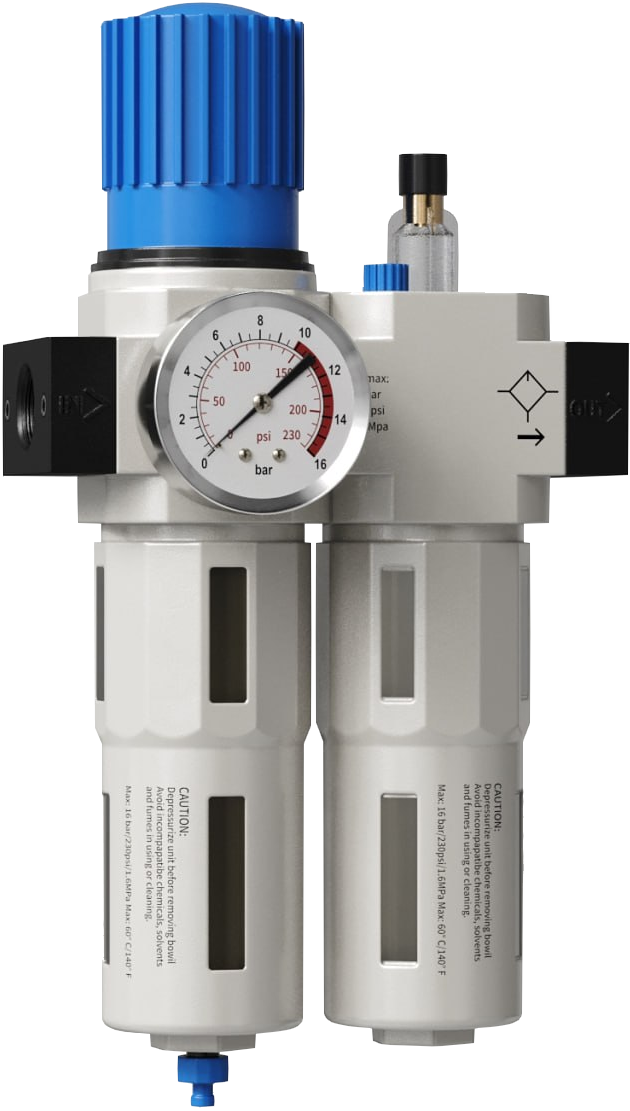
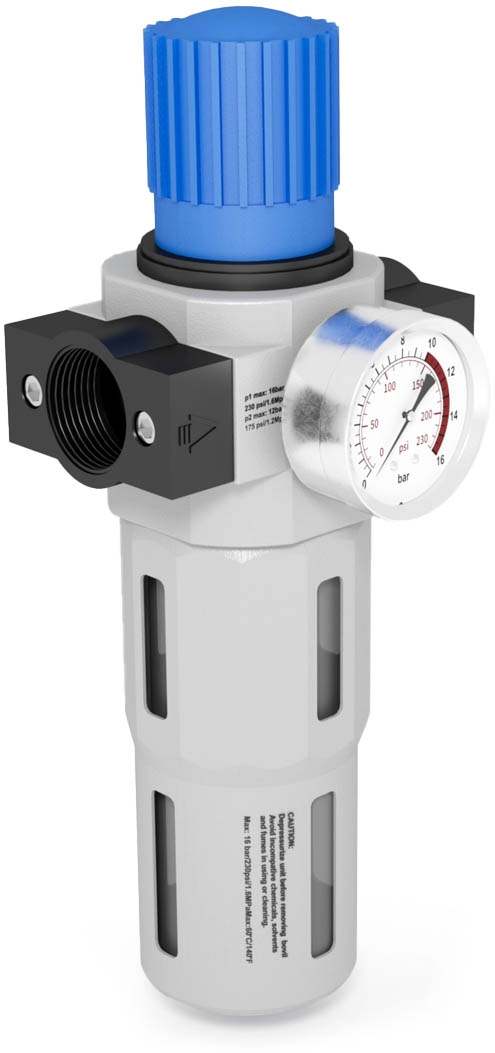
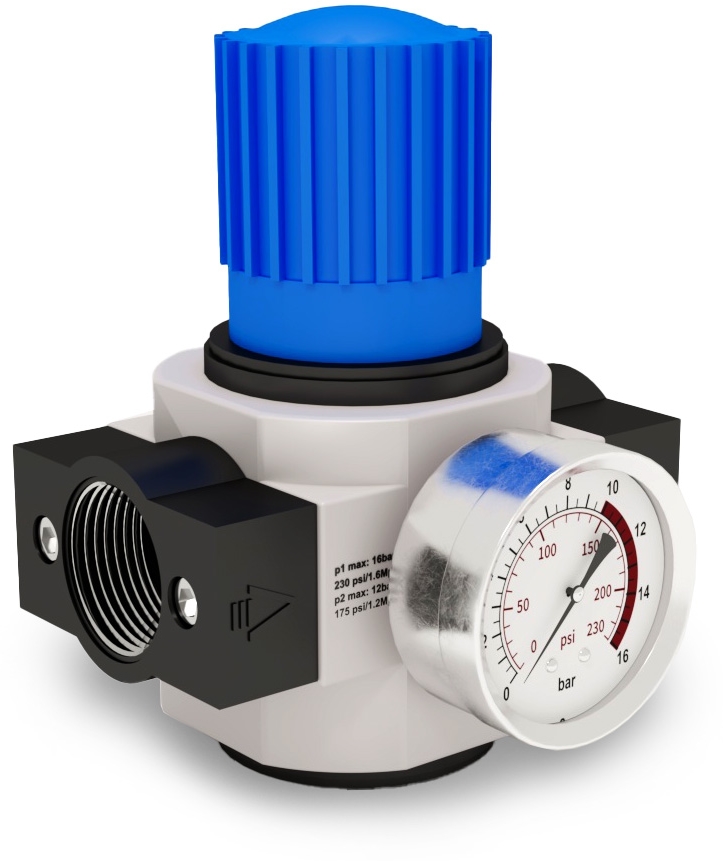
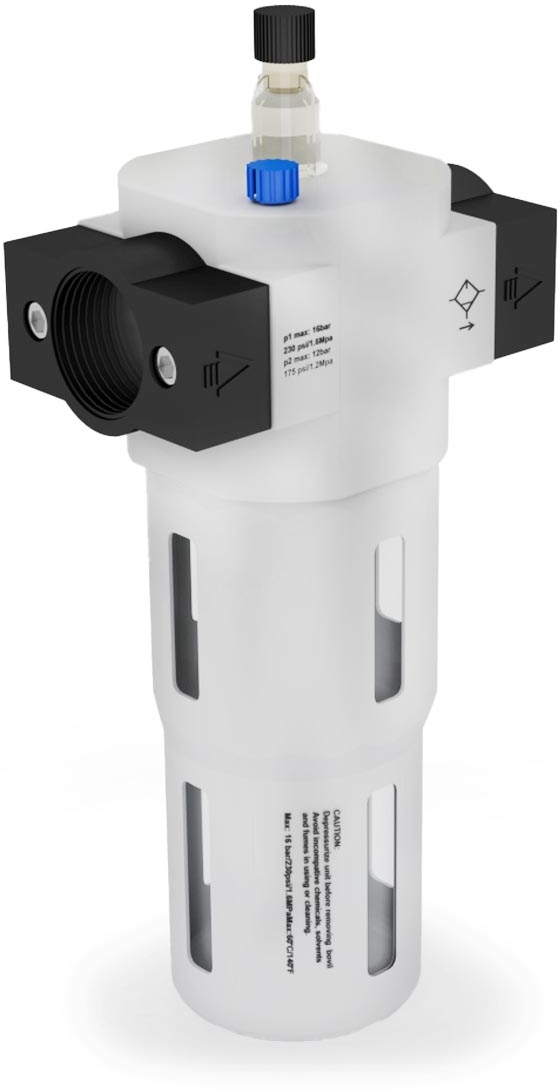
- Adjusting the inlet pressure. A pressure regulator must be installed in your system to regulate the inlet pressure. Using this regulator, you can adjust the force generated by your pneumatic cylinder.
- Adjusting the speed of the pneumatic cylinder. To regulate cylinder speed, flow control valves must be installed on the inlet ports of the pneumatic cylinder or valve.
- Adjusting cushioning or smooth stopping of the pneumatic cylinder at end positions. If your cylinder is equipped with cushioning, special screws on the end covers allow adjustment of stopping smoothness at the end positions.
Does a pneumatic cylinder need lubrication?
Pneumatic cylinders require minimal maintenance. During manufacturing, they are filled with grease that is often sufficient for the entire service life of the cylinder.
Main operating requirements:
- The air supplied to the cylinder must not contain solid particles larger than 40 microns.
- The air supplied to the cylinder must not contain moisture. Moisture in the air washes away the grease and causes premature failure of the cylinder seals.
- If your system uses an air lubricator, oil supply must not be interrupted, as this will lead to rapid wear of the cylinder seals.
- The cylinder must not be supplied with compressed air pressure higher than specified in the manufacturer's catalog.
- Excessive radial load on the pneumatic cylinder rod may lead to premature failure.
- Incorrect installation of the pneumatic cylinder may result in damage.
- Attaching an excessively large load to the pneumatic cylinder rod may cause its destruction.
To avoid losing the warranty on purchased equipment, consult a manager of our company regarding the operating conditions of pneumatic cylinders.
Get technical support
Qualified automation engineers of PE "Specialist" will provide you with the necessary consultation regarding the selection, installation, and adjustment of pneumatic cylinders. We can also help you select the necessary valves and mounting accessories.
Call toll-free within Ukraine
+38 0800 210 317
