



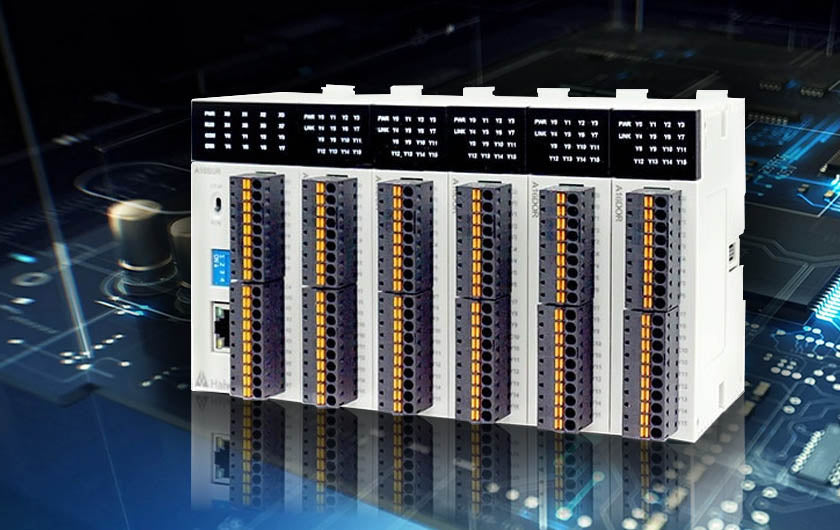
In the modern world of automation, industrial programmable logic controllers play a crucial role in controlling technological processes and production lines. These devices are specialized computer systems designed for reliable operation in industrial environments and for performing complex control tasks. In this article, we will review the main functions and advantages of industrial PLCs, their various configurations, and provide examples of popular models on the market.
What Are Programmable Logic Controllers
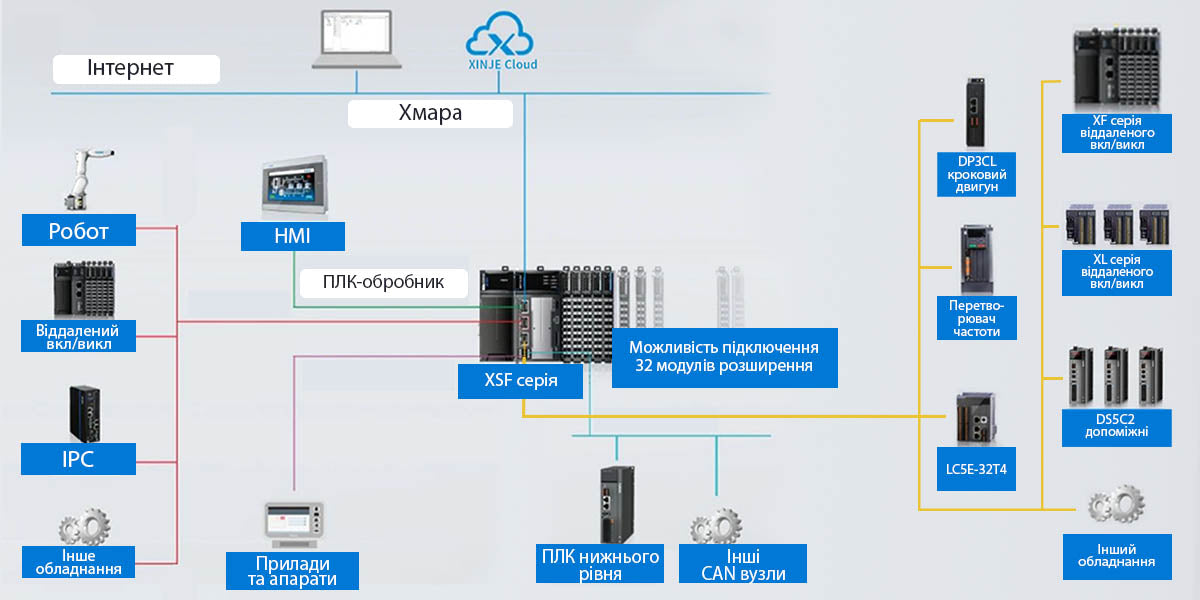
An industrial controller (or PLC — Programmable Logic Controller, not to be confused with a microcontroller (single-chip computer)) is an electronic device designed to automate technological processes in industry. The main task of the controller is to receive data from sensors, process it according to the programmed logic, and control actuators. Unlike conventional computers, industrial controllers are designed to operate in harsh conditions: high temperatures, increased humidity, vibrations, and electromagnetic interference.
Types of Controller Designs
The modern market offers various PLC designs that can be classified according to several criteria:
Standalone PLCs and Integrated Systems
A standalone programmable logic controller is installed independently from other components and connected to operator panels, sensors, and actuators through communication interfaces. This configuration provides greater flexibility in system design and allows components to be placed in different locations.
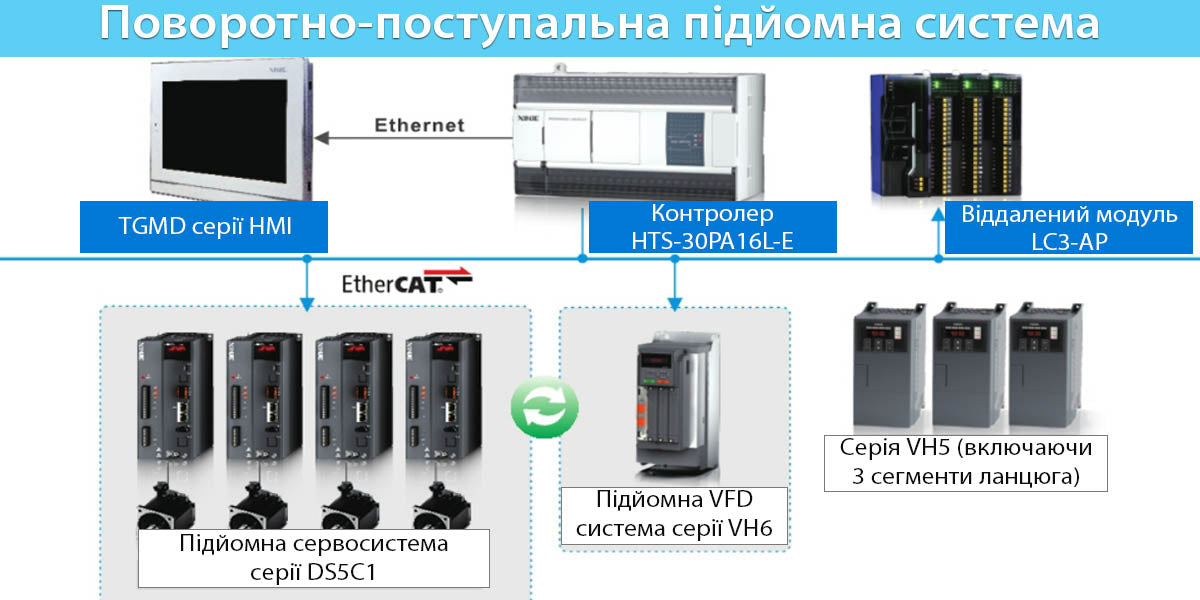
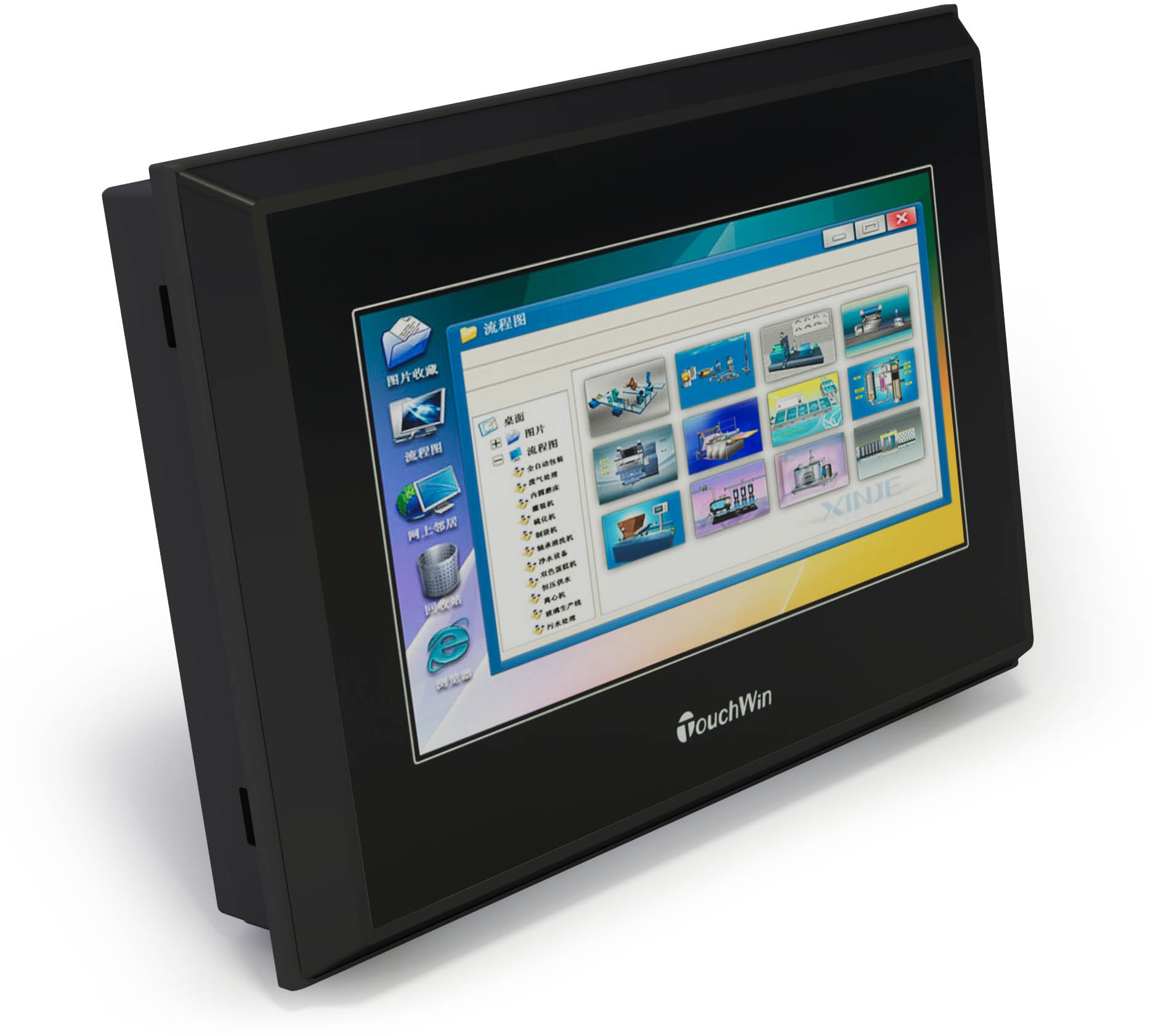
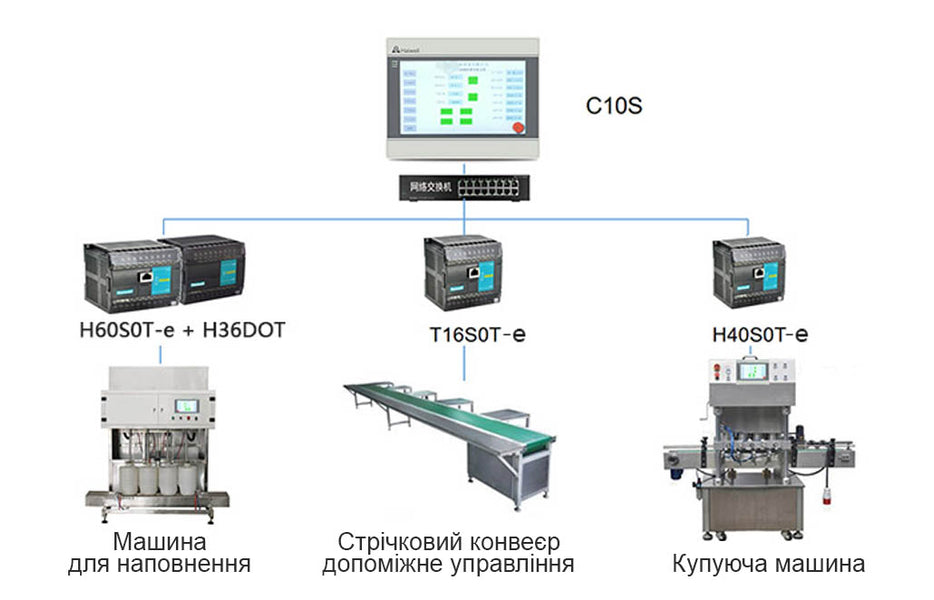
Integrated systems are devices that combine a controller and an operator panel into a single unit. This option offers several advantages:
- Space saving in the control cabinet
- Simplified connection between the controller and the operator panel
- Reduced installation and wiring costs
- No need to configure data exchange between separate devices
Integrated systems are ideal for use in compact machines and small control systems where project space and budget are critical, and they can implement a master-slave function.
Controller Sizes and Form Factors
By size and form factor, controllers are divided into several types:
Large enclosure controllers are typically designed for controlling complex systems with a large number of inputs/outputs. They are installed in industrial cabinets and offer extended functionality. Such controllers are often used in large-scale production facilities where processing large volumes of data and controlling numerous actuators is required.
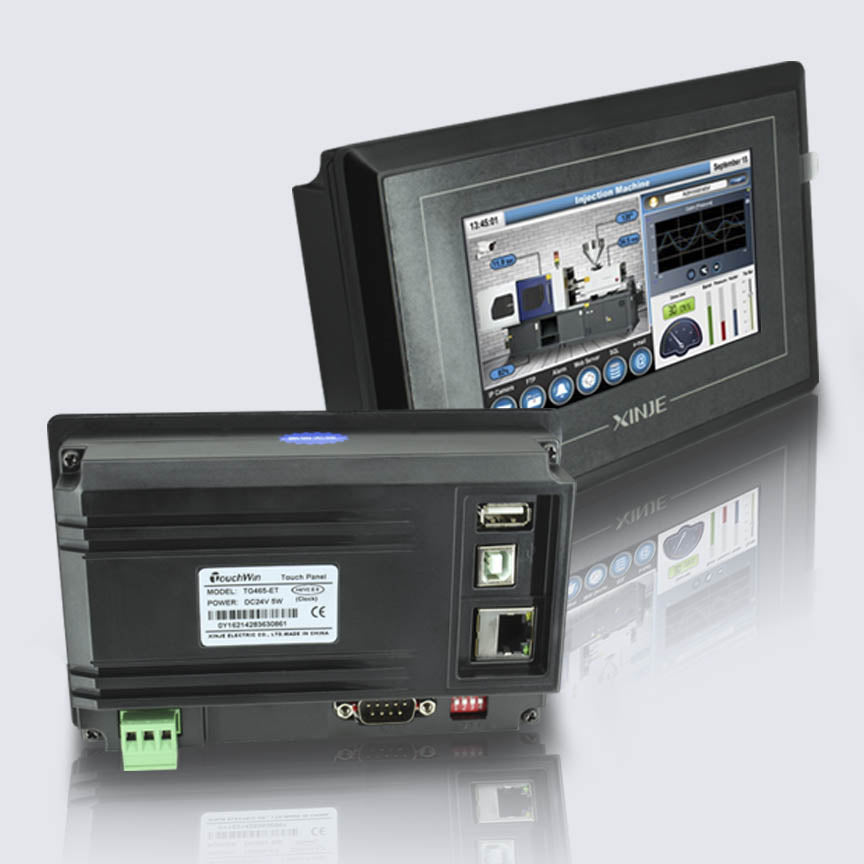
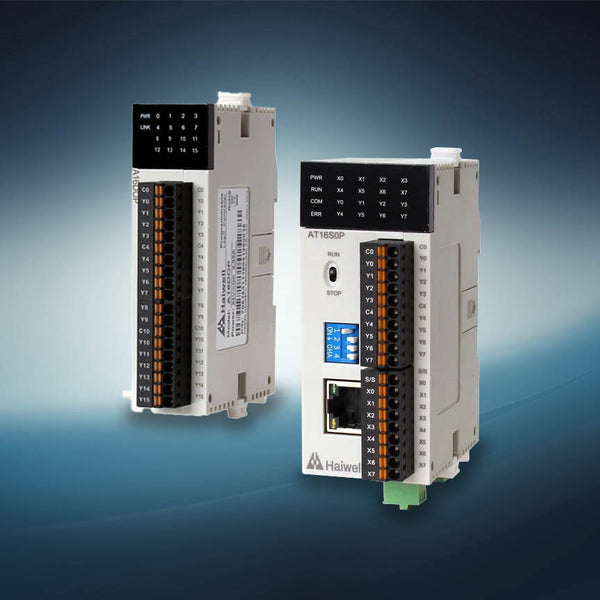
Compact controllers or card-type controllers are smaller in size and represent a modular system consisting of a main unit (processor module) and additional expansion modules. The main unit contains the processor, memory, and a basic set of inputs/outputs, while additional modules are added as needed. This approach provides:
- Cost optimization (you can purchase only the modules that are actually needed)
- System scalability (the ability to add new modules when expanding functionality, allowing powerful systems to be built over time)
- Ease of maintenance (if one module fails, only that module is replaced rather than the entire controller)
- Compactness (important when installation space is limited)
Controller Programming Environments and Programming Languages
Specialized programming environments provided by equipment manufacturers are used to develop control programs for industrial controllers. These environments significantly simplify the process of creating, debugging, and downloading programs to controllers.
Industrial Controller Programming Environments
Most modern PLC programming environments offer the following capabilities:
- Graphical User Interface — an intuitive interface with the ability to visually design algorithms.
- Built-in Debugging Tools — program simulators that allow algorithms to be tested without connecting to real hardware.
- Project Documentation — automatic generation of technical documentation, including wiring diagrams, variable lists, and program comments.
- Library Management — creation and use of libraries of standard functions and function blocks for reuse in different projects.
- Monitoring Tools — the ability to monitor variable states and program operation in real time.
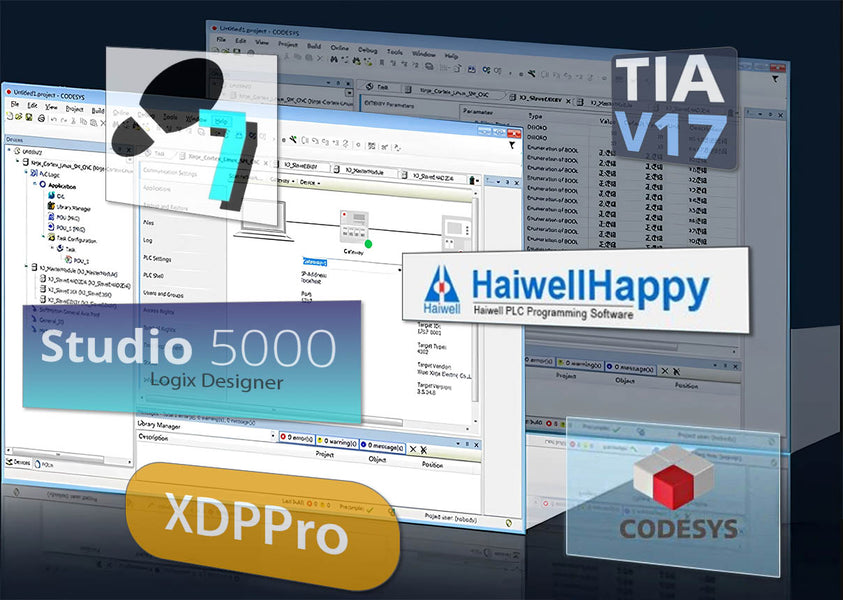
Examples of popular programming environments include:
- Haiwell Happy — a development environment for Haiwell PLC software that includes a program emulator and visualization tools.
- XDPPro — a software package for Xinje PLCs that provides a complete set of development tools.
- STEP 7/TIA Portal — a Siemens PLC programming environment with extensive capabilities and support for all standard IEC languages.
- Studio 5000 Logix Designer — a programming environment for Allen-Bradley PLCs that combines software development, hardware configuration, and diagnostics.
- CoDeSys — a universal programming environment supported by many PLC manufacturers and compliant with the IEC61131-3 standard.
Controller Programming Languages
According to the international standard IEC61131-3, five main languages are used for programming industrial PLCs:
- Ladder Diagram Language (LD, Ladder Diagram) — a graphical language resembling relay circuits. The main elements of this language are contacts and coils connected in circuits. The language is intuitive for electrical engineers and is widely used for programming discrete processes.
- Function Block Diagram Language (FBD, Function Block Diagram) — a graphical language where the program is represented as blocks with inputs and outputs connected by communication lines. Suitable for describing algorithms involving analog signals and complex mathematical calculations.
- Structured Text Language (ST, Structured Text) — a high-level textual language syntactically similar to Pascal. It allows the implementation of complex algorithms using loops, conditional operators, and mathematical functions. It is especially effective for data processing and calculations.
- Instruction List Language (IL, Instruction List) — a low-level textual language similar to assembly language. The program consists of a sequence of commands, each beginning on a new line. It allows compact and efficient code creation but requires a highly skilled programmer.
- Sequential Function Chart Language (SFC, Sequential Function Chart) — a graphical language for describing sequential processes. The program is represented as steps and transitions between them, allowing clear visualization of operation sequences and possible process branches.
In addition to the standard languages, some manufacturers offer extended capabilities:
- Programming in C/C++ — used in high-level controllers to implement complex data-processing algorithms.
- Visual Programming — graphical environments that allow users to create programs by dragging and connecting blocks without knowledge of programming language syntax.
- Specialized Languages — some manufacturers develop their own languages optimized for specific tasks.
The choice of programming language depends on the nature of the task, the programmer’s preferences, and the controller’s features. In practice, a combination of several languages is often used within a single project, where each part of the program is implemented in the language best suited for it.
SCADA Based on Industrial Controllers
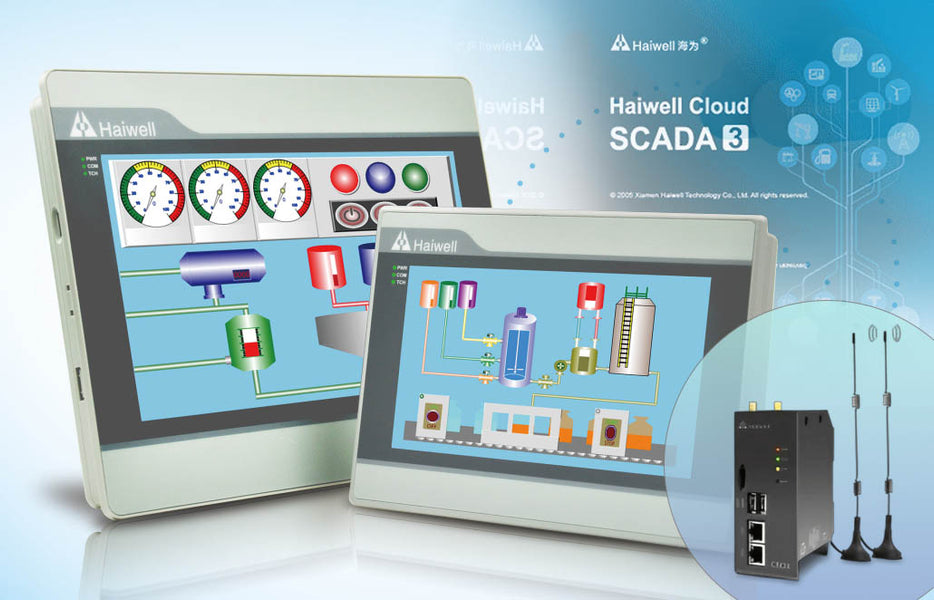
One of the key advantages of modern industrial PLCs is the ability to create full-featured SCADA systems (Supervisory Control And Data Acquisition systems). A SCADA system allows:
- Real-time visualization of production processes
- Collection and archiving of process data
- Remote monitoring and control of equipment
- Notification of personnel about abnormal situations
- Generation of equipment operation reports
Controllers with cloud technology support make it possible to organize remote access to the system via the Internet, which is especially relevant in modern conditions of globalized production and the need for rapid response to changes in industry.
Popular Types of Industrial Controllers
Let's consider two popular types of PLCs available on the market:
Haiwell SPLC-AT16SOT Modular Controller
Modular devices of the Haiwell AT series are a modern solution for various industrial applications. These devices combine high performance, configuration flexibility, and ease of use.
Main advantages of Haiwell SPLC-AT16SOT:
- Multilingual Programming: support for various programming languages, including LD, IL, and FBD, using Haiwell Happy software.
- Compact Design: optimized dimensions allow the controller to be installed in limited control cabinet space.
- I/O Flexibility: integration of various I/O types (digital, analog, temperature, pulse), which can be configured for specific signal module tasks.
- Cloud Technologies: connection to the Haiwell Cloud service provides remote PLC programming and monitoring via the Internet.
- Communication Capabilities: compatibility with a wide range of communication protocols (Modbus, CANopen, Profibus, Ethernet, etc.).
SPLC-AT16SOT Technical Specifications:
- 8 digital inputs
- 8 NPN transistor outputs
- 2 channels of high-speed input A/B 200K
- 2 channels of high-speed output A/B 200K
- Communication protocols: LAN+RS 485 (up to 5 ports)
- Number of connected modules – up to 15
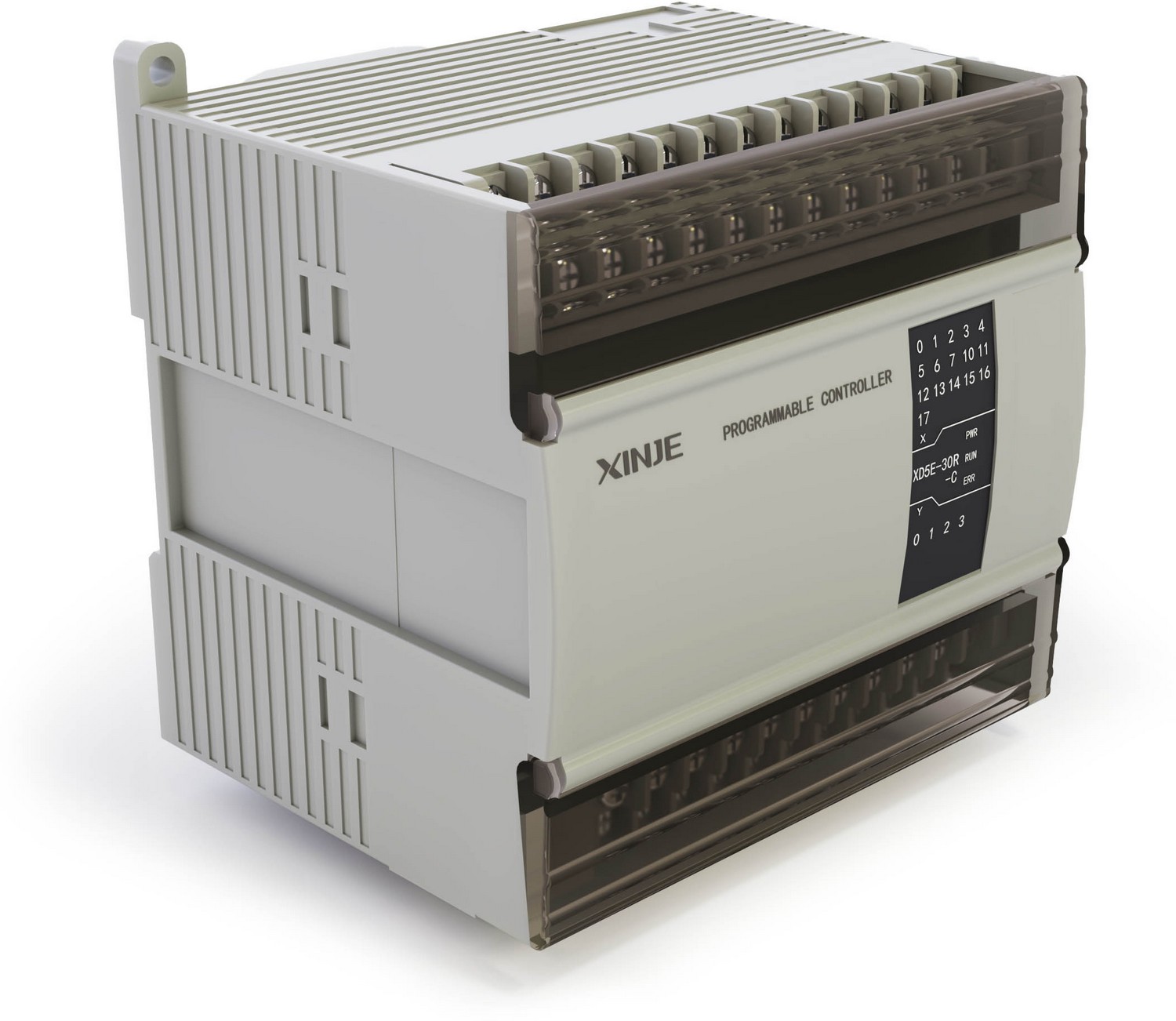
Xinje XD5 Controllers
Xinje XD5 series devices are advanced PLCs with full functionality and broad application possibilities.
Key features of Xinje XD5 PLCs:
- Multilingual Programming: support for LD, C-like text, and FBD languages in the free XDPPro development environment.
- Transistor I/O Type: provides high switching speed and long service life.
- Scalability: supports up to 16 expansion modules (special, communication, or I/O modules).
- Special Functions: pulse output, high-speed counter, PWM, frequency measurement, and two-axis control.
- Communication Capabilities: support for RS232 / RS485 protocols.
- Cloud Services: integration with Xinje Cloud for remote PLC programming and monitoring.
SPLC-XD5-32T-C Processor Module Technical Specifications:
- 18 digital inputs
- 14 transistor outputs
- 3 channels of high-speed input A/B 200K
- 2 PUL/DIR outputs
- Communication protocols: RS232/485
- Support for connecting 1BD, 1ED, and up to 16 right-side modules
- Power supply voltage: 24V
Want to automate your production?
Our engineers can select the optimal equipment from our warehouse in Ukraine based on price and functionality. We not only sell PLCs, industrial electronics, and pneumatics, but can also manufacture control panels and cabinets, program controllers, and develop project documentation and schematics.
Call toll-free within Ukraine
+38 0800 210 317Key Functions of Industrial PLCs
Regardless of the manufacturer and model, modern industrial PLCs have a number of important functions:
- Logical Control: execution of logical operations, conditional branching, and delays for implementing control algorithms.
- Analog Signal Processing: conversion, scaling, and processing of analog values from sensors (temperature, pressure, level, etc.).
- PID Control: maintaining specified parameter values using a proportional-integral-derivative controller.
- Motion Control: positioning and speed control of electric drives through pulse outputs or specialized modules.
- Event Processing: response to external events, including emergency situations, with minimal delay.
- Communication Functions: data exchange with other devices via industrial protocols.
Advantages of Using Industrial Controllers
The use of industrial PLCs in systems provides several significant advantages:
- Increased Efficiency: process automation reduces operation time and minimizes the impact of the human factor.
- Reduced Operating Costs: process optimization decreases energy consumption and material costs.
- Improved Product Quality: precise parameter control ensures consistency of product characteristics.
- Enhanced Safety: monitoring safety parameters and timely response to emergencies reduce the risk of injuries and damage.
- Solution Scalability: the modular structure allows the system to be easily expanded during modernization.
- Integration with Enterprise IT Systems: modern PLCs provide data transfer to higher-level systems (MES, ERP).
Conclusion
PLCs remain a key element of modern systems. The variety of designs—from compact modular solutions to systems integrated with operator panels—allows users to choose the optimal solution for any task. The ability to create SCADA systems based on PLCs provides comprehensive monitoring and control of equipment.
The choice of programming environment and development language plays an important role in the effectiveness of system implementation. Modern standardized programming languages compliant with IEC61131-3 provide flexible tools for solving tasks of any complexity, while specialized environments significantly simplify program development and debugging.
The Haiwell SPLC-AT16SOT and Xinje XD5 PLC models reviewed in this article demonstrate modern industry trends: cloud technology integration, configuration flexibility, advanced communication capabilities, and support for specialized functions. The choice of a specific controller model should be based on automation system requirements, available budget, and future functionality expansion plans.
When designing automation systems, it is important to pay attention not only to the selection of hardware but also to the software tools used to create control algorithms. The optimal combination of a modern controller and an efficient programming environment makes it possible to create a reliable and flexible automation system capable of solving a wide range of industrial production tasks.

