



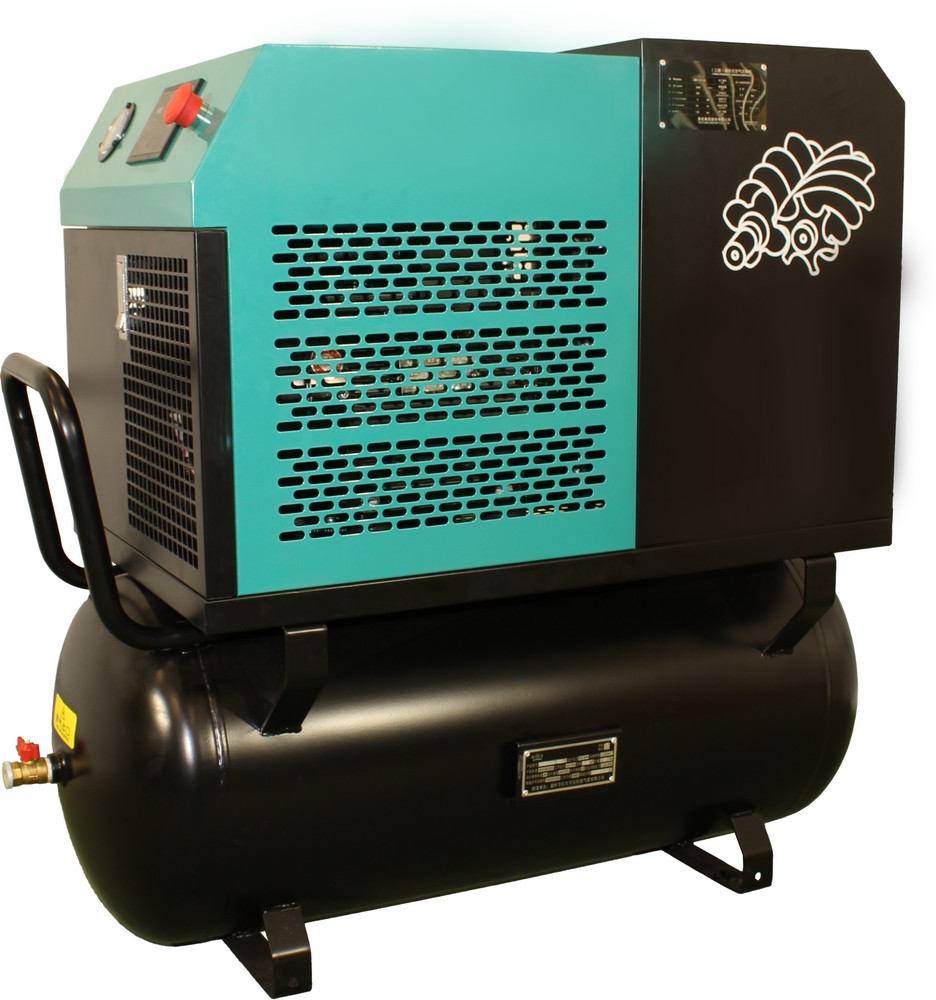
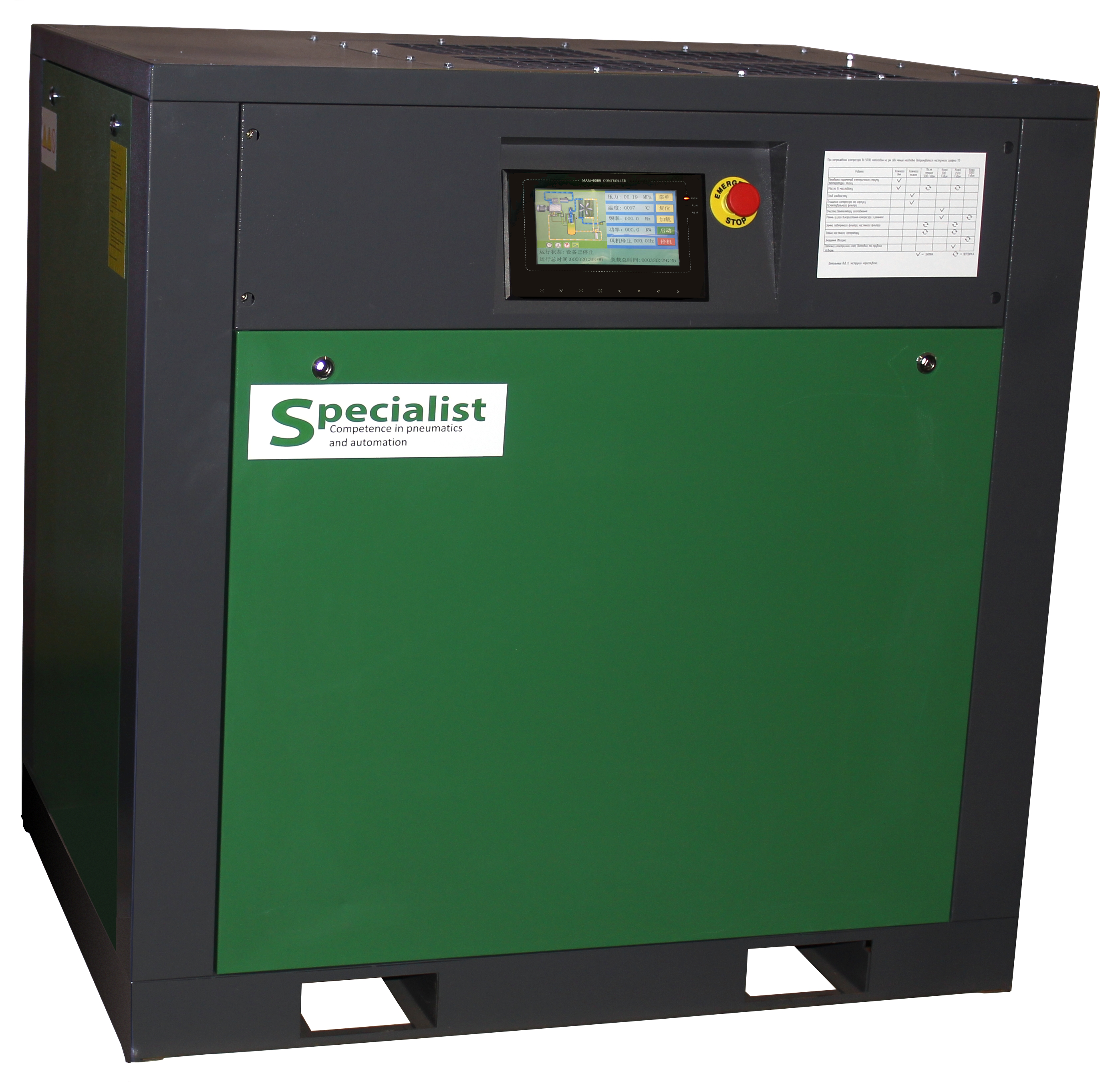
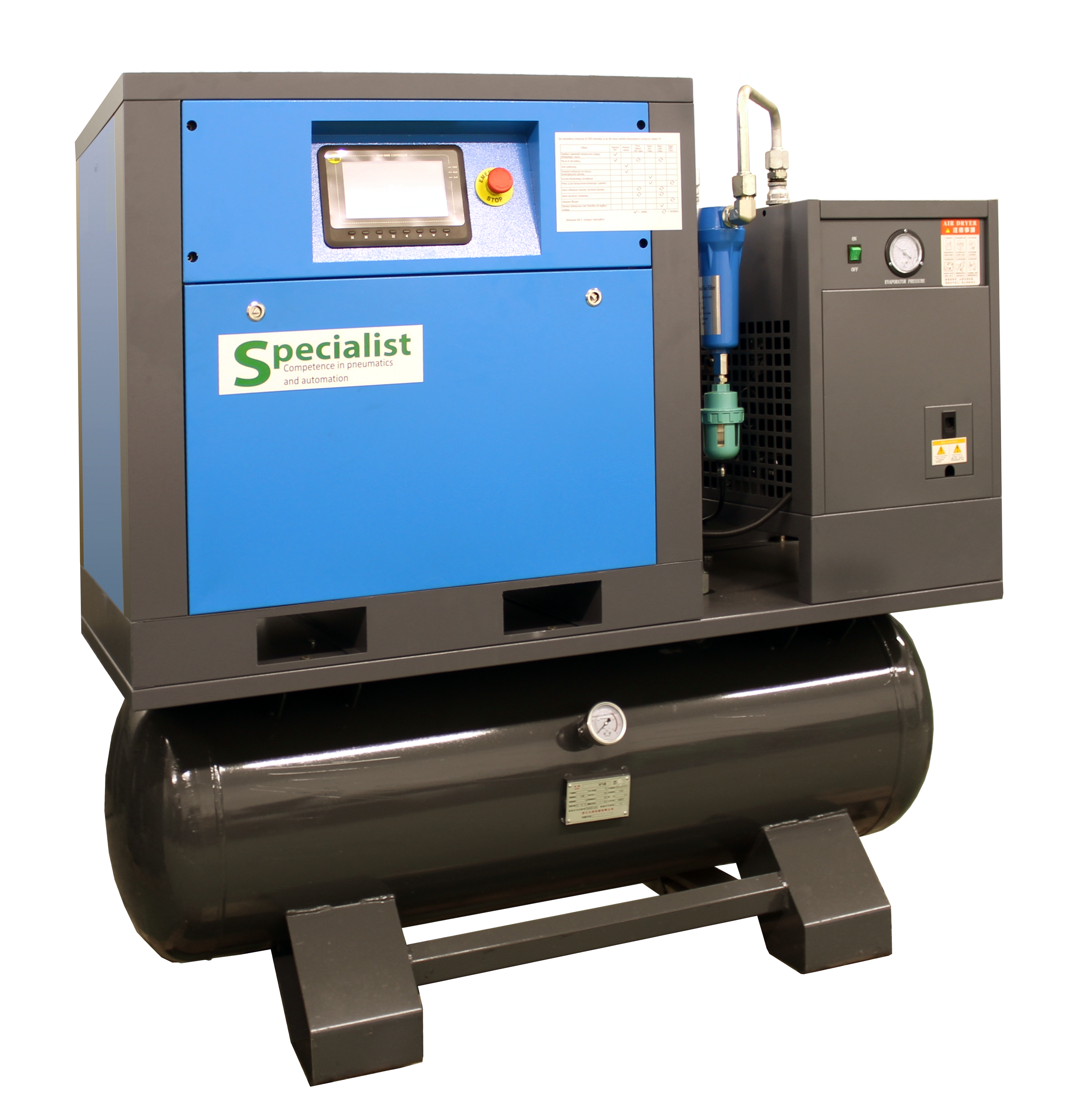
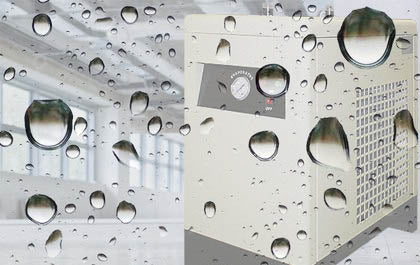
What is a compressed air dryer?
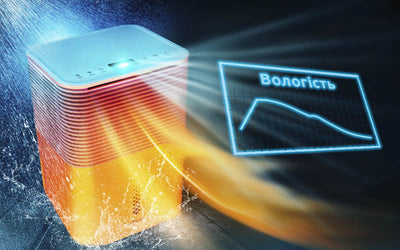
A compressed air dryer is a device for removing moisture that was present in the atmosphere in gaseous form and was drawn in by the compressor together with the air. Air humidity negatively affects the condition of equipment and the quality of production. That is why, in industrial systems, a dryer is an important part of the pneumatic system.
Various methods of removing water from compressed air can be used for drying, including condensation, adsorption and membrane technologies. Dryers can have different sizes and capacities depending on the specific needs of the industrial process.
Importance of air dryers for industry
Moisture inside a pneumatic system washes protective lubrication off surfaces, causes corrosion and rusting of parts, and, as a result, improper operation of equipment and breakdowns, which leads to product rejection and premature downtime for repairs. Moisture also damages pneumatic tools.
In addition, in some production processes, compressed air is used not only as an energy carrier that drives pneumatic mechanisms, but is also used directly in the technology. For example, an air stream can be used for cleaning parts, loosening and fluffing raw materials, blowing out molds, etc. In many of these cases, water in the air, as well as other types of contamination (solid particles and compressor oil particles), directly affect product quality.
Thus, air dehumidification is necessary to ensure the safety of production processes and product quality.
Main types of air dryers: refrigerated and adsorption
Although all air dryers ultimately remove moisture from the air, there are different types of these devices, among which two of the most common are refrigerated and adsorption dryers.
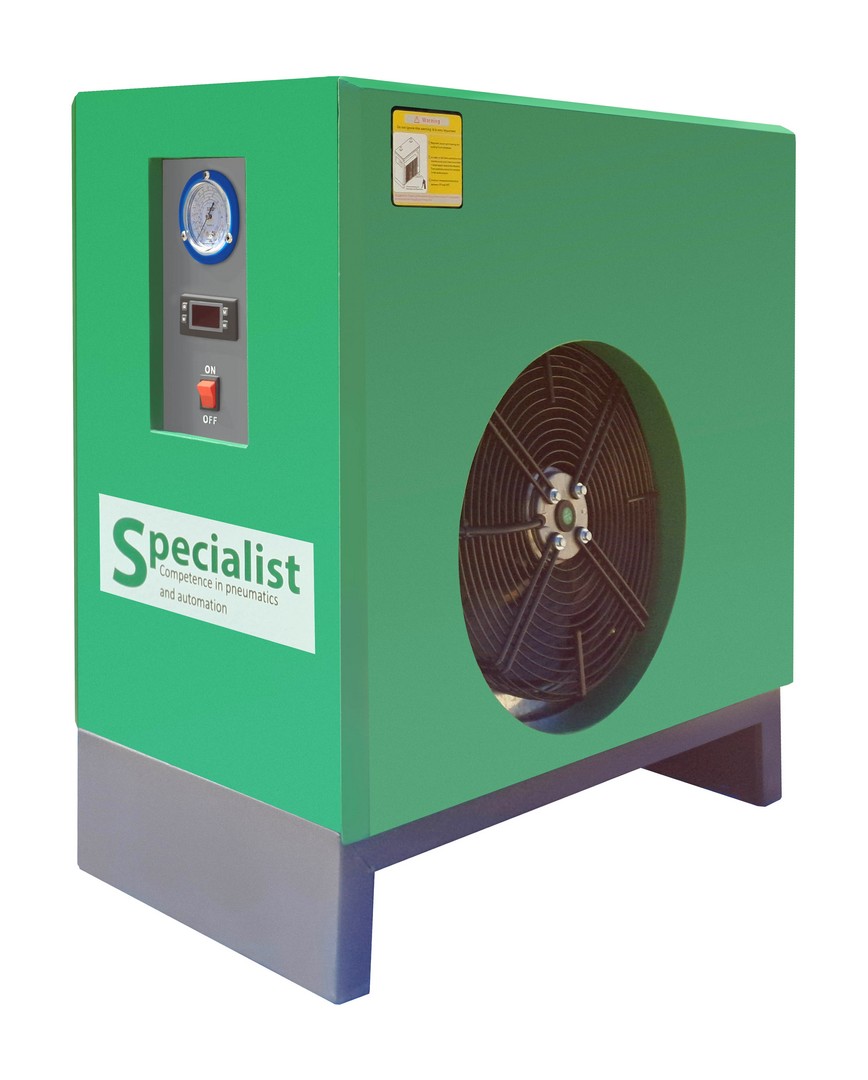
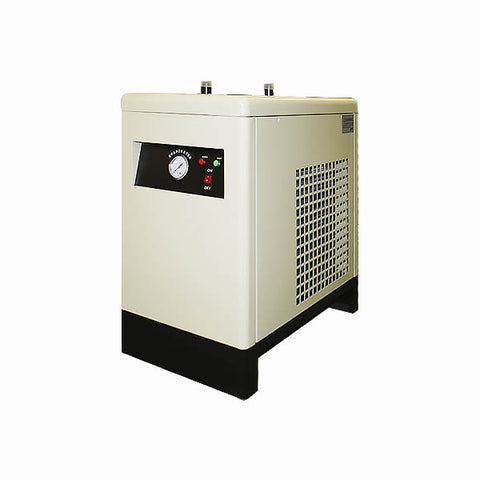
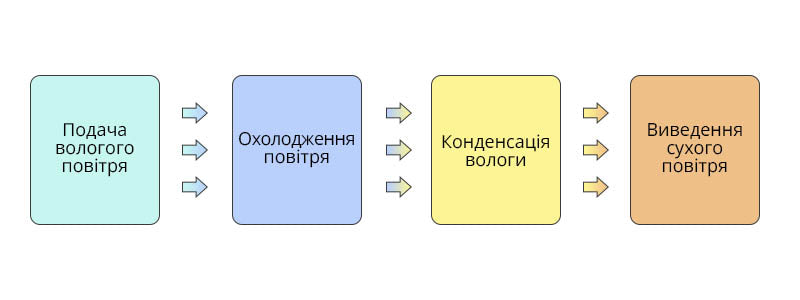
Refrigerated dryer (also known as a refrigeration dryer) is used to cool the air to low temperatures so that the water in it turns into condensate, which is easier to separate from the air. Like all types of refrigeration equipment, this type of dryer is filled with refrigerant. Moist air passes through the evaporator chamber, where its temperature is reduced to the dew point, when water changes from a gaseous state to a liquid state, flows downward and is removed as condensate. The purified air is supplied to the dryer outlet.
For the operation of refrigerated dryers, the air inlet temperature should not exceed 40 degrees, and all droplet moisture must be removed. To create the necessary conditions, it is often sufficient to install only a receiver and moisture separators between the compressor and the refrigeration dryer. Although the main function of the receiver is to create an air reserve and eliminate pressure fluctuations, it also reduces the temperature of the air after the compressor. Only if the air consumption in the pneumatic system is too high and the air does not have time to cool in the receiver, it may be necessary to use a pre-cooler heat exchanger that will lower the air temperature before it enters the refrigeration dryer.
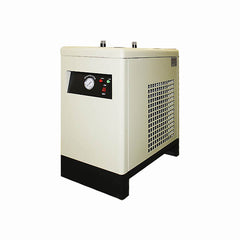
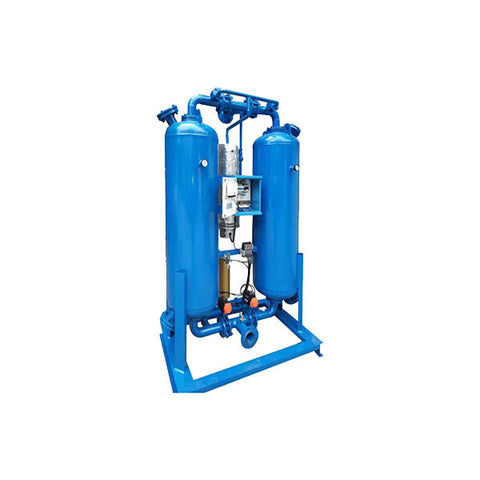
Adsorption dryer uses the phenomenon of adsorption — it contains a material that absorbs water molecules from compressed air. This type allows air to be dried more effectively and is usually used only in production processes where a very low level of air humidity is required.
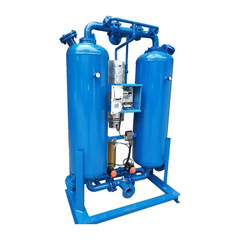
The adsorption dryer is installed after the refrigerated dryer. This makes it possible to achieve high performance of the entire system.
Principle of operation of refrigeration dryers
The operating principle is based on the use of the refrigeration cycle method. It takes place in several stages:
- Compressed air enters the dryer, passes through a pre-filter to remove particles and dust, and then enters the evaporator, where the air is cooled to a temperature below the dew point.
- When the air reaches the dew point, excess moisture in it begins to condense and turn into liquid. Liquid water is removed from the system, while the remaining air continues to move into the main line.
- Then the cooled and dried air passes through the condenser, where it is heated to room temperature, and exits the dryer ready for use.
- In parallel with the main process, part of the air from the dryer is used to cool the medium in the evaporator and condenser.
The final dew point of the air leaving the refrigerated dryer depends on several parameters:
- Amount of water in the air supplied to the dryer.
- Temperature of the air supplied to the dryer.
- Ambient temperature.
- Air flow rate through the dryer.
Thus, the main operating principle of a refrigerated compressed air dryer is to cool the air to the dew point, condense excess water and remove it from the system. This process makes it possible to achieve dew points up to +3° C and lower, ensuring high air drying efficiency.
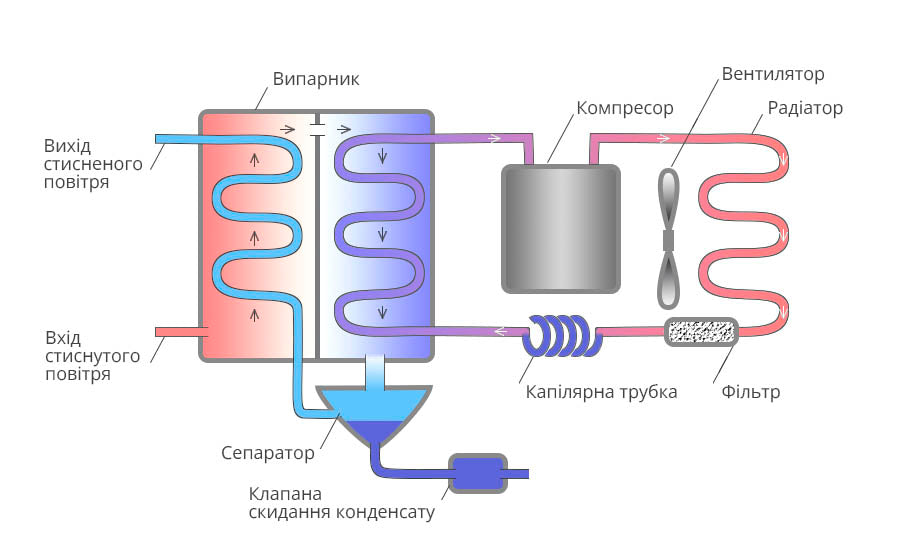
- Compressor - a device that compresses the refrigerant (usually Freon) and pumps it through the system.
- "Air-to-air" heat exchanger - a heat exchanger where the compressed refrigerant is cooled and condensed into a liquid.
- Separator - a device in which droplet water is separated from the air.
- Evaporator - a heat exchanger where the liquid refrigerant evaporates and absorbs heat from the surrounding air.
- Fan and radiator - reduce the temperature of the refrigerant after it is compressed in the compressor.
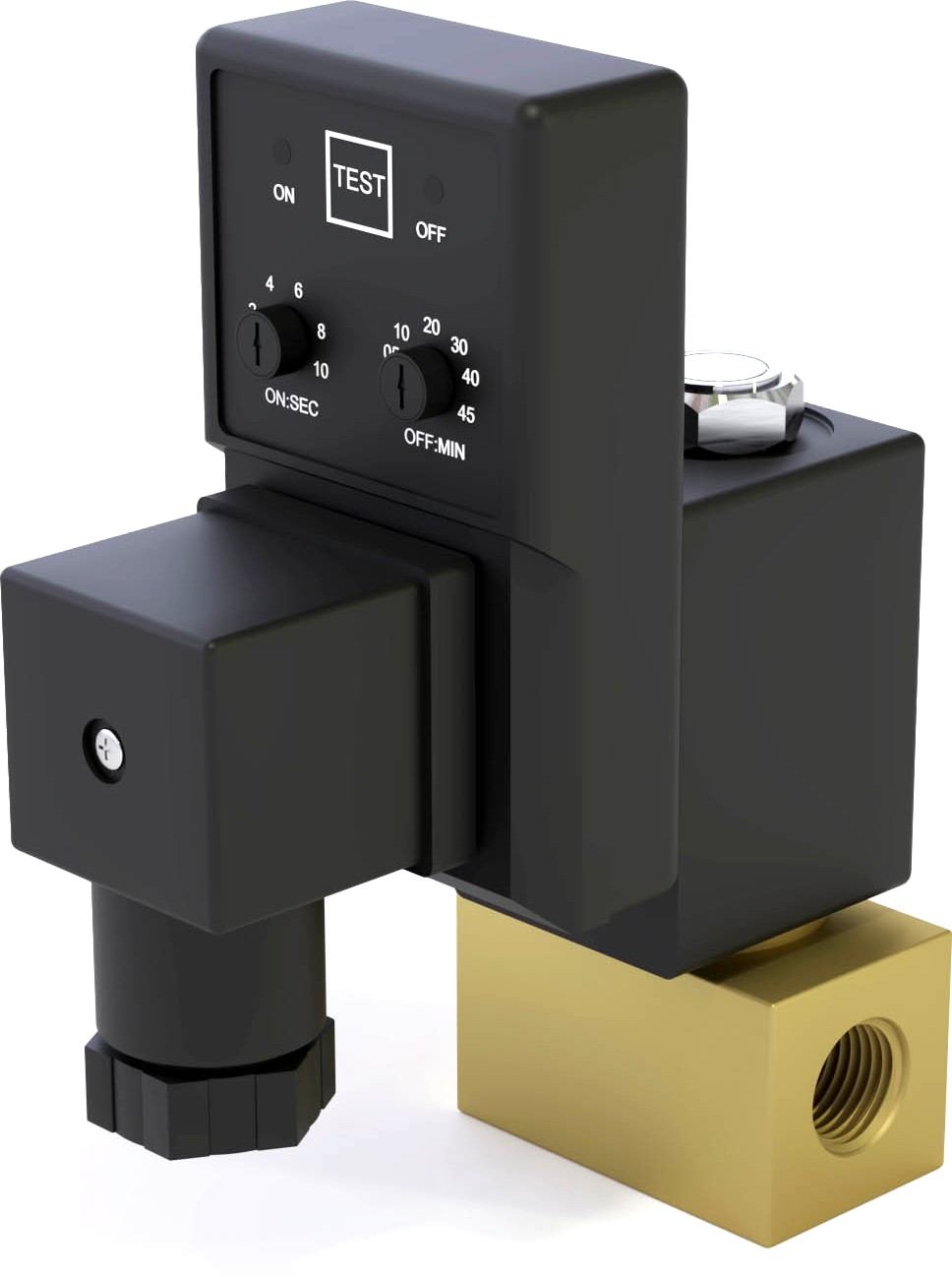
- Condensate drain valve serves to remove condensate from the system.
Advantages and disadvantages of refrigeration dryers
Refrigerated compressed air dryers are one of the most common types of dryers and are used to remove water from compressed air. These devices use a cooling cycle for drying.
Advantages of refrigeration dryers:
Refrigerated compressed air dryers have several advantages:
- High efficiency. Refrigerated compressed air dryers can remove up to 70% of water from compressed air, allowing a low level of humidity to be achieved.
- Ease of operation. They do not require a large amount of maintenance and are easy to use.
- Durability. Refrigerated compressed air dryers have a long service life because they have no moving parts and do not require frequent replacement of consumables.
- Low operating costs. They do not consume much energy and do not require the use of chemicals or other additional consumables for operation.
- Versatility. Refrigerated compressed air dryers can be used in various industries, including food production, pharmaceuticals, electronics, automotive manufacturing and others.
Disadvantages of refrigeration dryers:
- Require cooling
- Limited temperature range
- Need for regular maintenance
Application of refrigeration dryers in industry:
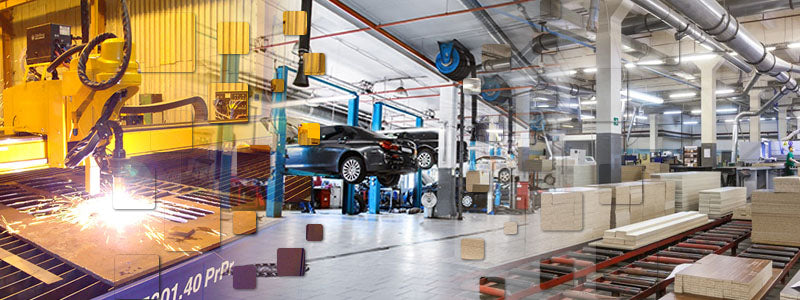
- Air drying for plasma and laser cutting machines.
- Service stations for pneumatic tools.
- Air drying in pneumatic networks of industrial equipment using distributors and pneumatic cylinders.
- Woodworking equipment.
- Furniture industry.
- Air preparation for transporting materials that should not come into contact with water.
Adsorption air dryer
Operating principle of an adsorption dryer:
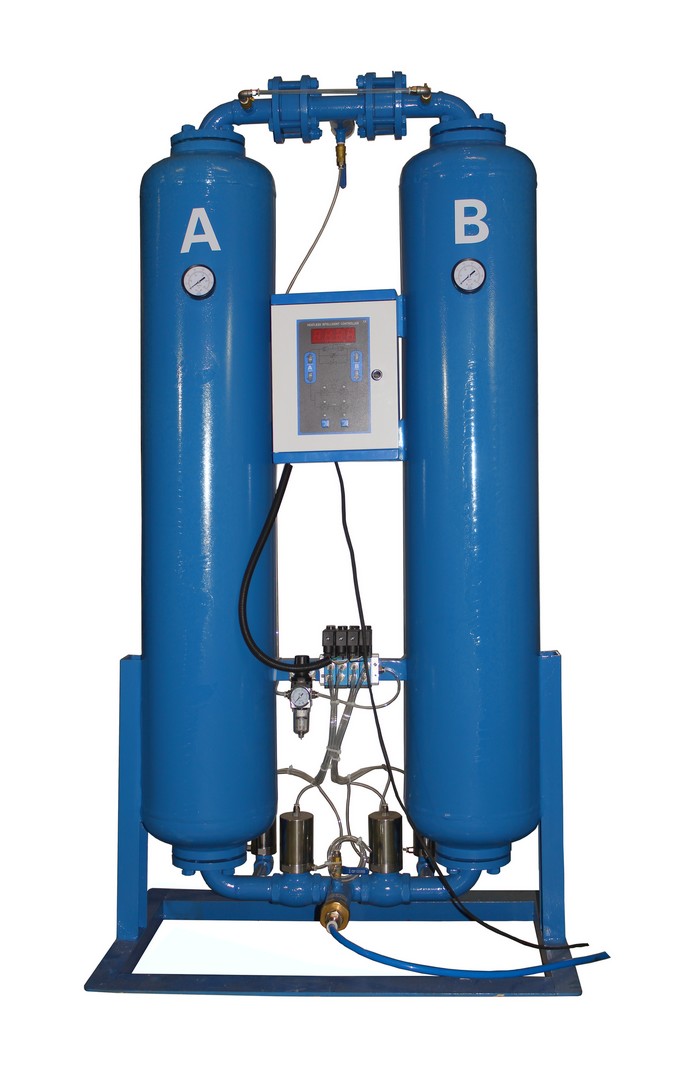
An adsorption dryer has two operating cycles: direct adsorption and regeneration of the adsorbent.
The adsorbent material is usually silica gel, molecular sieve or another material with a high moisture absorption capacity. When compressed air passes through the adsorber, it captures water from the air flow and allows the air to pass through. Due to the structure of the adsorbent, water molecules are retained on its surface, so over time it becomes saturated with moisture and ceases to provide effective drying. The process of removing moisture from the adsorbent material is called regeneration.
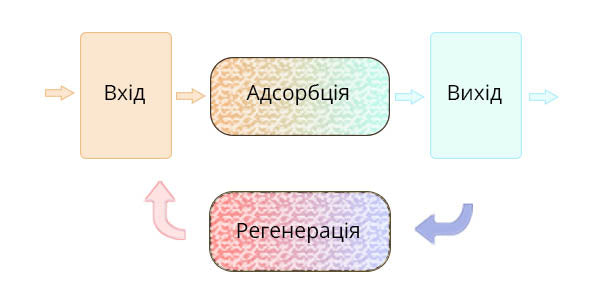
Restoration of the adsorbent properties is possible in two ways. The so-called "hot regeneration" uses heated air, while "cold regeneration" uses dry air.
The operating cycle with hot regeneration and a dew point of −40 degrees proceeds as follows:
- Air saturated with moisture enters the dryer through the inlet valve.
- In the dryer, water is absorbed by the sorbent (silica gel, zeolite or another material)
- When the sorbent reaches its maximum moisture saturation level, the system automatically switches to the regeneration process.
- At this moment, hot air enters the device inlet, usually at a temperature of about 150—200° C.
- Hot air passes through the dryer in the reverse direction and blows out the accumulated moisture from the sorbent.
- The water together with the hot air is discharged from the dryer through the condensate outlet valve.
After regeneration, the material returns to its operating condition and is again suitable for air drying.
The regeneration process is started automatically or manually depending on the specific dryer model. It should be noted that hot regeneration is energy-intensive because heating the air requires additional electricity. This disadvantage is not characteristic of cold regeneration, which uses cold but dry air to purge the adsorbent.
The air used for cold regeneration is taken from the main line after drying (usually about ±5% of the total air volume). This process takes longer, but does not require a significant amount of energy. That is why cold regeneration is more economical than thermal regeneration. This is especially useful for production facilities where there is no access to a heat source.
When choosing an adsorption dryer, consider which regeneration option is most economically feasible: if heat is a by-product of production, install an adsorber with hot regeneration; otherwise, choose cold regeneration.
Main components and design of adsorption air dryers
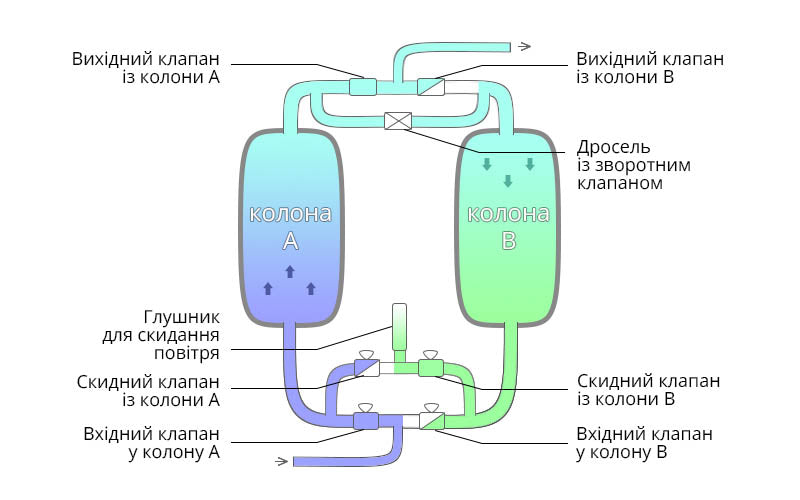
Air dryer with cold regeneration
- V1 - inlet valve of column A;
- V2 - inlet valve of column B;
- V3 - discharge valve from column A;
- V4 - discharge valve from the column;
- С1 – outlet valve from column A;
- С2 - outlet valve from column B;
- RT - throttle with a check valve for air supply for regeneration;
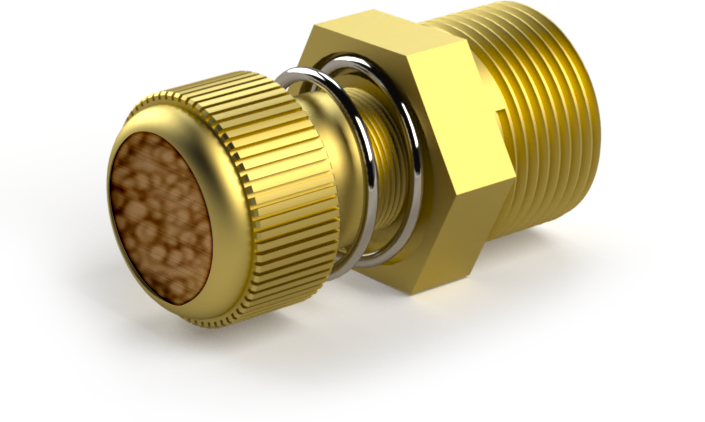
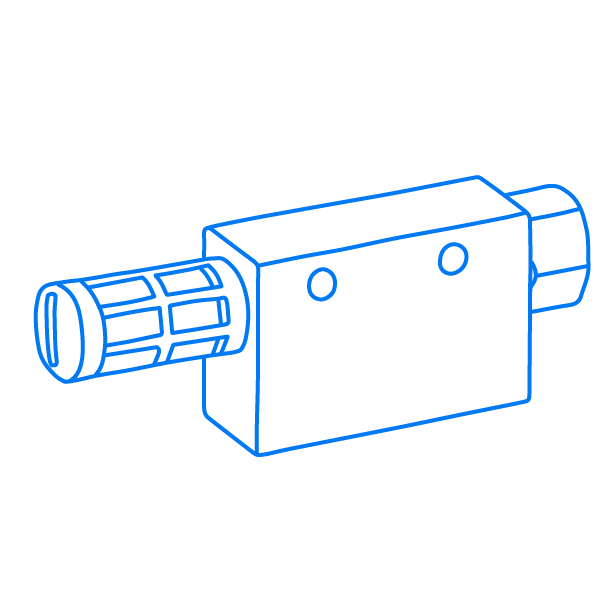
- SF – silencer for releasing air after regeneration.
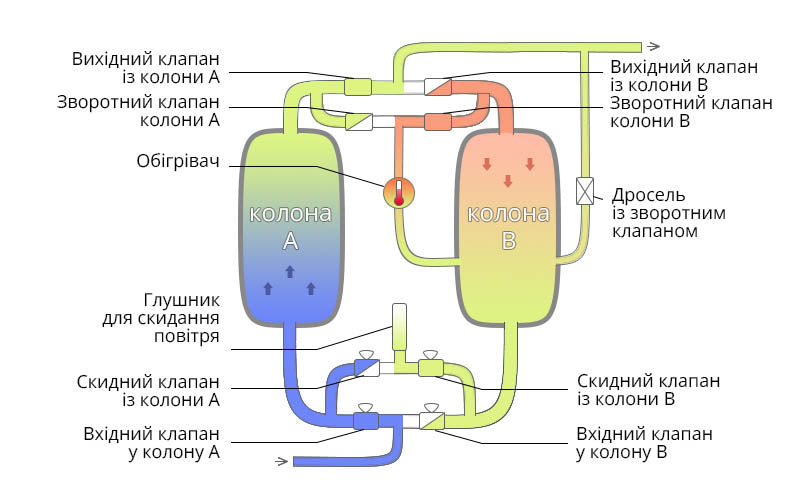
Air dryer with hot regeneration
- V1 - inlet valve to column A;
- V2 - inlet valve to column B;
- V3 - discharge valve from column A;
- V4 - discharge valve from column B;
- С1 – outlet valve from column A;
- С2 - outlet valve from column B
- C3 - check valve for regeneration of column A
- С4 - check valve for regeneration of the column.
- RT - throttle with a check valve for air supply for regeneration.
- SF – silencer for releasing air after regeneration.
Advantages and disadvantages of adsorption dryers
Advantages of using compressed air adsorption dryers:
- High efficiency when low dew point air is required. They can provide a dew point down to −40° C.
- Can operate at high temperatures and high air humidity.
- Durability: When properly operated, adsorption dryers have a long service life.
Disadvantages of using compressed air adsorption dryers:
- Need for regular adsorbent quality checks
- Additional energy consumption
- Need for regular maintenance to ensure the required air humidity.
Application of adsorption dryers in industry

Adsorption dryers can be used for air preparation in pneumatic networks when equipment operates at low temperatures and complete moisture removal is required, ensuring reliable and trouble-free operation of the equipment under such conditions.
These dryers are also used in the food and pharmaceutical industries when preparing air before it comes into contact with products or packaging.
Comparison of refrigerated and adsorption dryers
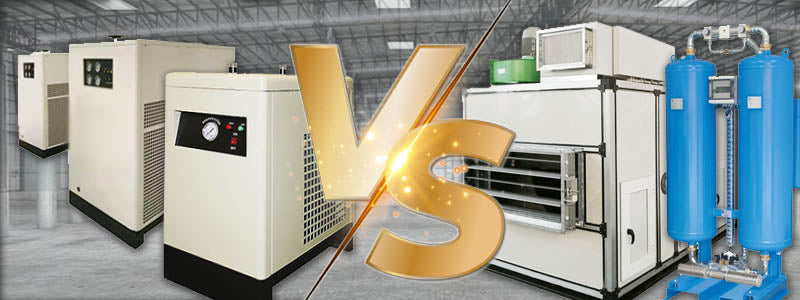
Compressed air dryers play an important role in various industrial processes where the use of compressed air is required. Let's consider some of the main differences between them:
| Refrigerated dryer | Adsorption dryer |
|---|---|
| Operating principle | |
| Use a refrigerant (usually Freon) to cool and condense water vapor in compressed air | Use the phenomenon of adsorption to remove moisture from compressed air |
| Efficiency | |
| Dew point down to +3° C | Drier air. Dew point from −20° С to −40° С |
| Energy consumption | |
| Consume a lot of energy. Require a refrigeration unit (refrigerant compressor). | Consume less energy. Use part of the air to regenerate the adsorbent, but can also use heat if it is a by-product of production. |
Get technical support
Qualified automation engineers from PE "Specialist" will provide you with the necessary consultation on the selection and installation of compressed air dryers. We also provide warranty and post-warranty service for this equipment.
Call us toll-free in Ukraine
+38 0800 210 317
