



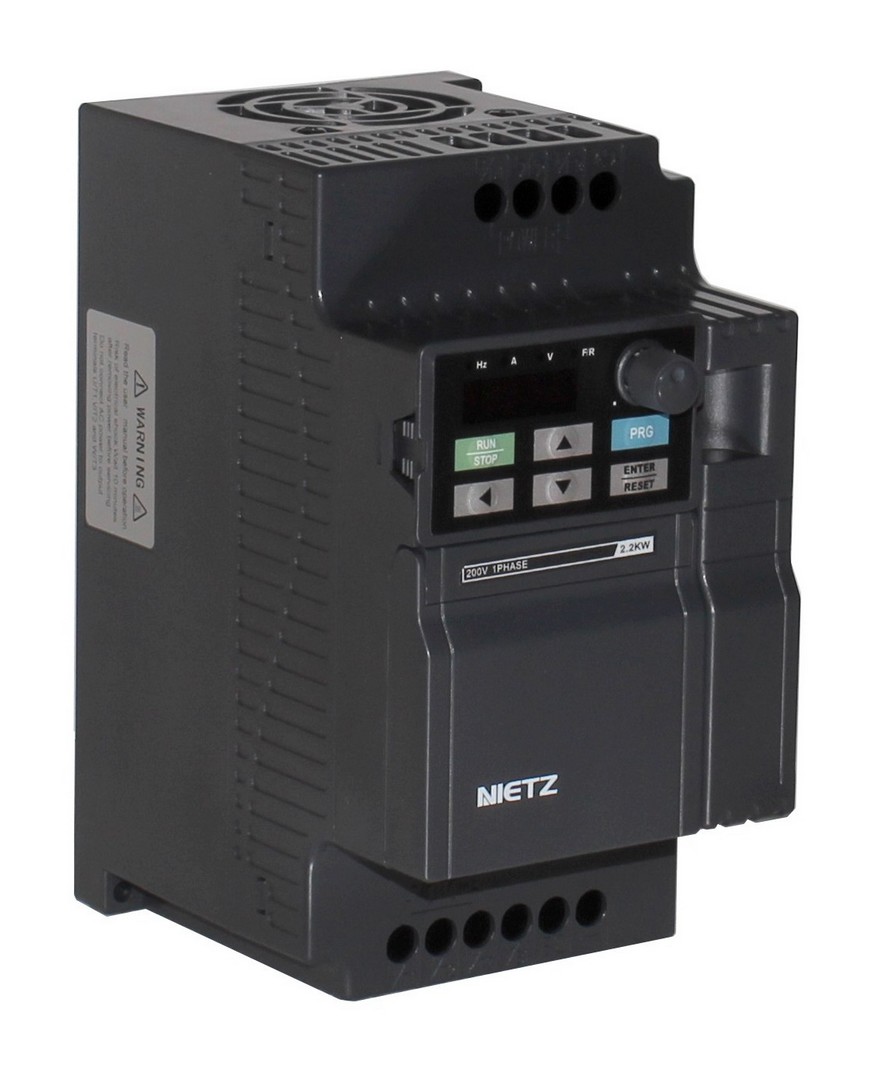

In modern industrial and household electrical equipment, there is an increasing need to connect three-phase devices when only a single-phase power supply is available. The solution to this problem is a frequency inverter, capable of converting single-phase 220V voltage into three-phase 380V voltage. Let us take a closer look at what a 220/380 frequency inverter is, how it works, and the key aspects of selecting one.
What is a frequency inverter?
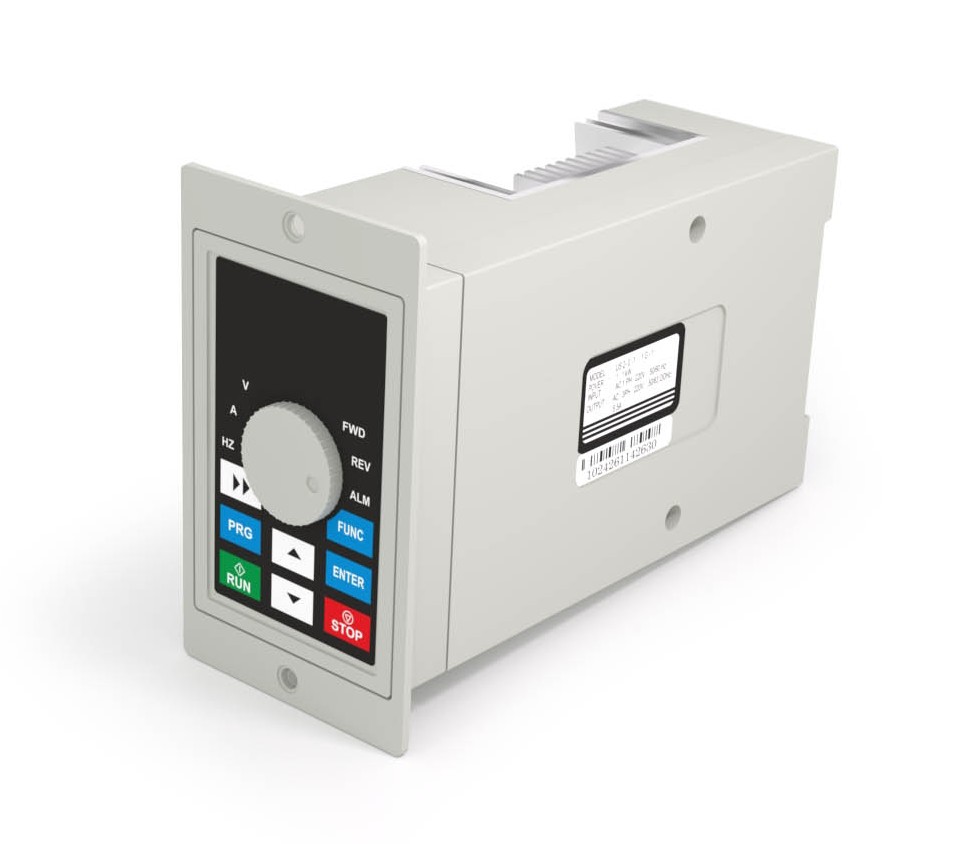
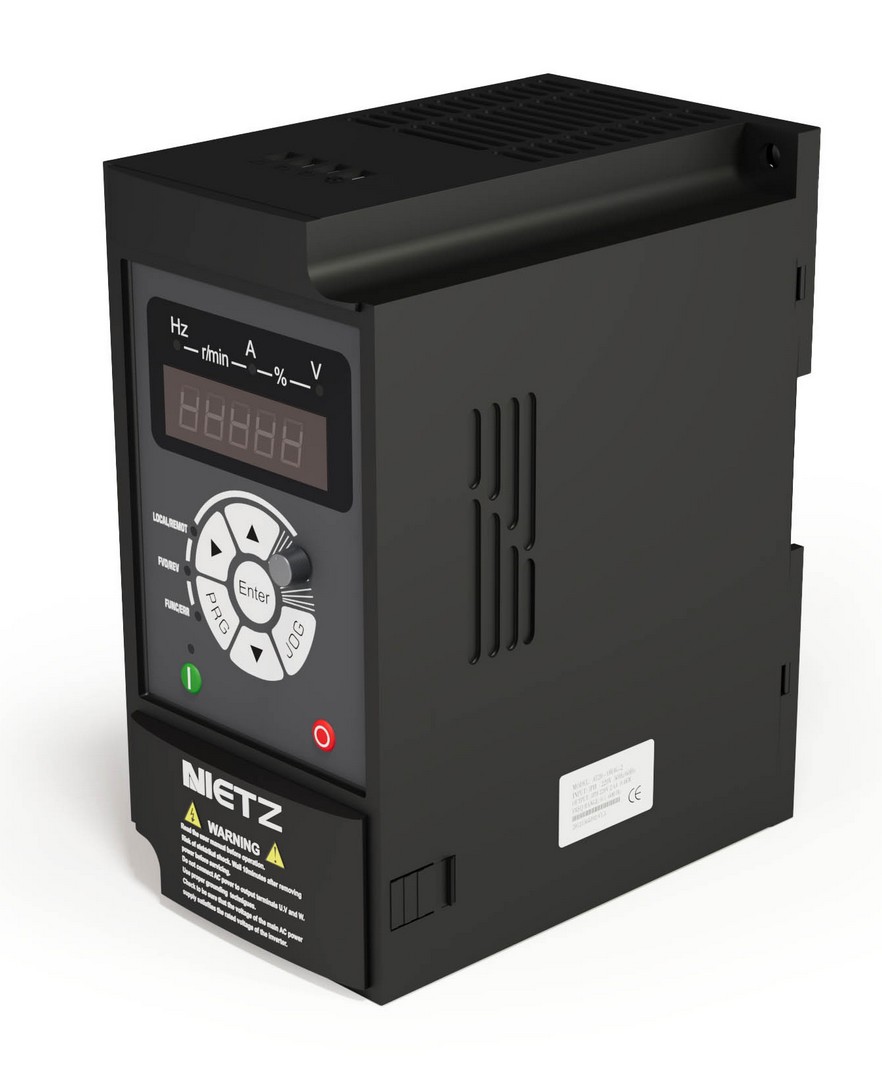
A frequency inverter (VFD) is an electronic device designed to change the frequency and amplitude of the supply voltage. The main function of a frequency inverter is to control the rotational speed of an electric motor by changing the frequency and voltage of the output power supply.
A frequency inverter consists of the following main units:
- Rectifier (converts AC voltage into DC voltage)
- DC link (smooths voltage ripples)
- Inverter (generates output voltage with the required frequency and amplitude)
- Control system (controls the operation of all units)

Why is a frequency inverter needed?
The use of frequency inverters is driven by a number of advantages:
- Energy efficiency – electricity savings of up to 30–60% through optimization of motor operating modes.
- Smooth start and braking – reduced starting currents and mechanical loads, extending equipment service life.
- Precise speed control – the ability to maintain required process parameters.
- Motor protection – prevention of emergency situations related to overload, short circuit, and phase loss.
- Power supply conversion – the ability to run a three-phase motor from a single-phase power supply.

In the context of converting 220V to 380V, frequency inverters are especially востребованы in the following cases:
- In private homes and workshops where a three-phase power supply is unavailable
- At remote facilities with limited power supply capabilities
- For temporary work in locations without access to a three-phase network
- For powering specialized industrial equipment under limited electrical network conditions
Differences between types of frequency inverters
Depending on the input and output voltage, frequency inverters are divided into several categories:
1. Input voltage 220V (1 phase), output voltage 220V (1 phase)
This is the simplest type of frequency inverter. A 220V frequency inverter does not change the number of phases; it only regulates the frequency in a single-phase network. It is used to control single-phase motors in household appliances, pumps, fans, and other mechanisms. Such inverters usually do not exceed 2–3 kW.

Advantages:
- Low cost
- Easy installation
- Compact size
Disadvantages:
- Do not solve the problem of powering three-phase equipment
- Limited power capacity
- Lower efficiency compared to three-phase systems
2. Input voltage 220V (1 phase), output voltage 220V (3 phases) with conversion
This inverter generates a three-phase 220V output voltage from a single-phase input. It allows three-phase motors to be powered from a single-phase network and provides a proper sine wave, but with a lower line voltage level.
Advantages:
- Ability to power three-phase electric motors from a single-phase network
- Affordable price
- Wide selection of models
Disadvantages:
- Not suitable for equipment requiring a 380V power supply.
- Power is usually limited (up to 5–7 kW)
- At full load, they require high currents from the single-phase network
3. Input voltage 220V (1 phase), output voltage 380V (3 phases)
A 220/380 frequency inverter is the most popular type for powering standard three-phase equipment from a single-phase network. It increases the voltage and generates a full three-phase system with a line voltage of 380V.

Advantages:
- Full compatibility with standard three-phase equipment
- Ability to operate without a three-phase power supply
- Additional motor protection and control functions
Disadvantages:
- Higher cost
- Output performance is limited by the input single-phase network
- Requires proper calculation and selection for the specific load
- Requires a high-quality power supply network
4. Input voltage 380V (3 phases), various output options
A classic industrial frequency inverter operating from a three-phase network. Depending on the model, it can generate a three-phase 380V output as well as other output options.

Pros:
- High performance (tens and hundreds of kW)
- Maximum efficiency
- Wide functionality
- High reliability
Cons:
- Require a three-phase power supply
- High cost
- Complex installation and maintenance
Operating principle of a 220/380 frequency inverter
The conversion of a single-phase 220V network into a three-phase 380V network takes place in several stages:
-
Rectification – the input single-phase 220V voltage is converted into DC voltage using a diode bridge and filter capacitors.
-
Energy storage – the rectified voltage charges the DC link capacitors, creating an energy reserve for generating a higher output power supply.
-
Inversion – using IGBT transistors, the DC voltage is converted into three-phase AC voltage. The control system generates three sine waves shifted by 120 degrees relative to each other at the output.
-
Voltage boosting – to obtain 380V output from a 220V input, either a boost DC/DC converter in the DC link or special pulse-width modulation (PWM) algorithms are used.

It is important to understand that a 220/380 inverter does not create additional power. The maximum output power is limited by the input power, taking conversion efficiency into account. In a 220V single-phase network with a typical household limit of 16A, the maximum consumed power is about 3.5 kW, which, considering efficiency losses, will provide no more than 3–3.2 kW at the output.
Main mistakes made by sellers and buyers when selecting 220/380 converters
-
Underestimating power limitations Many sellers indicate the rated power of the frequency inverter without considering the limitations of the input network. A person may purchase a "5 kW" 220 to 380 frequency inverter without realizing that a standard household outlet can only provide 3–3.5 kW.
-
Ignoring starting currents When starting an electric motor, a starting current 5–7 times higher than the rated current is required. Although the device reduces starting currents, it is necessary to select a converter with a power reserve.
-
Misunderstanding the difference between inverter power and motor power The declared power of a frequency inverter is often the maximum power of a compatible motor under ideal conditions rather than the actual output power of the device, although it can be used to start simple machines and pumps. It is also necessary to consider the motor's current consumption to ensure it does not exceed the inverter's output current.
-
Incorrect assessment of operating conditions Ambient temperature, dust, and humidity all affect the operation of a frequency inverter and require selecting a device with an appropriate protection class. For example, the NZS model.
-
Purchasing low-quality devices Saving money on a converter often results in buying low-quality equipment, which may cause damage and lead to motor failure.
-
Underestimating the importance of input power quality For stable operation, a 220/380 converter requires a power supply with minimal frequency and voltage deviations.
Recommendations for selecting a 220/380 frequency inverter
-
Determine the actual power requirement Consider not only the motor’s rated power but also the load characteristics, operating mode, and machine starting currents.
-
Assess the capabilities of your single-phase network Check the allowable current in your electrical wiring, the availability of protective circuit breakers, and other components with the appropriate ratings.
-
Choose a converter with a power reserve It is recommended to select an inverter with a power rating 20–30% higher than required to compensate for peak loads.
-
Consider operating conditions When operating in harsh conditions (dust, moisture, high temperature), choose variable frequency drives with the appropriate IP protection rating. For example, the NZS model.
-
Check for technical documentation and certificates A quality 220 to 380 frequency inverter is always supplied with a detailed user manual in the local language and the necessary certifications.

Need technical consultation?
If you have any doubts, you can always consult our technical department. Qualified engineers will help you determine which frequency inverter can operate with your motor. We provide complete documentation in Ukrainian for our converters and also share videos with customers demonstrating connection and configuration examples.
Call free of charge within Ukraine
+38 0800 210 317Conclusion
220/380 frequency inverters are an effective solution for powering three-phase equipment from a single-phase network. They not only perform power supply conversion but also provide motor speed control, protection, and energy savings.
A properly selected 220/380 frequency inverter becomes a reliable solution that opens up new possibilities for using three-phase equipment in conditions of limited power supply, improving the efficiency and safety of electric drives for various applications.

