



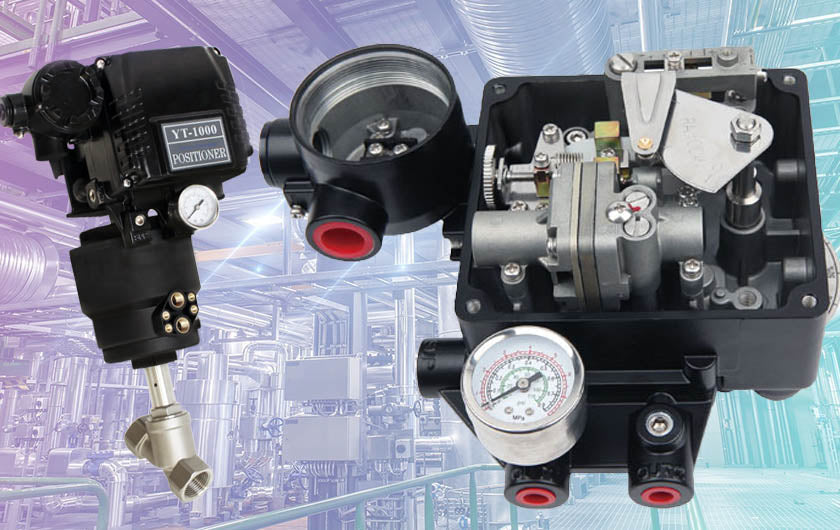
In modern industrial process automation systems, shut-off valves play a key role in controlling liquid and gas flows. Various devices are used to monitor valve positions – from a simple position sensor to a sophisticated electropneumatic positioner. Let us consider their features, operating principles, and advantages.
Position Sensors: A Basic Solution
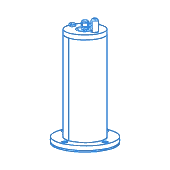
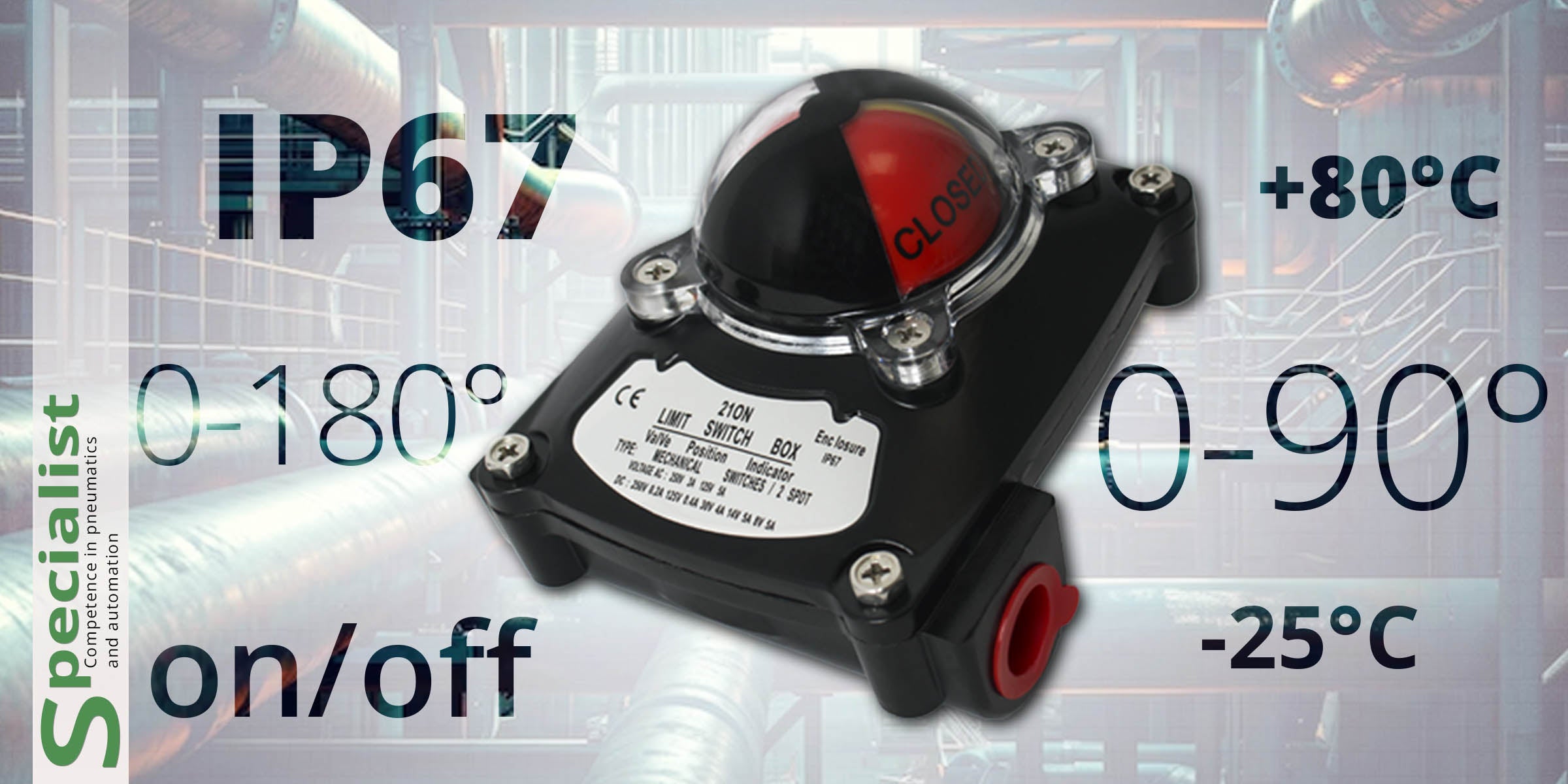
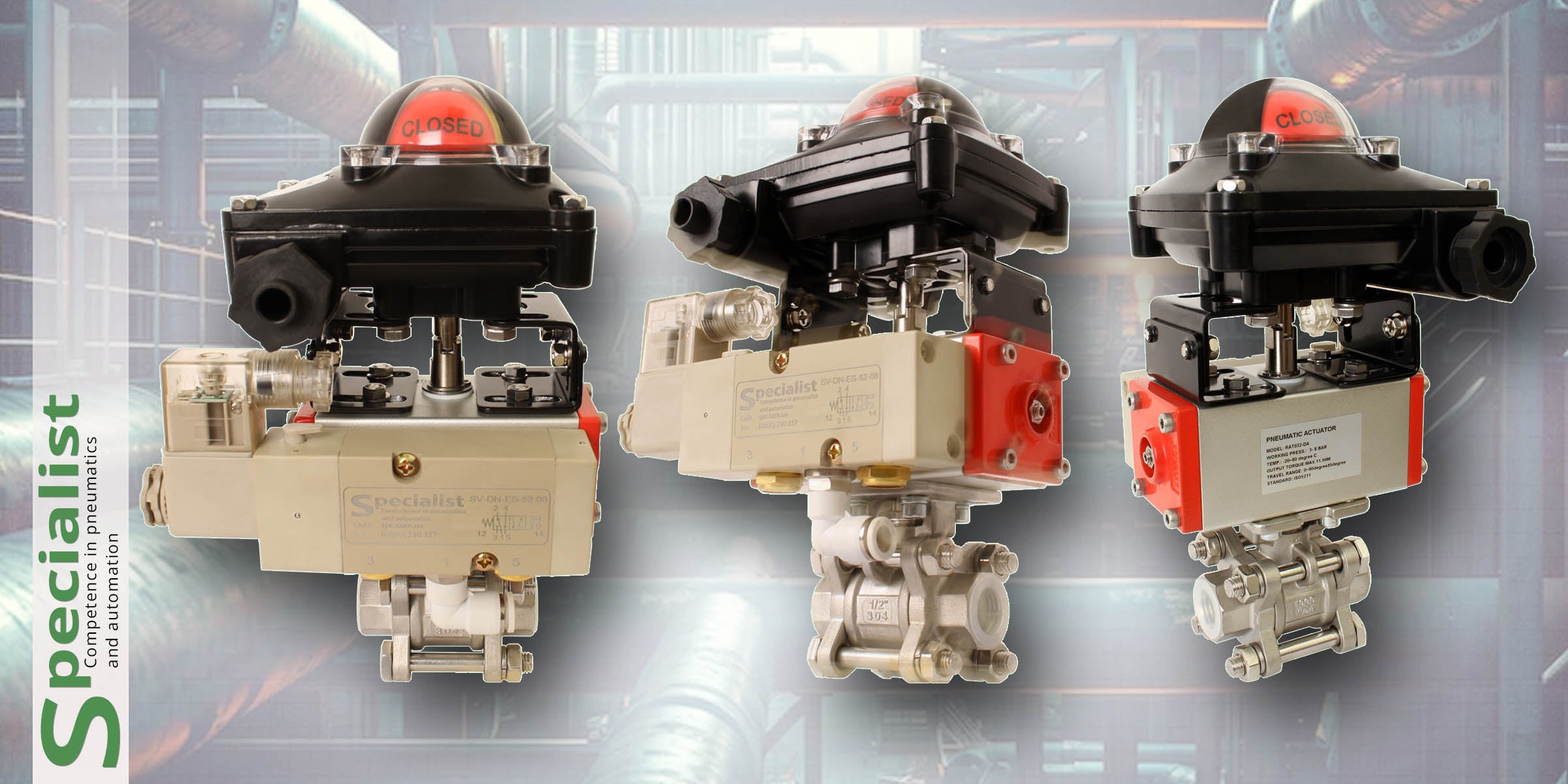
Simple position and monitoring sensors, such as limit switch boxes, are often used for valves. For example, the SCBF-FIDA-ITS-100 series is installed on pneumatic actuators with a 90° rotation and provides visual indication of the pipeline valve status (open/closed). The housing of such units offers a high level of protection against external influences (NEMA4.4X/IP66/IP67).
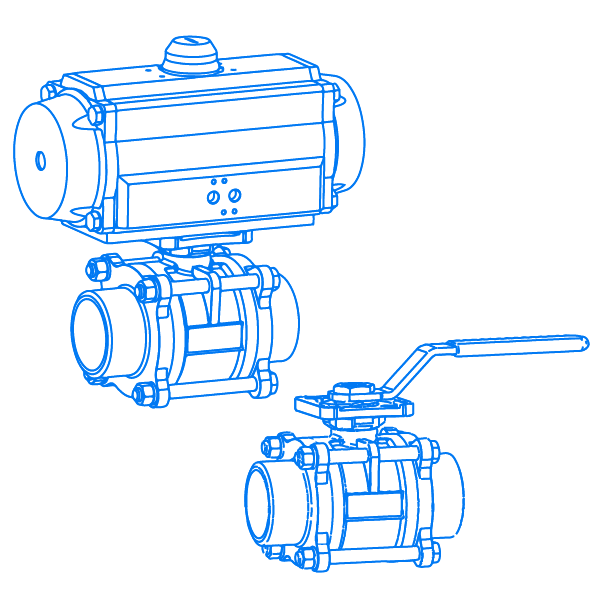
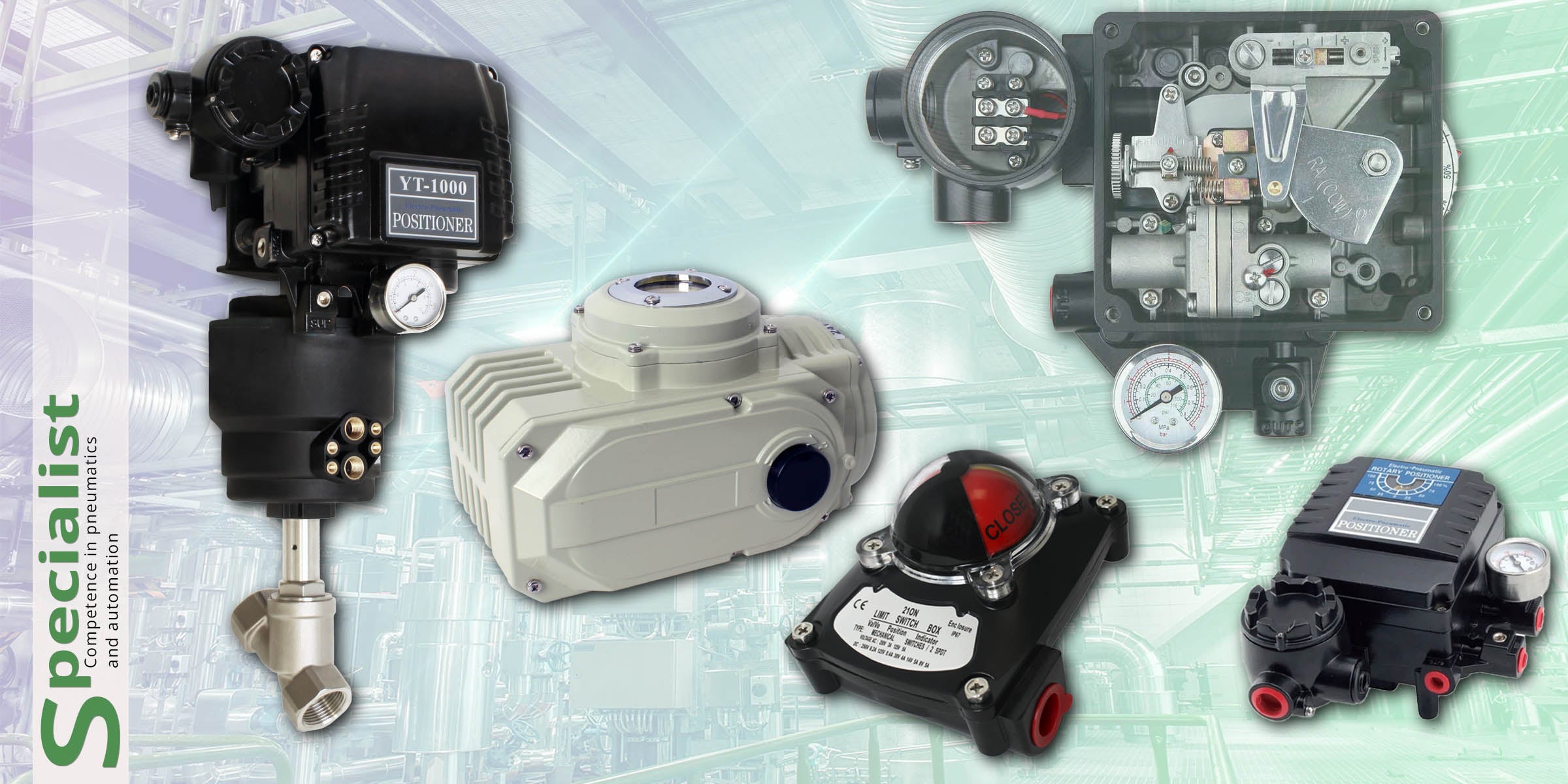
The ALP-210N position sensor can operate with SC-RAT/RST series pneumatic actuators for controlling butterfly valves, disc valves, and other valve types. It features a visual indicator (yellow – open, red – closed) and provides dry contacts for integration into control systems.
This position sensor has the following technical specifications:
- Protection rating IP67
- Operating temperature range: -25°C to +80°C
- Mechanical switch with changeover contacts
- Rotation range: standard 0-90°, optional 0-180°
- Cable connections: 1/2NPT, PT1/2, PF1/2, M20, PG13/5
- However, this sensor has limited functionality – it only signals the extreme valve positions (fully open or closed) and does not allow precise control of intermediate positions.
Electropneumatic Positioners: An Advanced Solution
Unlike simple position sensors, electropneumatic positioners provide precise control of shut-off and control valves. They convert an electrical signal into a pneumatic action on the valve actuator.
Operating Principle
An electropneumatic positioner receives an electrical command (4-20 mA current or 0-5 V voltage) from the control system and converts it into a pneumatic signal to operate the pneumatic actuator. The process can be described in the following stages:
- The sensor receives an electrical signal of a specified value
- The electronic section converts this signal into a control action
- The pneumatic block regulates the air supply to the pneumatic actuator
- The actuator moves the shut-off element to the required valve position
- If feedback is available, the positioner monitors the actual position and adjusts control to achieve the required accuracy
Types of Positioners
Electropneumatic positioners are divided into two main types:
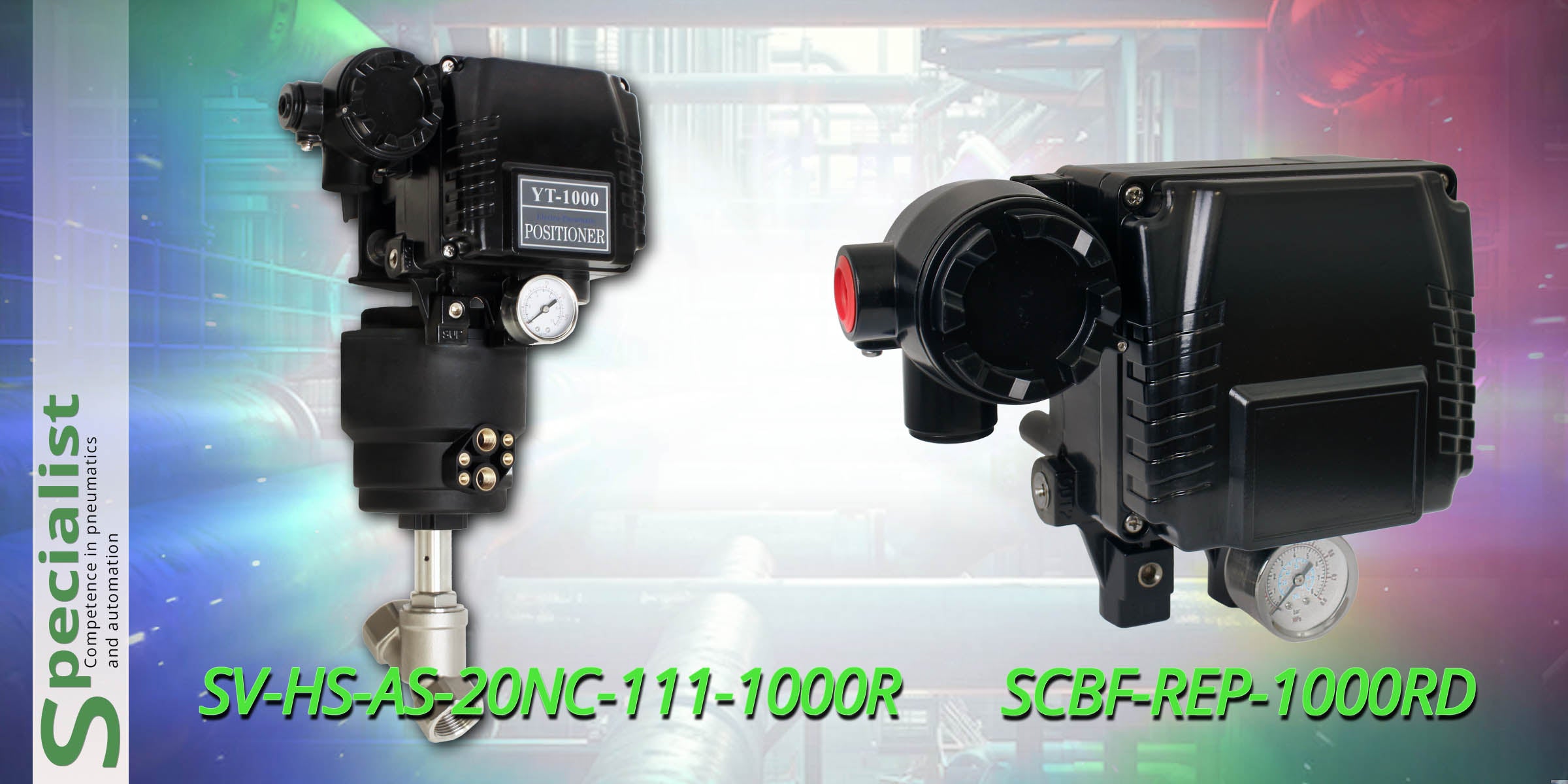
- Rotary – for controlling rotary valves with a rotation angle of 0-90° or 0-180°. Example – SCBF-REP-1000RD series.
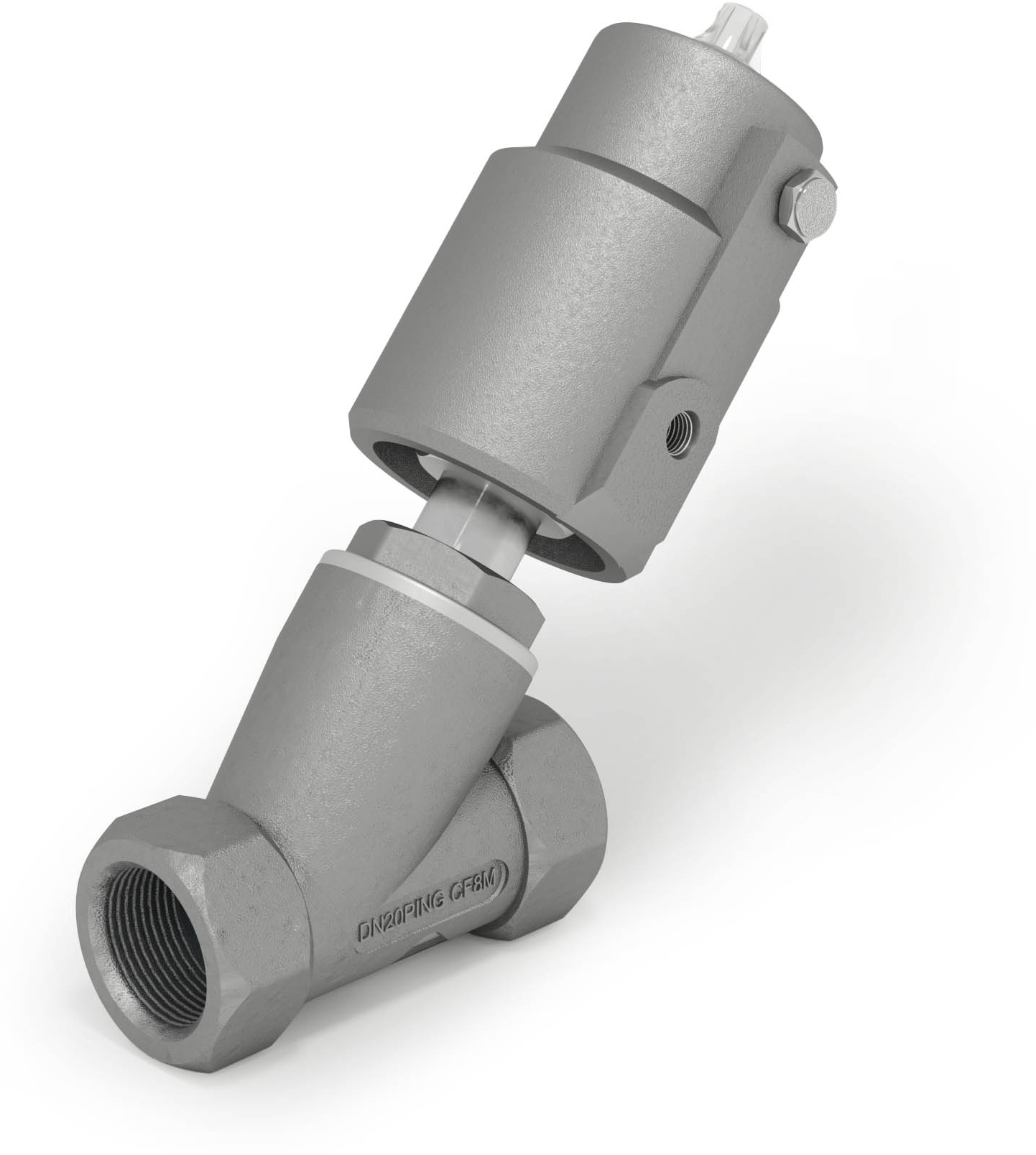
- Linear – for controlling and monitoring valves with a linear stem movement. For example, as used with the SV-HS-AS-20NC-111-1000R valve.
Positioners also differ by the availability of feedback:
- With feedback – provide high positioning accuracy and automatic position correction
- Without feedback – simpler and more cost-effective solutions
Technical Specifications
The SCBF-REP-1000RD electropneumatic rotary positioner has the following parameters:
- Input/output signal: 4-20 mA DC
- Input resistance: 250±15 Ohm
- Air connection: G 1/4"
- Operating stroke range: 0-90°
- Hysteresis: ±1.0% of full scale
- Sensitivity: ±0.2% of full scale
- Repeatability: ±0.5% of full scale
- Flow capacity: 80 l/min (1.5 bar)
- Operating temperature: from -20 to +70°C
- Housing material: cast aluminum
- Protection rating: IP65
- Weight: 2.7 kg
Advantages of Electropneumatic Positioners
Positioning Accuracy – allow the shut-off element to be set at any position within the operating range with high precision (up to ±0.2%).
Flexibility – support standard signal interfaces (current or voltage), ensuring compatibility with most automation systems.
Reliability – robust construction and a high protection rating (IP65 and above) ensure long service life in demanding industrial environments.
Versatility – can operate with both single-acting and double-acting pneumatic actuators.
Diagnostics – advanced models can provide actuator and valve performance diagnostics.
Energy Efficiency – optimize compressed air consumption compared to simple control schemes.
Fast Response – ensure a quick system reaction to changes in the control signal.
Still have questions?
If you need valves or ball valves with an actuator and positioner, we can select an individual configuration for you from our shut-off and control valve catalog.
Call free of charge within Ukraine
+38 0800 210 317Conclusion
Electropneumatic positioners are an important component of modern automation systems, providing precise control of shut-off and control valves. Unlike simple position sensors, which only indicate extreme positions, positioners allow the shut-off element to be set at any intermediate position with high accuracy.
The choice between simple position sensors and advanced positioners depends on the requirements of a particular system: where it is only necessary to monitor fully open or fully closed positions, limit switches are sufficient; for precise flow control, electropneumatic positioners with analog control and feedback are indispensable.

