




The Importance of Compressed Air Preparation for Industrial Production
Both pressure and the cleanliness level of compressed air affect the entire production process, as poor air quality can damage installed equipment and lead to production downtime. Untreated compressed air also directly creates a risk of contamination and product rejection, especially in the food and pharmaceutical industries. Therefore, compressed air must not contain harmful contaminants and impurities, and the pressure must be limited according to the equipment specifications. This is exactly why air preparation units are used.
Overview of Air Preparation Units and Their Components
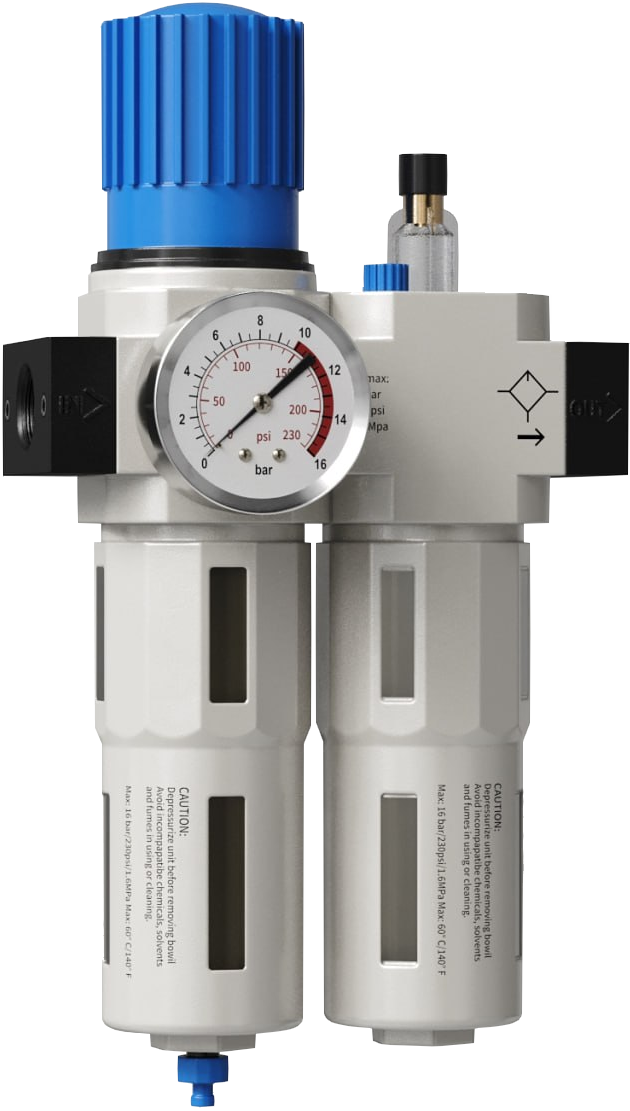
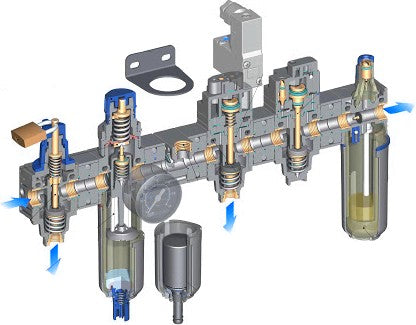
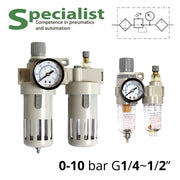
Typically, an air preparation unit refers to a device consisting of a filter regulator with a pressure gauge and a lubricator. However, it may also include branching modules, filter assemblies, and valve sets. Such an assembly is usually installed directly before a pneumatic tool or pneumatic cylinder where air is supplied.
Filter Regulator
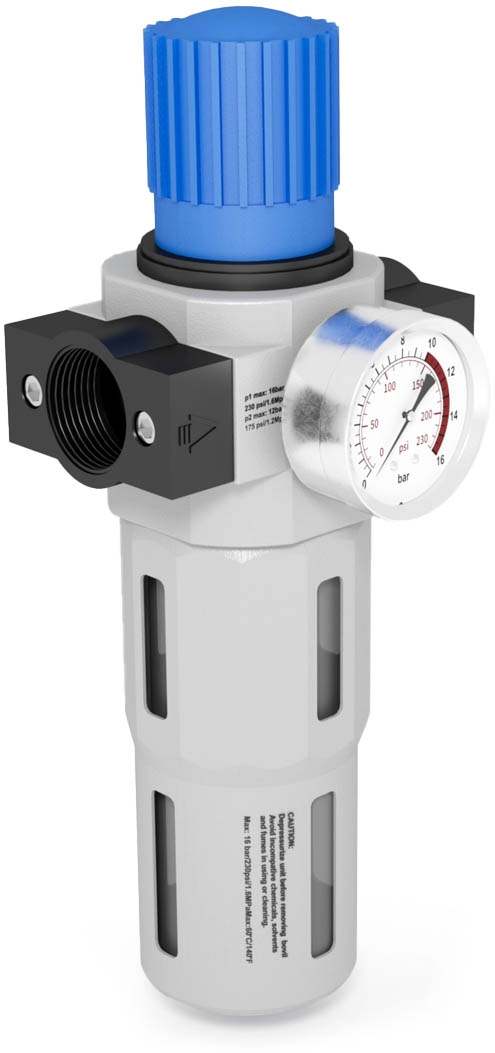
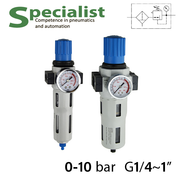
A standard air filter regulator combines two main devices — an air moisture separator filter and a mechanical air pressure regulator. Since the key characteristic of such a product is flow capacity, it is manufactured using components with identical specifications — the same connection thread, designed for the same operating pressure range and air consumption.
Description and Operating Principle of the Filter Regulator
The operating principle of a filter regulator is as follows:
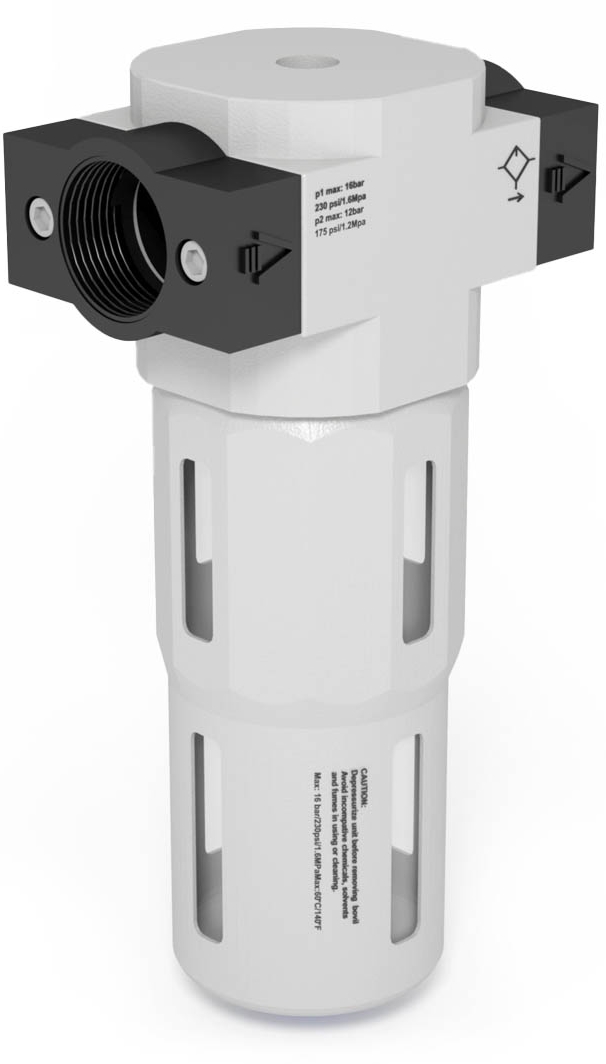
- Air Filtration. Air drawn in by the compressor and transported through the piping system to pneumatic equipment may contain various contaminants: dust, compressor oil particles, and water. Water is removed in the filter regulator similarly to how it is removed in a centrifuge — the design has a special shape that forces the air to spin and move in a circular path, while small droplets are thrown out of the airflow. After that, the air passes through a porous bronze or polypropylene filter element where solid particles are trapped. The filtration quality is determined by the pore size and is measured in microns (µm). The smaller the micron value, the finer the filtration.
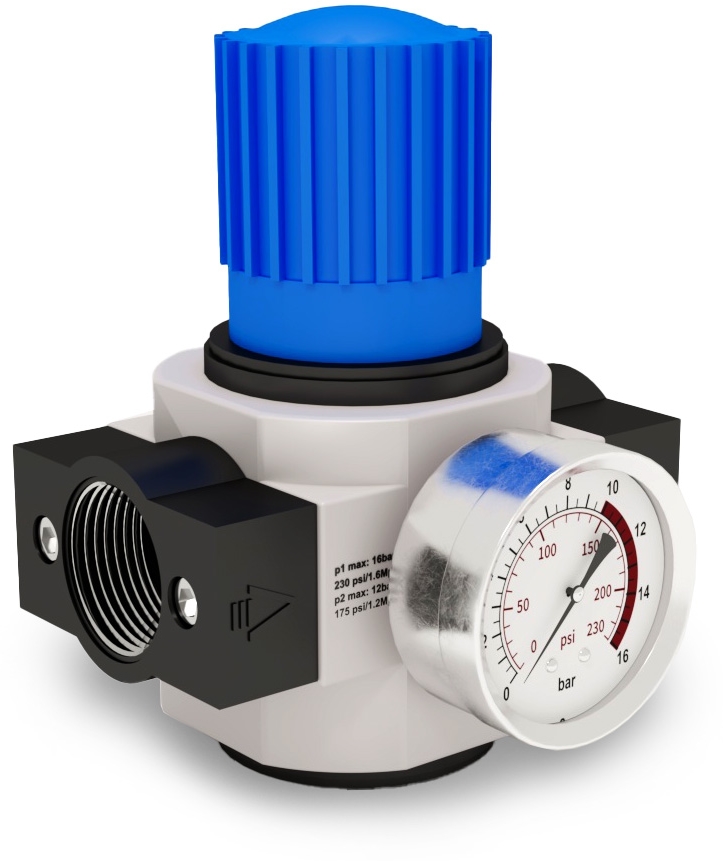
- Pressure Regulation. The operating air pressure supplied to the pneumatic equipment system must be controlled to ensure safe and efficient operation. Filter regulators are usually equipped with mechanical pressure gauges that display the outlet pressure value. Turning the adjustment knob changes the compression force of the internal valve spring, which affects the size of the passage opening and, accordingly, the outlet pressure level.
Functions of the Filter Regulator
An air filter regulator is a device that replaces separate pressure regulators and filters. It performs several functions:
- Moisture Separation. During air cooling, moisture condenses into tiny droplets that can be carried to end-use equipment, washing away lubrication and causing oxidation of equipment components. To remove water, the filter regulator contains a separation zone where air is forced into a spiral motion. Small condensate droplets are separated from the air, similar to the operation of a centrifuge.
- Air Filtration. The filter regulator also contains a filtering material that mechanically cleans the air from contaminants — it allows air molecules to pass through while retaining dust, small debris, dirt, used compressor oil particles, and other impurities that may damage pneumatic components.
- Pressure Regulation.. Since pressure must be reduced directly before the pneumatic tool, this is done by the filter regulator, which is equipped with a pressure gauge and adjustment knob.
- Backflow Protection. The design of the air filter regulator provides for venting excess outlet pressure to the atmosphere and prevents airflow in the reverse direction — from outlet to inlet. This prevents accidental movement of pneumatic components when the system is shut down.
Lubricator
Description and Operating Principle of the Lubricator
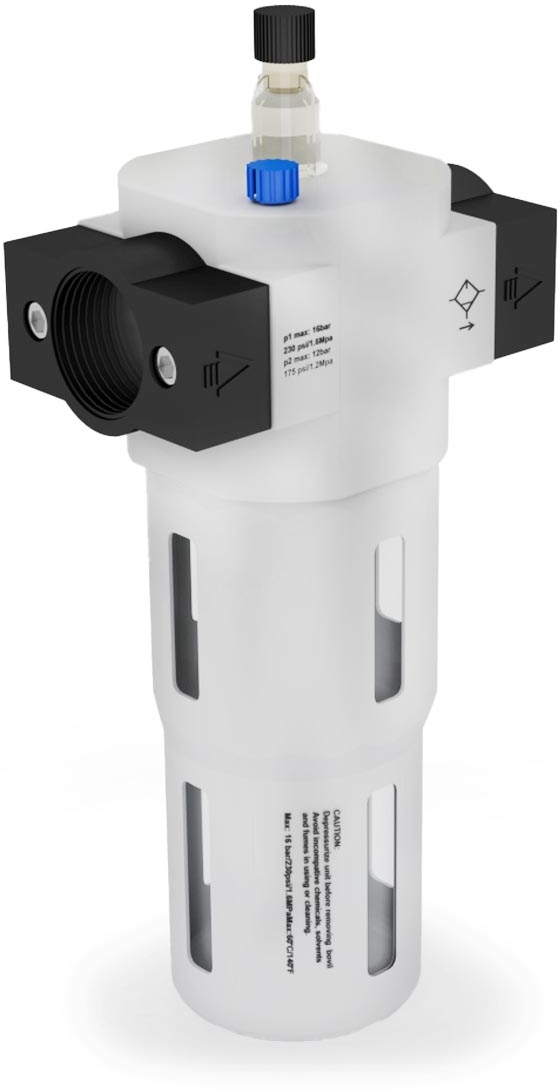
A lubricator is also often called an oil mist lubricator. It is a device used to inject and atomize liquid lubricant into the air, which carries it to the internal surfaces of components and lubricates them from the inside.
The lubricator consists of a body with an opening for filling lubricant into a storage bowl. Inside the bowl is a tube through which lubricant is drawn and injected into the airflow. The operating principle is based on the suction effect created by the compressed air flowing past a nozzle, so the device supplies lubricant only when air is flowing. The lubricant is picked up from the nozzle and dispersed into the air as very fine particles.
For adjustment, the lubricator has a transparent sight dome that allows monitoring of lubricant dripping and adjusting the drop rate, and therefore the amount of lubricant entering the air. To decrease or increase lubrication, turn the throttle screw in the appropriate direction.

Functions of the Lubricator
A pneumatic lubricator performs the following functions:
- Supplies lubricant while equipment is operating (when air is flowing)
- Breaks lubricant into droplets and disperses them into the airflow
- Regulates the amount of lubricant supplied
Although the lubricator itself is compatible with various types of lubricants, only the lubricants recommended by the equipment manufacturer should be used. For pneumatic mechanisms, the recommended lubricant is turbine oil with a viscosity grade of 32 mm2/s, which is designated as ISO VG32.
Integration of the Filter Regulator and Lubricator into a Single Air Preparation Unit
The filter regulator and lubricator are separate devices, but for convenience and compactness they are combined into an air preparation unit using specialized mounting components. A typical air preparation unit usually consists only of these devices. Such modules are sometimes designated by the abbreviation FRL (filter-regulator-lubricator).
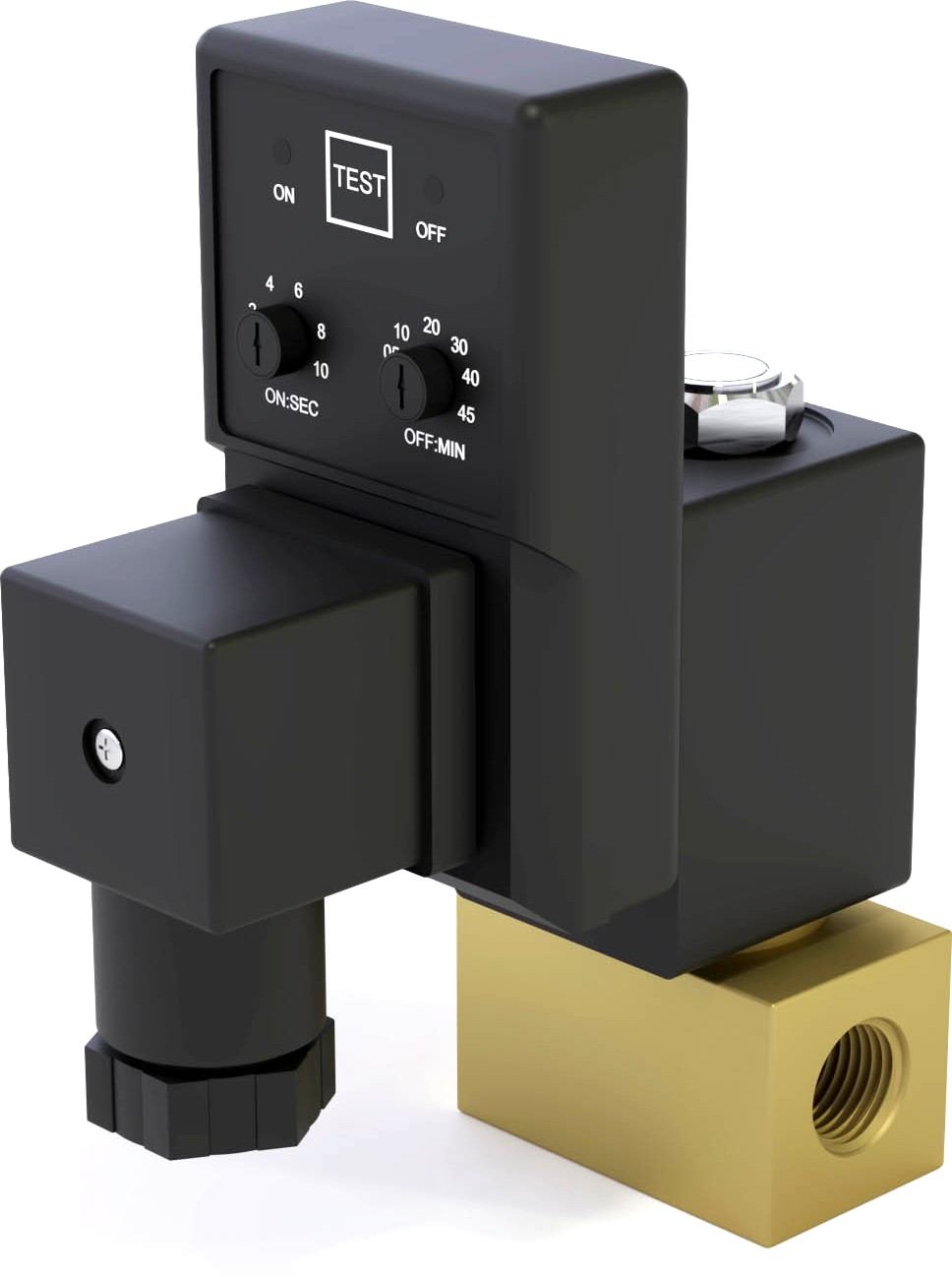
The selection of a specific FRL unit directly depends on air quality, pressure, and flow requirements. However, it is also important to consider ease of maintenance and other factors, such as system shutdown frequency. For example, as mentioned above, the filter regulator removes condensate from the air during operation, so it accumulates in the bowl and must be drained. Different filter regulator models provide different condensate drainage methods — manual, semi-automatic, and automatic. Therefore, if a pneumatic system must operate 24/7, it is important to choose an air preparation unit with fully automatic condensate drainage.
FRL units can also be designed as compact assemblies with a single air inlet but multiple outlets. For example, with a distribution block that provides one outlet for pneumatic equipment requiring lubrication and another outlet where clean air is required.
Such combinations reduce the number of components and simplify equipment installation and connection, allowing savings in both time and maintenance costs.

Air Preparation Schemes and Configurations
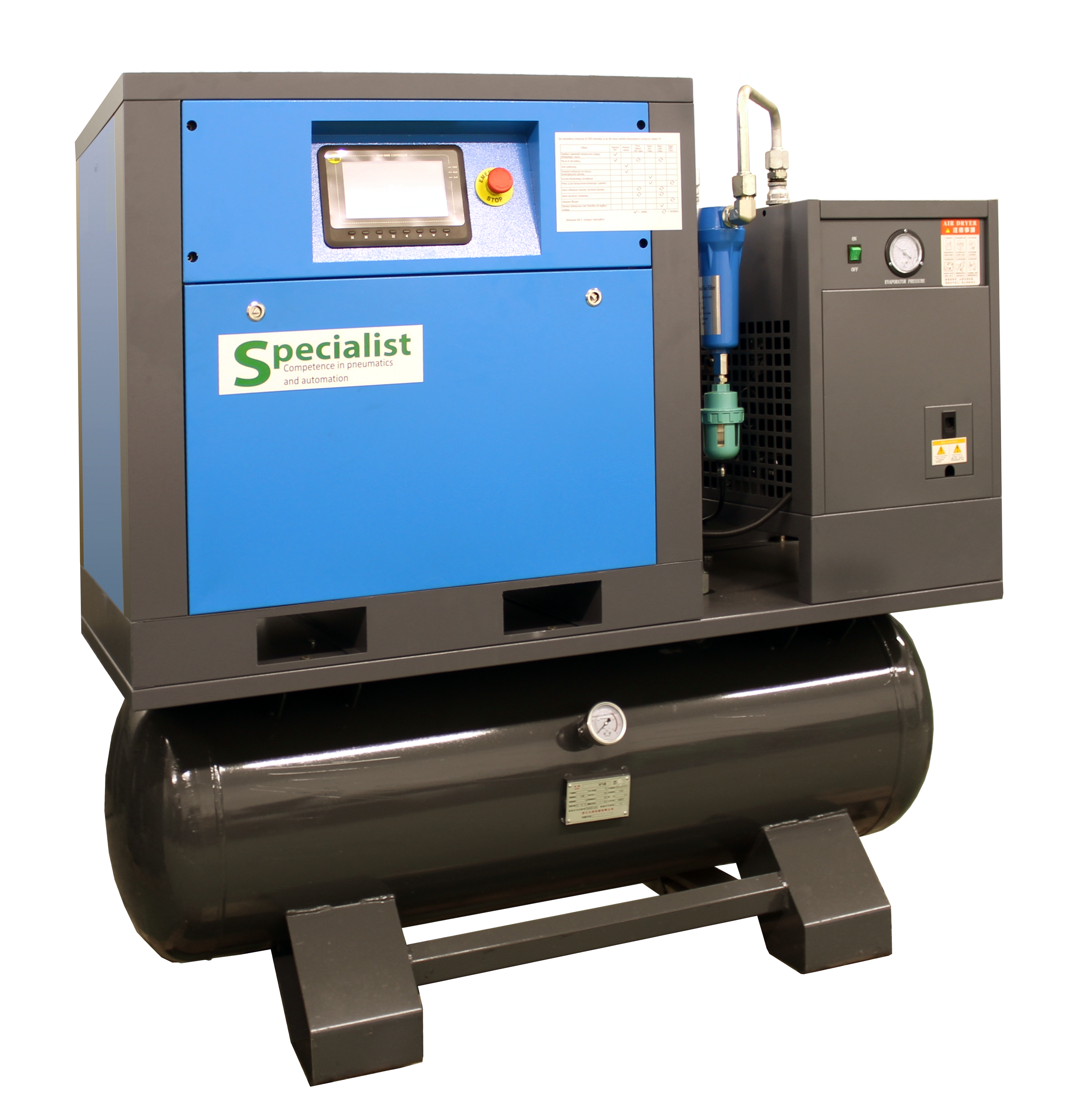
Far more devices are used for air preparation than just the filter regulator and lubricator mentioned above. The air preparation unit is installed immediately before supplying air to a pneumatic tool or cylinder — either directly at the point of use or inside a control cabinet. However, part of the air preparation process takes place immediately after the compressor. Depending on compressed air treatment requirements, the following elements are used:
- Receivers — used for storing compressed air and compensating pressure fluctuations. They may be vertical or horizontal.
- Coolers — used for cooling compressed air before use. They may be air-cooled or water-cooled.
- Moisture separators — designed to separate moisture from compressed air. They may be refrigeration or adsorption types.
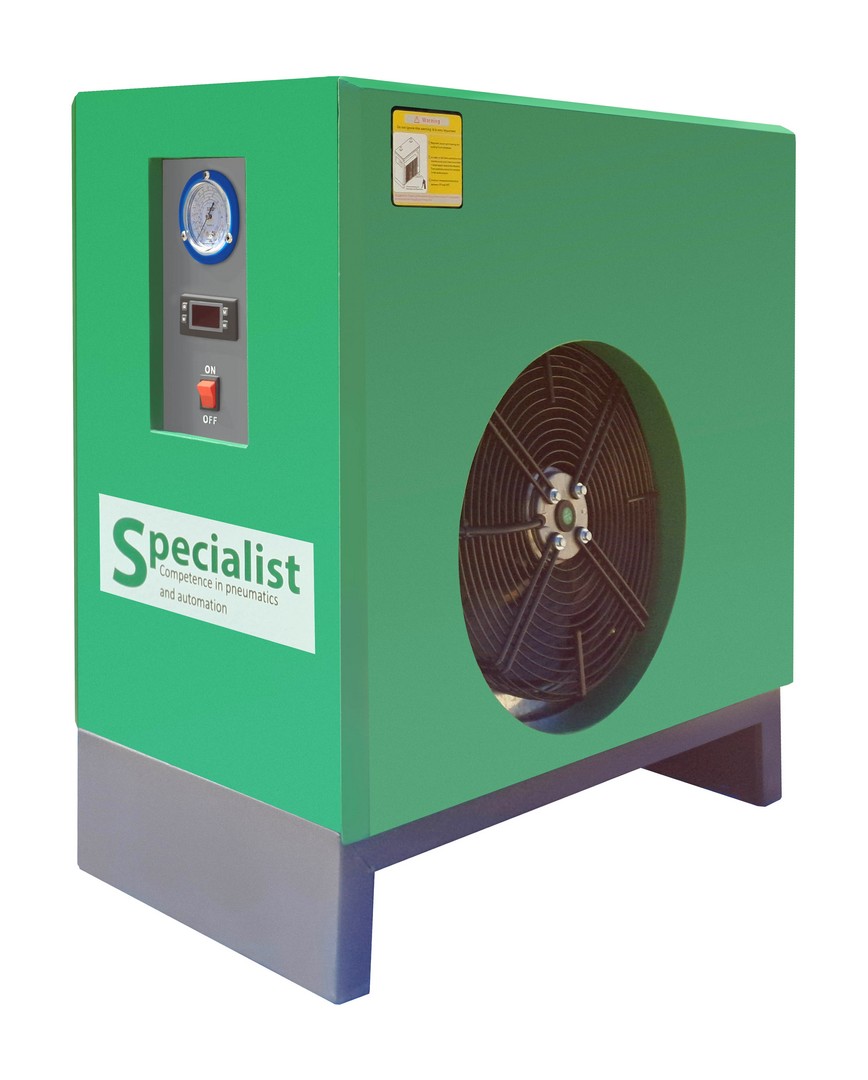
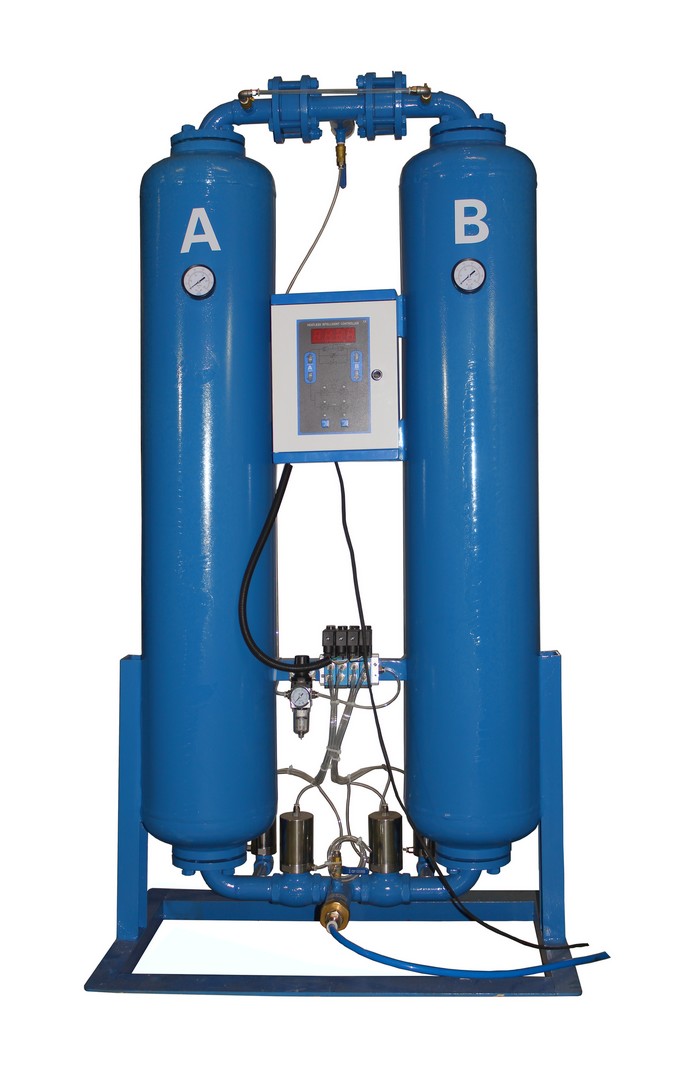
- Dryers — used to remove moisture from compressed air. They may be refrigeration or adsorption types.
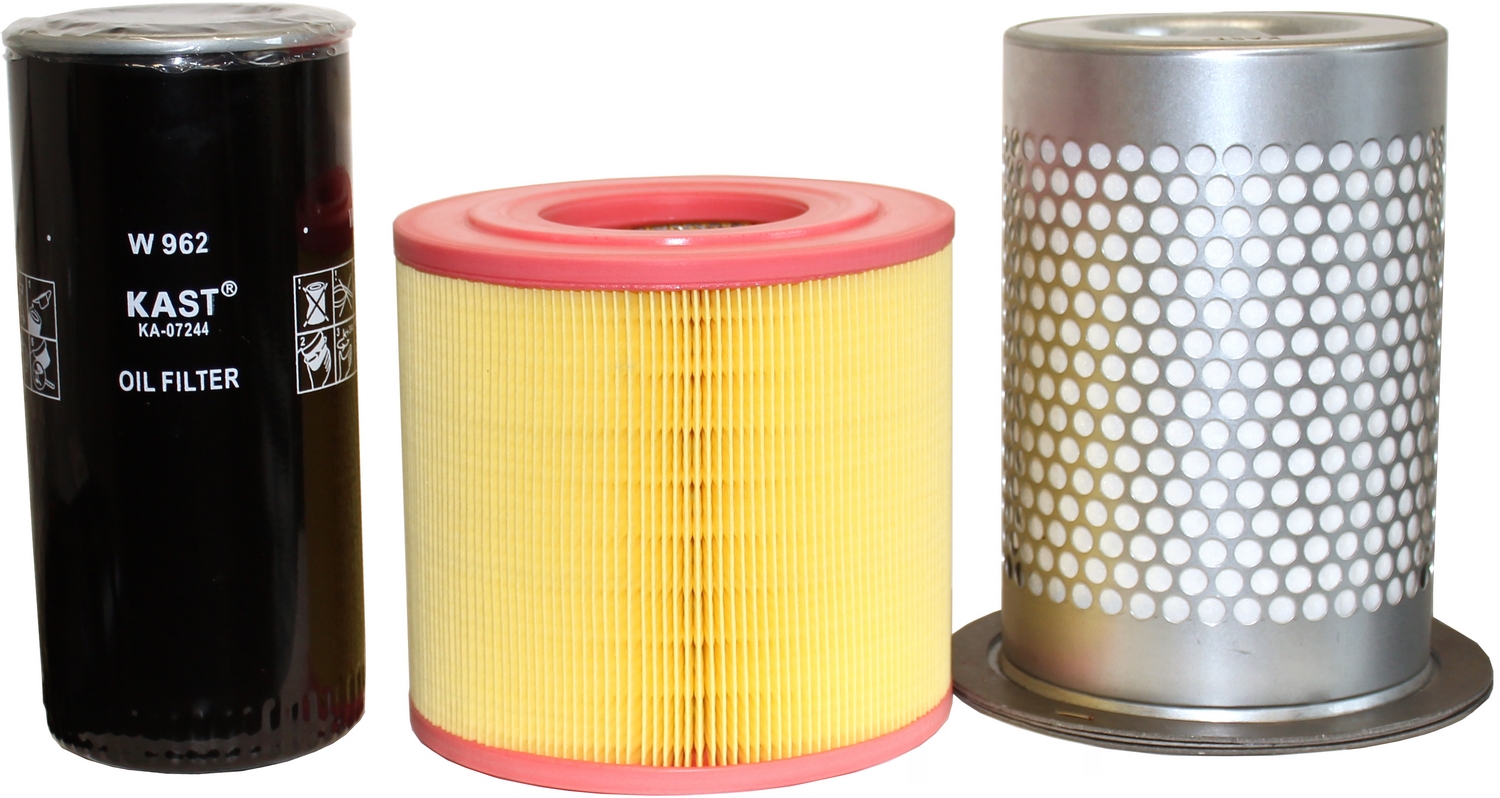
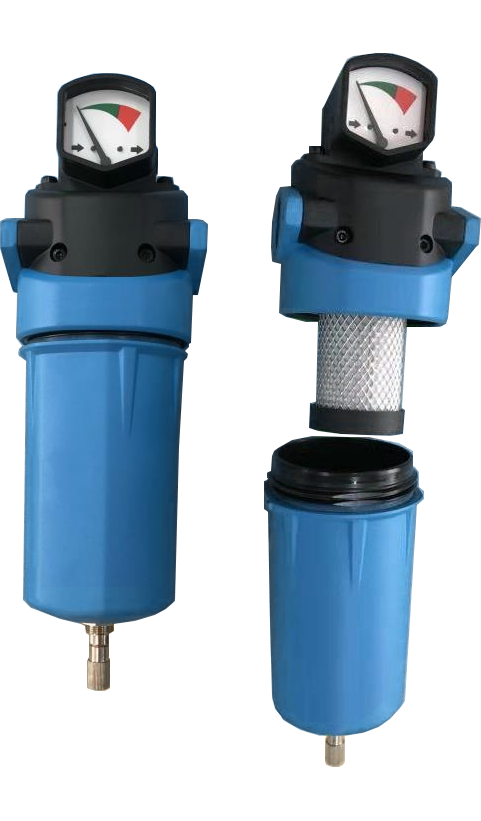
- Air filters — designed to remove dust, dirt, and other fine particles from the air. They may be mechanical or electrostatic and can provide different filtration levels.
- Regulators are used to control air pressure in the system. They may be simple manual units with a pressure gauge or electrically controlled versions.
- Lubrication devices — used to lubricate pneumatic equipment operating on compressed air. They may be automatic or manual.
The specific configuration of air preparation units depends on many factors, including air quality requirements, the need for intermediate compressed air storage, ambient humidity levels, and more.
Advantages of Integrated Air Preparation Units
Integrated air preparation units (or air control units) combine several functions in one compact device. Here are some of the advantages they provide:
- Space saving. Integrated units take up less space than several separate components, which is especially important for installations with limited space.
- Ease of installation. Installing one integrated unit requires less time and effort than installing several separate components.
- Improved efficiency. Integrated units help ensure more efficient operation of the pneumatic system, as all components are configured and matched to work together.
- Reduced costs. The use of integrated units can reduce maintenance costs and the expense of replacing individual components.
- Improved air quality. Integrated units enable more effective air filtration and humidity control, contributing to better air quality within the system.
- Ease of control. Integrated units provide a more convenient and straightforward way to manage the pneumatic system and maintain the required air parameters.
Selecting the Optimal Air Preparation Unit for Various Applications
The selection of the optimal air preparation unit depends on the specific application, since different industrial and commercial processes may require different air quality parameters. When choosing an air preparation unit, the air quality requirements of the specific process should be taken into account.
Get Technical Support
Our company's engineers will help you choose and purchase an air preparation unit that fits your application and budget.
Call free of charge within Ukraine
+38 0800 210 317Installation, Adjustment, and Maintenance of Air Preparation Units
The installation, adjustment, and maintenance of air preparation units require certain knowledge and skills to ensure efficient and safe operation.
Installation and Adjustment Requirements
Installation of an air preparation unit:
- Select a location for installing the air preparation unit. It should provide sufficient space for installation and maintenance.
- Check that the electrical voltage and power frequency comply with the requirements of the air preparation unit.
- Prepare the appropriate piping and mounting hardware for installation.
- Install the air preparation unit according to the manufacturer's instructions and ensure secure mounting.
Adjustment of an air preparation unit:
- Check that the correct air pressure is available at the inlet of the air preparation unit.
- Set the required outlet pressure level using the pressure regulator.
- Adjust the humidification level if the air preparation unit is equipped with a humidifier.
- Check the condition of the filters and replace them if necessary.
- Perform regular maintenance and component replacement.
Maintenance of the air preparation unit should be carried out regularly:
- Check the operating pressure at the inlet and outlet of the air preparation unit.
- Inspect the filters, clean them, and replace them if necessary.
- Monitor the lubricant level if the air preparation unit is equipped with a lubricator.
- Check the functionality of shut-off valves and safety valves and replace them when necessary.
- Carry out periodic inspections and maintenance according to the manufacturer's recommendations.
Air Preparation Unit for Pneumatic Tools
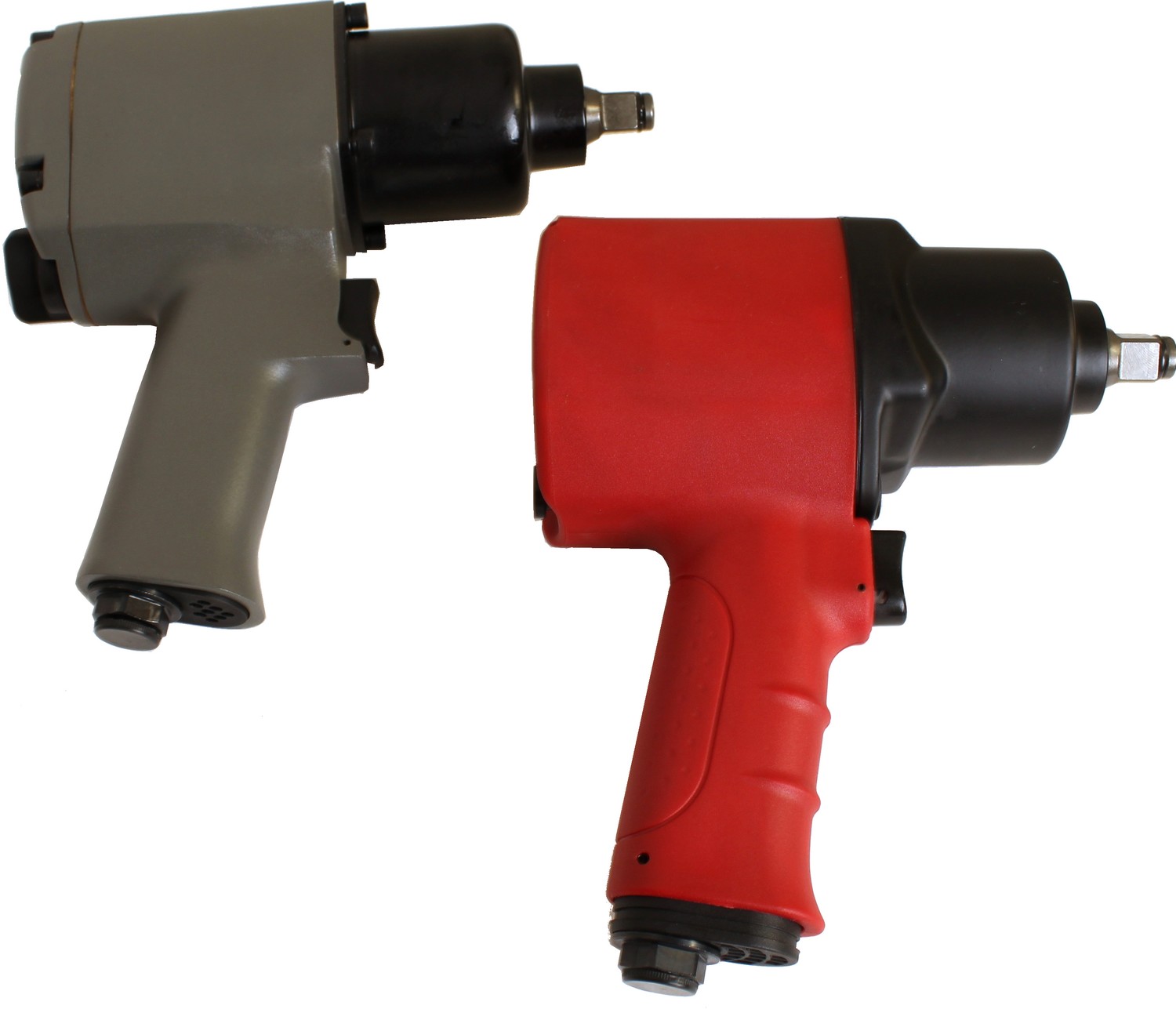
An air preparation unit for pneumatic tools is a device used to clean, regulate, and lubricate compressed air supplied to pneumatic tools.
Air Preparation Units Summary
What air preparation is performed after a compressor?
After compression, air must be cooled to condense moisture, and most of the water in liquid form is removed by moisture separators. Fine debris and dust drawn in by the compressor from the atmosphere are removed by mechanical filters. Air treatment for technical pneumatic applications is usually limited to these processes. For industries such as medical and food production, the air is further purified to remove even trace amounts of compressor oil, water, volatile compounds, and microorganisms.
Air preparation also includes stabilizing compressed air pressure — smoothing pressure fluctuations in the system, preventing pressure surges, and maintaining the required pressure level.
What equipment is used for air preparation?
The following equipment may be used for compressed air preparation:
- Air-oil separators (oil separators)
- Air receivers
- Air coolers
- Refrigerated dryers
- Adsorption dryers
- Water separators (moisture separators)
- Mechanical filters
- Adsorption filters
- Regulators
- Safety valves
What is a lubricator in an air preparation unit?
A lubricator is a device in an air preparation unit used to lubricate pneumatic tools and systems operating on compressed air. It is typically installed after the filter and pressure regulator and before the pneumatic tool.
What is a filter lubricator?
Usually, the term "filter lubricator" refers to a non-standard combined air preparation assembly consisting of two devices that perform compressed air filtration and add lubricant for the pneumatic elements of the system.
The filter and lubricator are installed before pneumatic mechanisms to protect their internal components from contamination, reduce wear of moving parts and seals, and ensure more efficient operation.

